Category: All About Guns
Categories
Inland M1 Carbine Range 2

In all of American firearms history, there is no more legendary name than John Moses Browning. Born in 1855, he was not only an inventor and innovator, he was also a genuine gun genius. Browning made his first firearm at age 13 in his father’s gun shop, and was awarded the first of his 128 firearm patents in 1879 at just 24 years of age.
“John M. Browning is the unrivaled Dean of arms inventors and designers,” said Philip Schreier, director of NRA Museums. “Throughout the long history of firearms, from the year 1350 to the present, no one person has had such a staggering effect on the evolution of firearms technology as John Browning. Now, nearly 100 years after his death, most of his firearms designs and patents are still being used on a daily basis to defend life and liberty.”
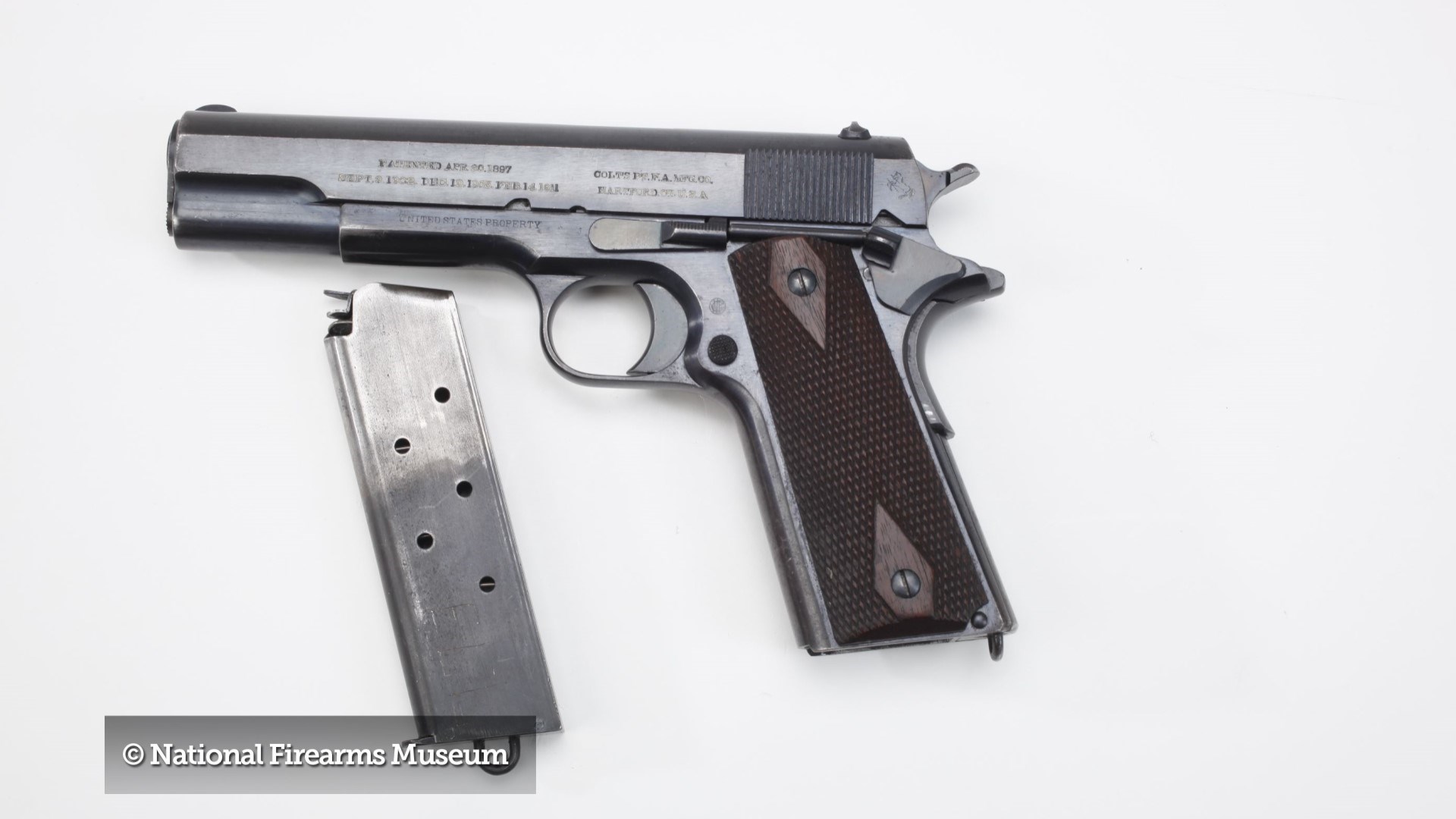
Handgun: Colt Model 1911
This pistol takes its model number from the year Colt introduced it, 1911. And from then until 1984—over seven decades—it was the standard-issue sidearm for the entire U.S. Armed Forces, eventually replaced by the 9mm Beretta M9. Some modern versions of the gun are still in service with American military units, such as the U.S. Army Special Forces.
Browning developed the Model 1911 in response to the U.S. Army’s having sought a semiautomatic handgun to replace its outdated revolvers. His design won the highly competitive Army contract because the handgun was not only extremely reliable, but also had a number of unique attributes. For example, it was one of the first guns with parts that could be used to disassemble itself for simple, easy takedown and cleaning.
In addition to its military history, the Model 1911 is a very popular handgun with the general public yet today. An estimated 150 firearms manufacturers or more worldwide make and sell Model 1911-style handguns in various calibers. Compact variants of the gun are also in high demand as a concealed-carry gun because of the design’s relatively slim width and the stopping-power of the .45 ACP (Automatic Colt Pistol) caliber.
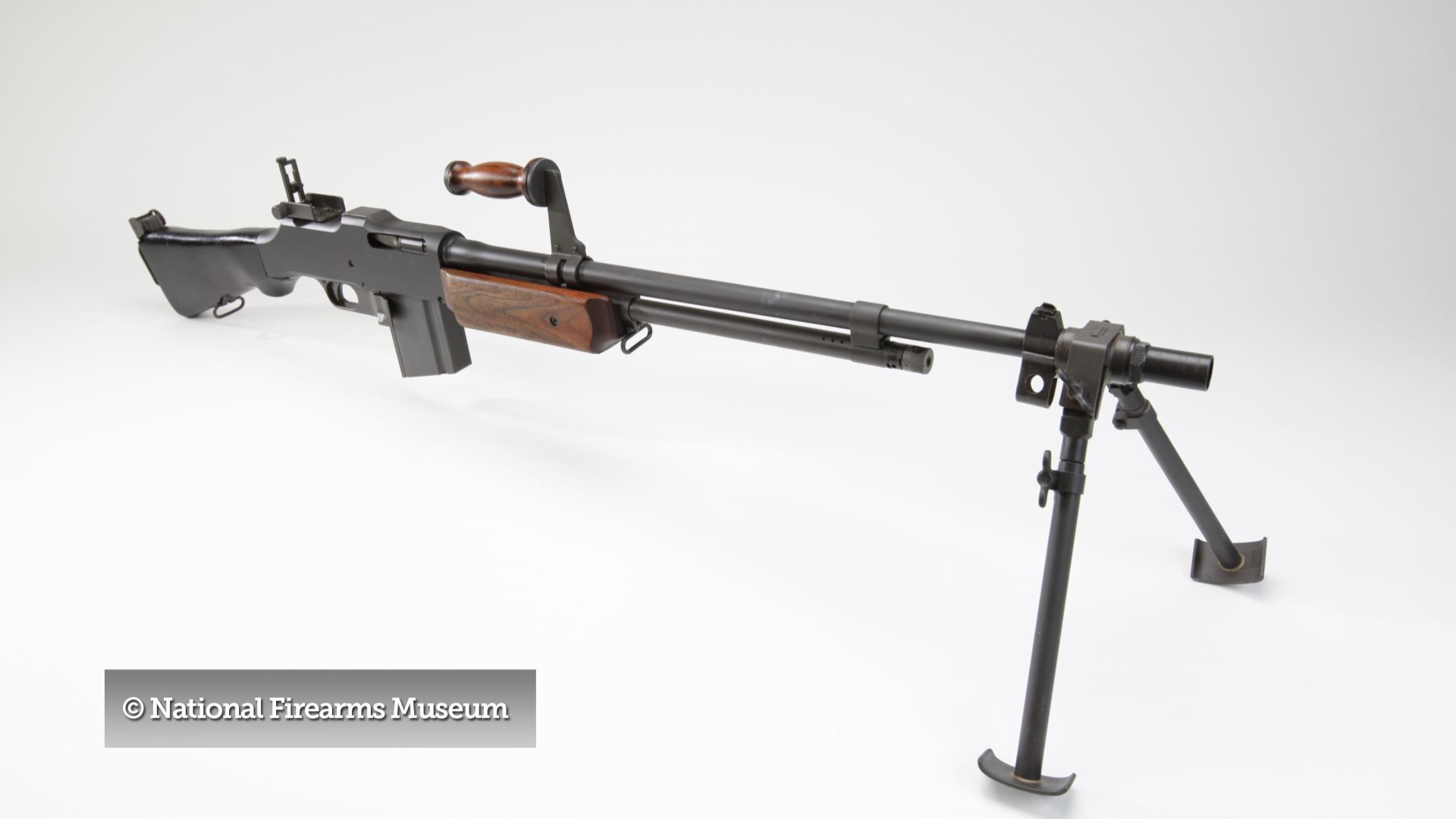
Rifle: M1918 Browning Automatic Rifle (BAR)
An absolutely awesome battlefield weapon in terms of firepower, John Browning invented this rifle in 1917. As a result, it saw only limited use near the end of World War I, but extensive use during World War II and the Korean War. The BAR (short for Browning Automatic Rifle) is a beast of a firearm. Weighing 16 to 20 pounds, the gun is selective-fire, capable of firing .30-06 Springfield-caliber ammunition in semiautomatic, full-automatic or burst modes. The rifle is fed by detachable box magazines of either 20 or 40 rounds
This so-called “light” machine gun was designed by Browning to be carried and fired by advancing troops while supported with a sling over the shoulder and fired from the hip without stopping or aiming, a concept known as “walking fire.” For more focused, aimed shooting, BAR rifles came equipped with a bipod after 1938.
Military personnel were not the only ones impressed with the firepower and portability of the BAR. Criminals also took notice, two of the more infamous being Clyde Barrow and Bonnie Parker (“Bonnie & Clyde”), who robbed banks throughout the South and Midwest during the 1930s. Clyde’s weapon of choice was the BAR, which he obtained—along with armor-piercing ammunition—by periodically breaking into National Guard armories.
But Bonnie could also handle one of these heavy rifles, even though she was not a large woman. A Missouri highway patrolman, forced to take cover behind an oak tree when Bonnie opened up on him with a BAR stated, “That little red-headed woman filled my face with splinters on the other side of that tree with one of those d*mned guns.”
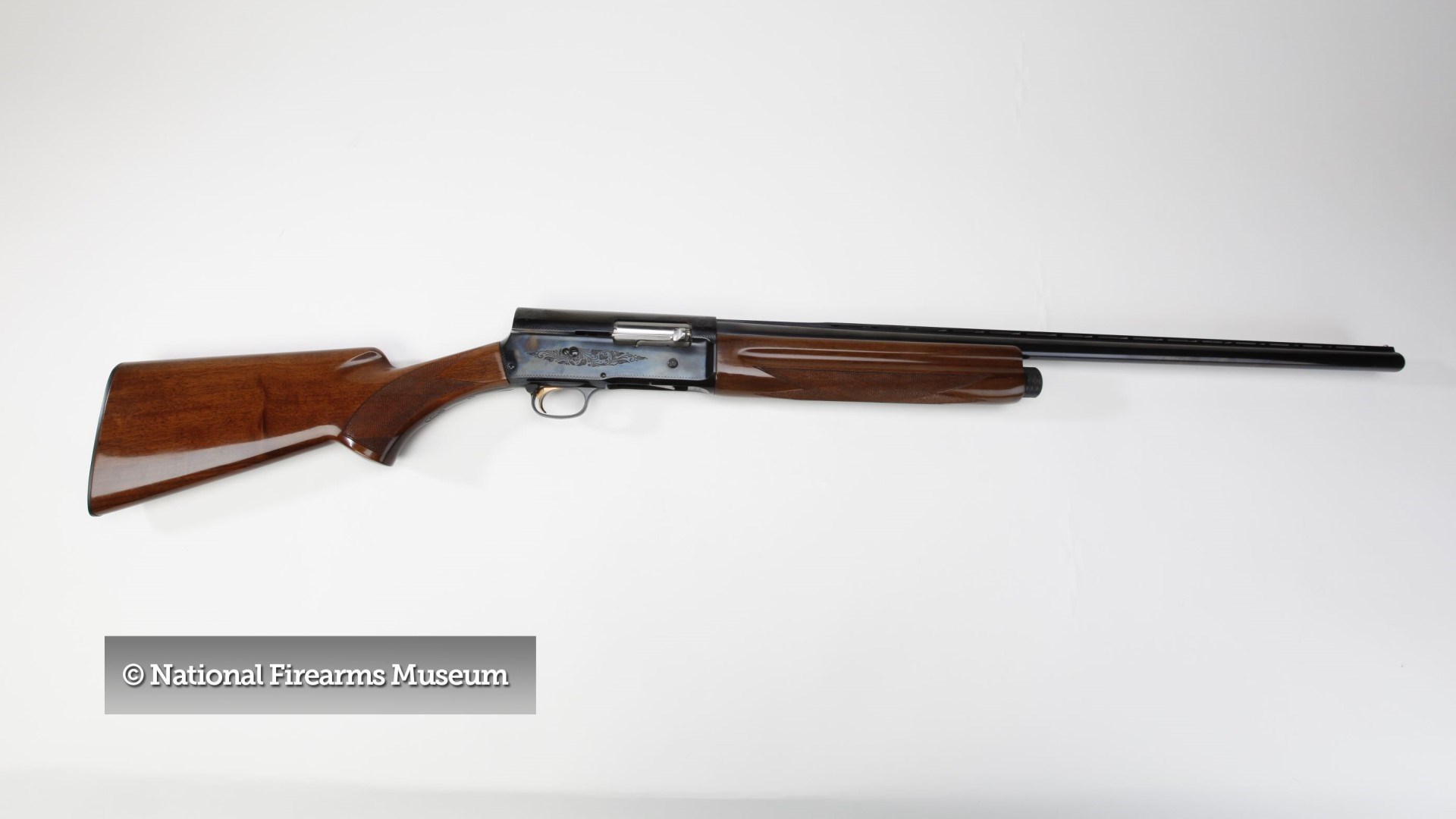
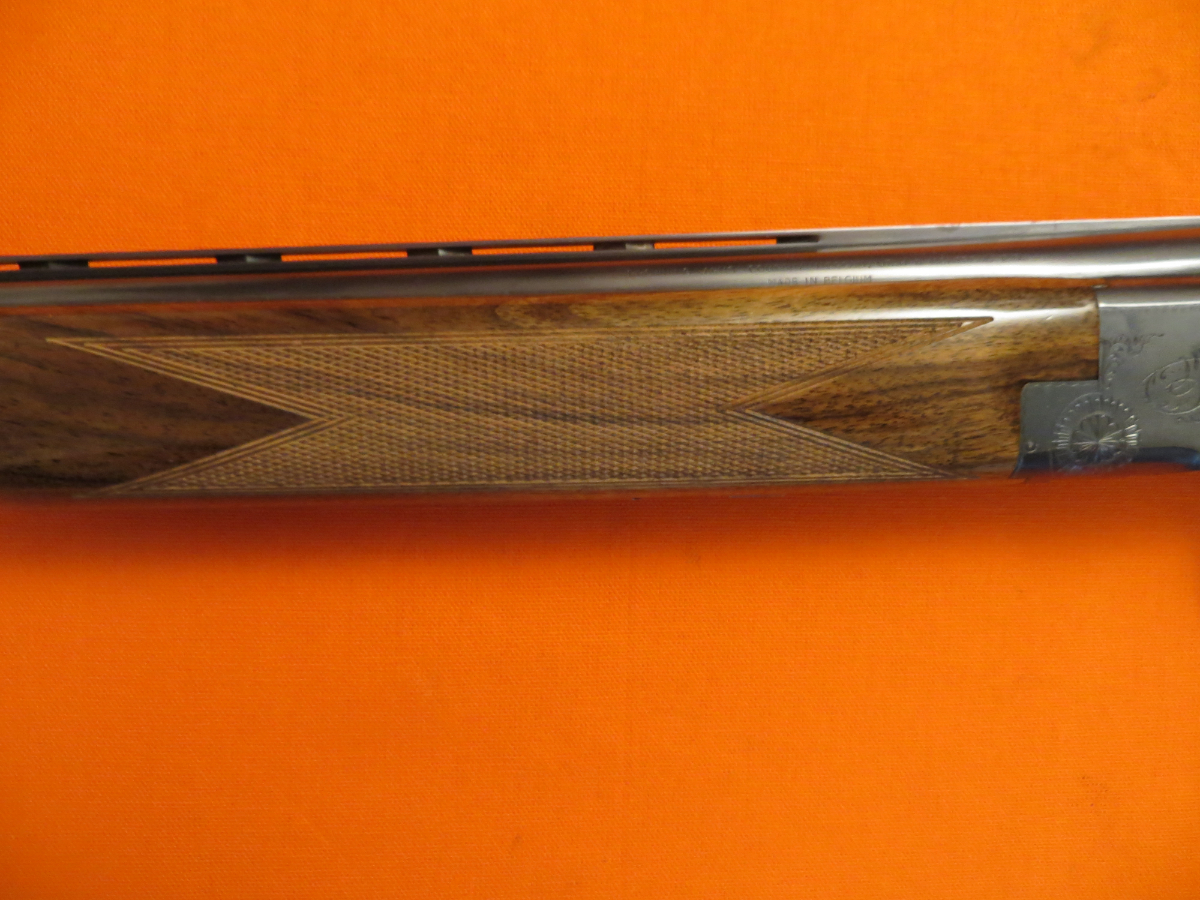
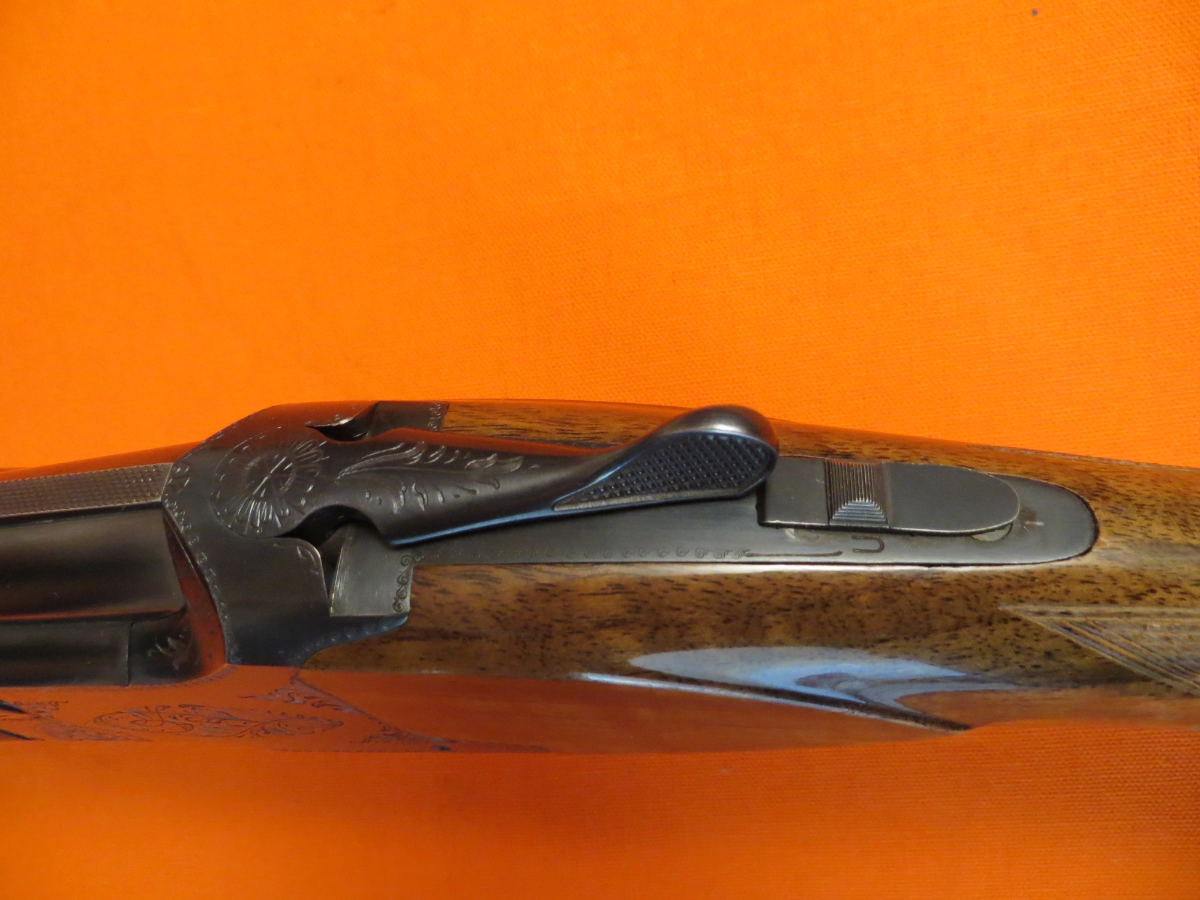
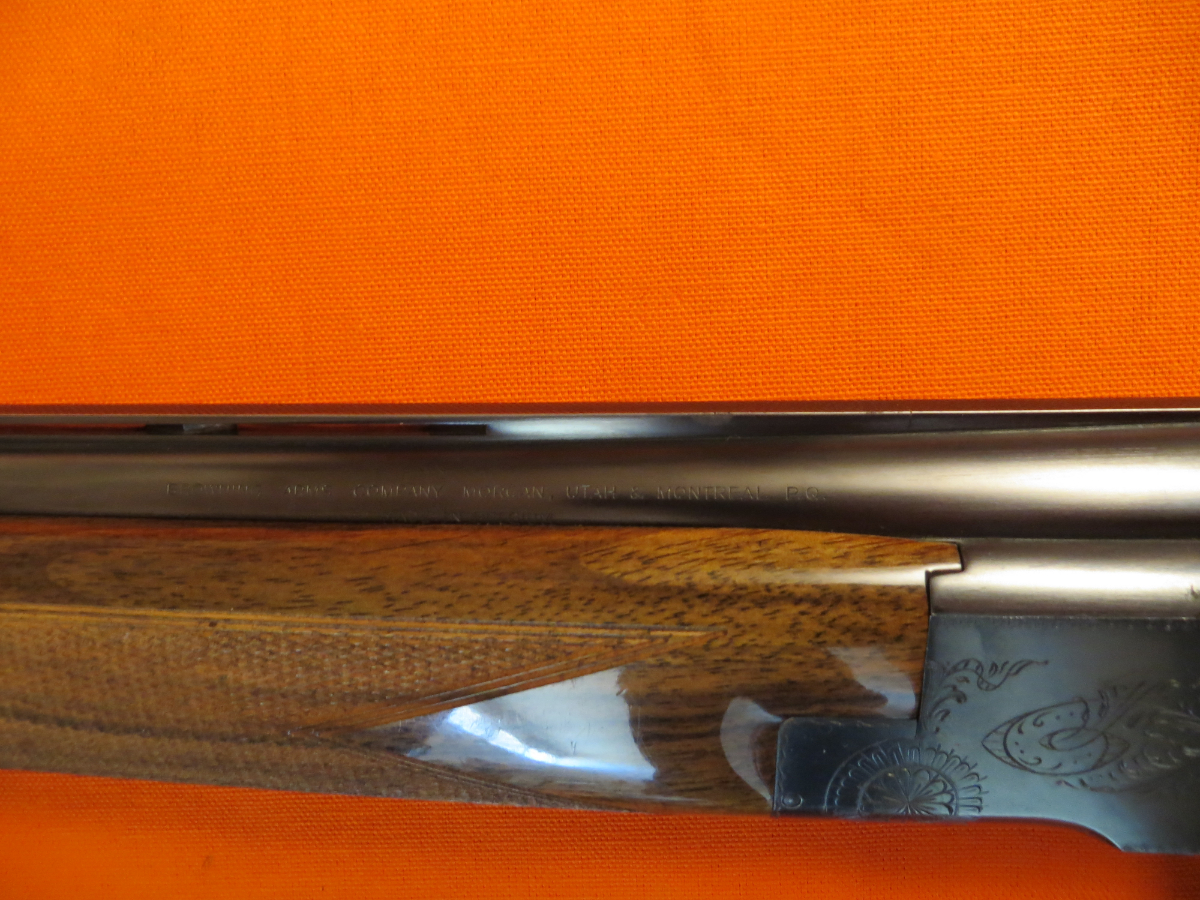
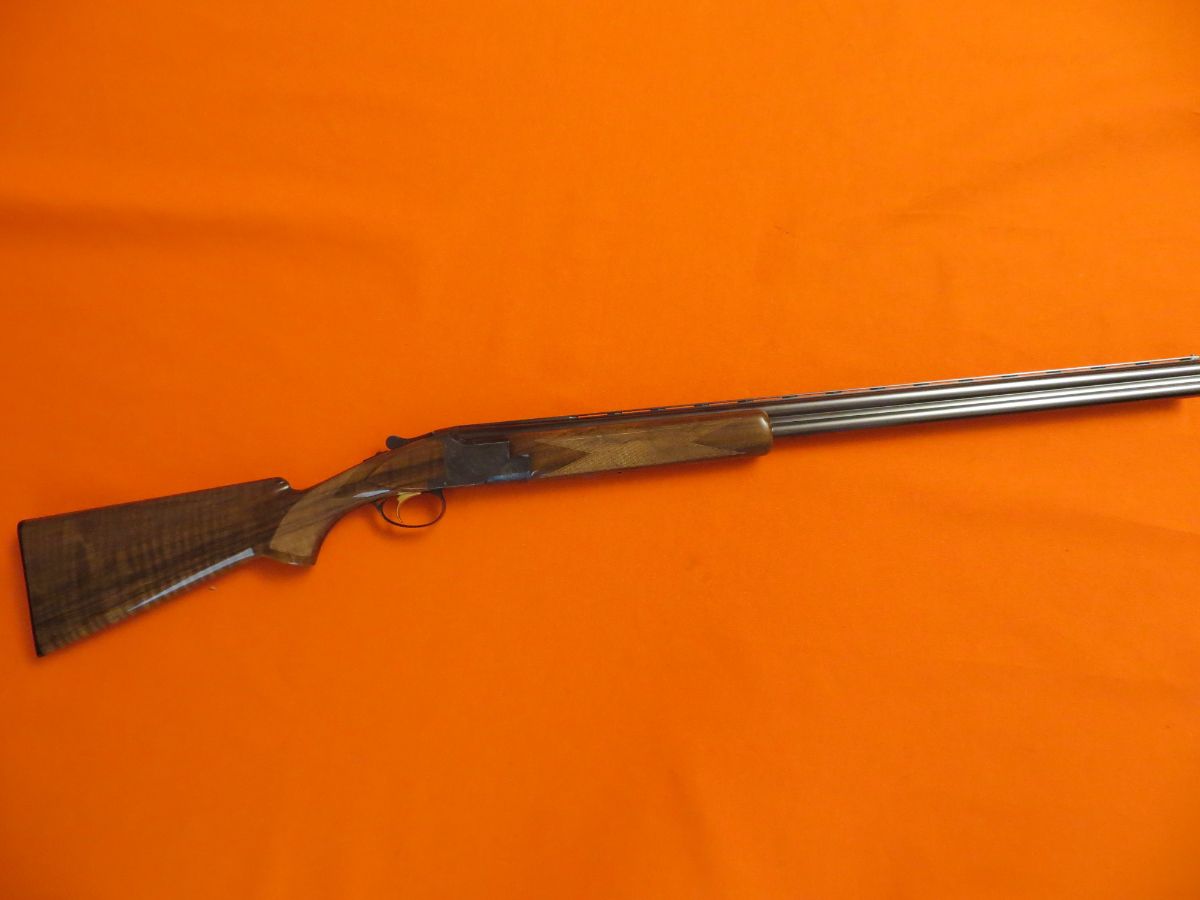
Shotgun: Browning Auto-5
A revolutionary design for its day—and the first successful, mass-produced semiautomatic shotgun—the Auto-5 has a squared-off receiver back, earning it the nickname “Humpback Browning.” John Browning designed it in 1898, receiving a patent for the gun in 1900. Produced continually for the next 100 years by several gunmakers, production finally ceased for this fine firearm in 1998.
The name Auto-5 needs a bit of explanation, however. Auto is short for autoloader, not automatic, possibly causing some confusion because the gun has a semiautomatic action. The numeral 5 stands for the total number of shells the shotgun can hold when fully loaded: one in the firing chamber and four in the magazine.
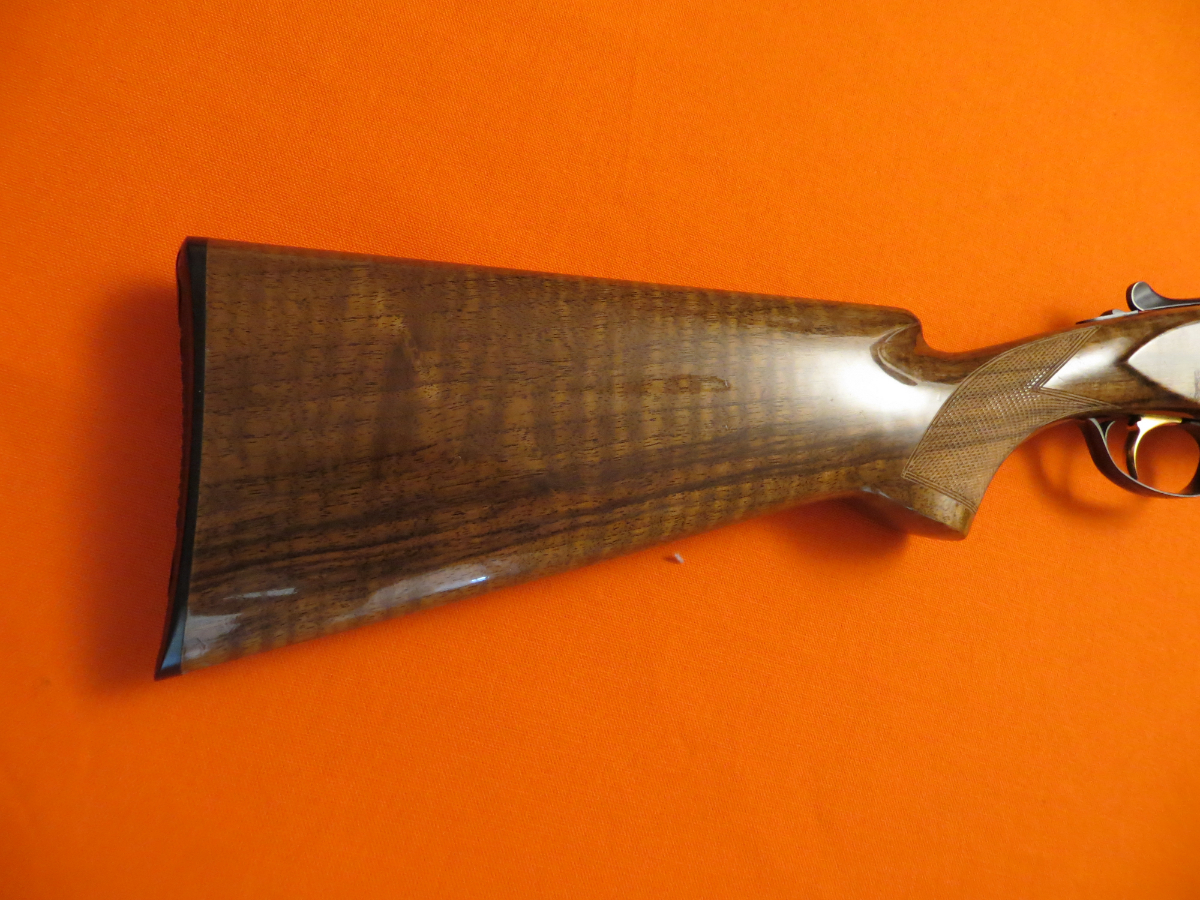
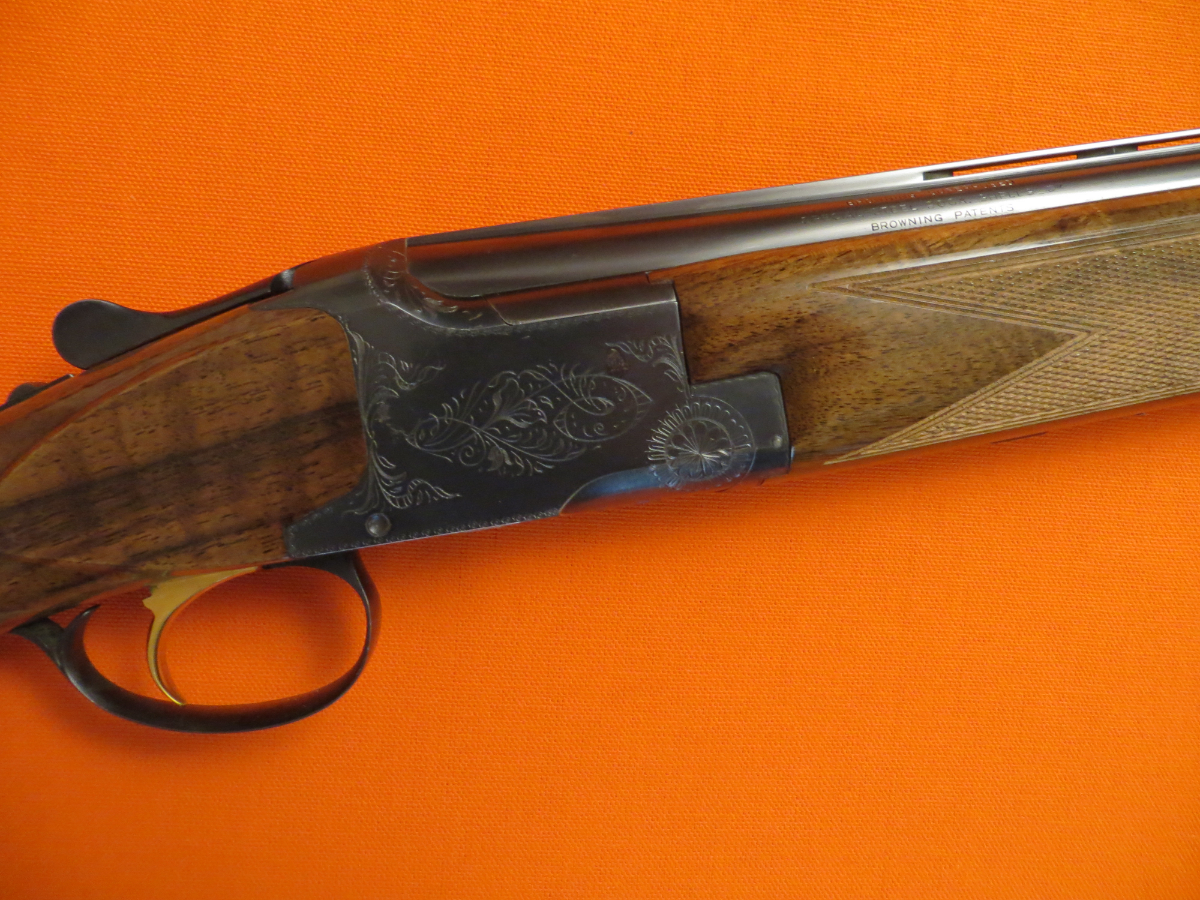
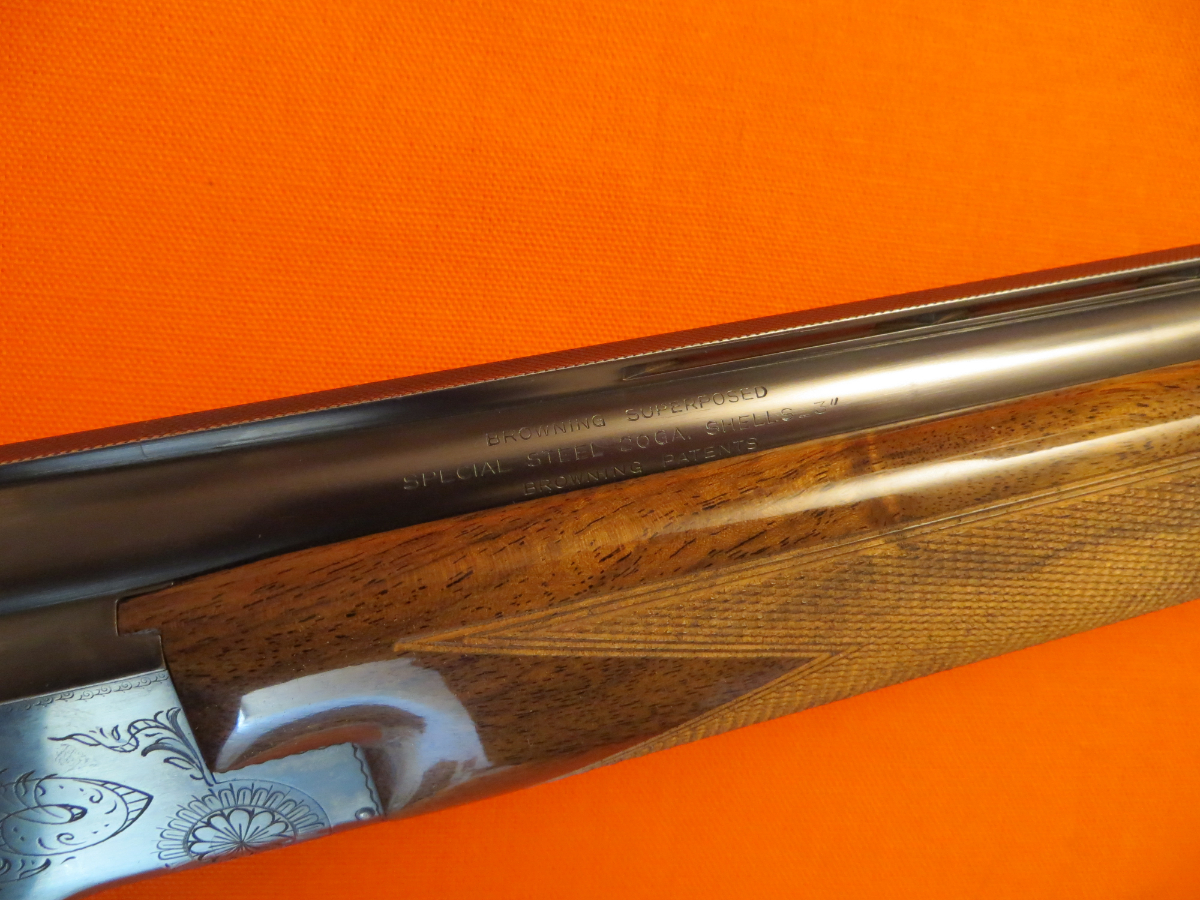
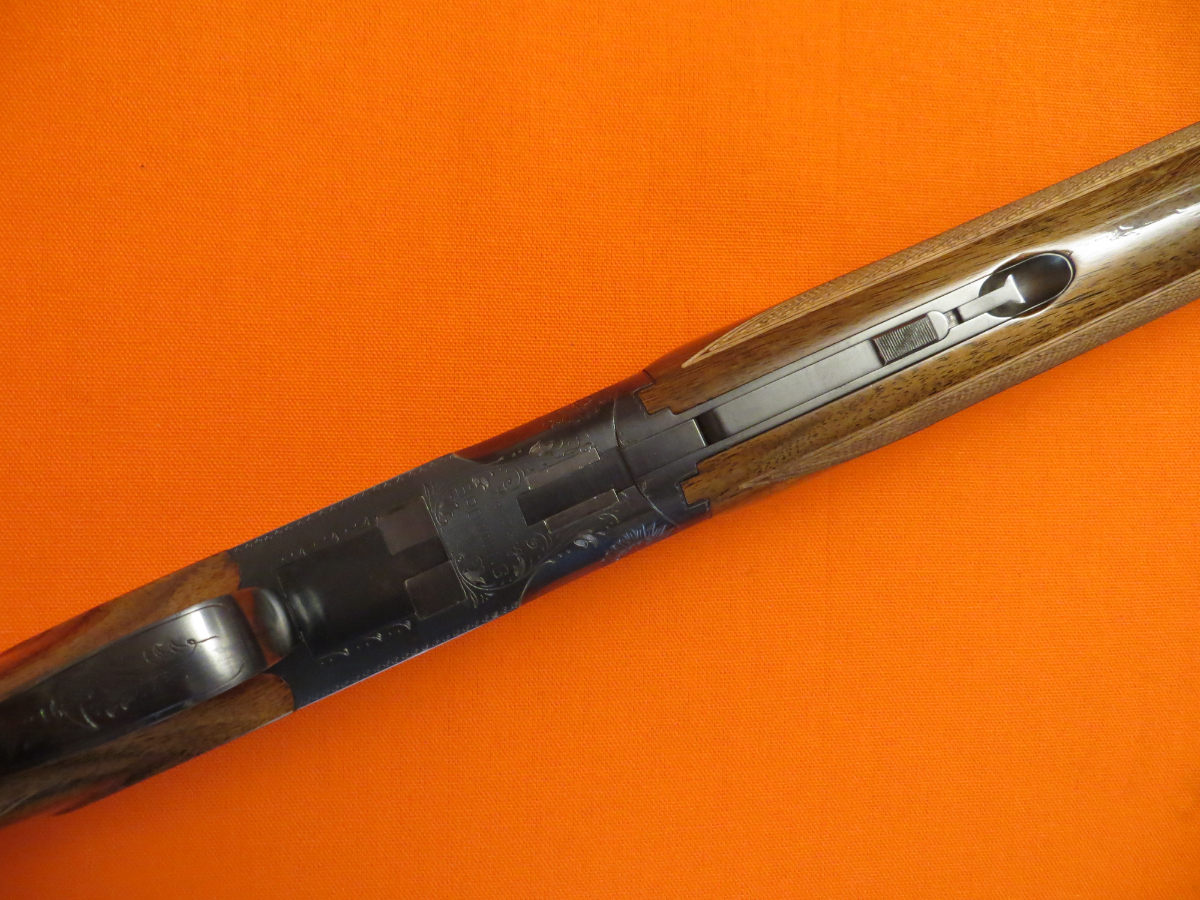
An interesting sidenote is that the famous 20th Century author, shooter and hunter Ernest Hemingway didn’t think much of semiautomatic shotguns in general—preferring instead Browning’s double-barreled Superposed over/under shotgun—but he liked the Auto-5. “I shot a Browning [Auto-5] for twelve years, and it is the only good automatic shotgun,” he said. Ironically, it’s also the gun that nearly killed him.
Hemingway would often invite the rich and famous from Hollywood to Sun Valley Resort in Idaho for fall weekend bird hunts. It was during one of those hunts that socialite Mary Raye Hawks, wife of film director Howard Hawks, was handling a 16-gauge Browning Auto-5 (known as the Sweet Sixteen) less than safely when it went off, barely missing Hemingway—who was kneeling down just a few feet away tying his bootlace. The shot passed so close to the back of Hemingway’s head that it singed his neck hair.
The real test of any firearm is the test of time, and the three guns mentioned above have all passed that lengthy, detailed examination with flying colors. But Browning had many other successes, as well, such as the development of various Winchester rifles, and the water-cooled M1917 and air-cooled M1919 heavy machine guns. And yet today, when the legendary Browning M2 .50-caliber “Ma Deuce” machine gun arrives on the battlefield, enemies scatter.
John Moses Browning died doing what he loved best, inventing and designing firearms. While at his workbench one day in 1926, at the age of 71, he simply slumped over and slipped into firearms history.
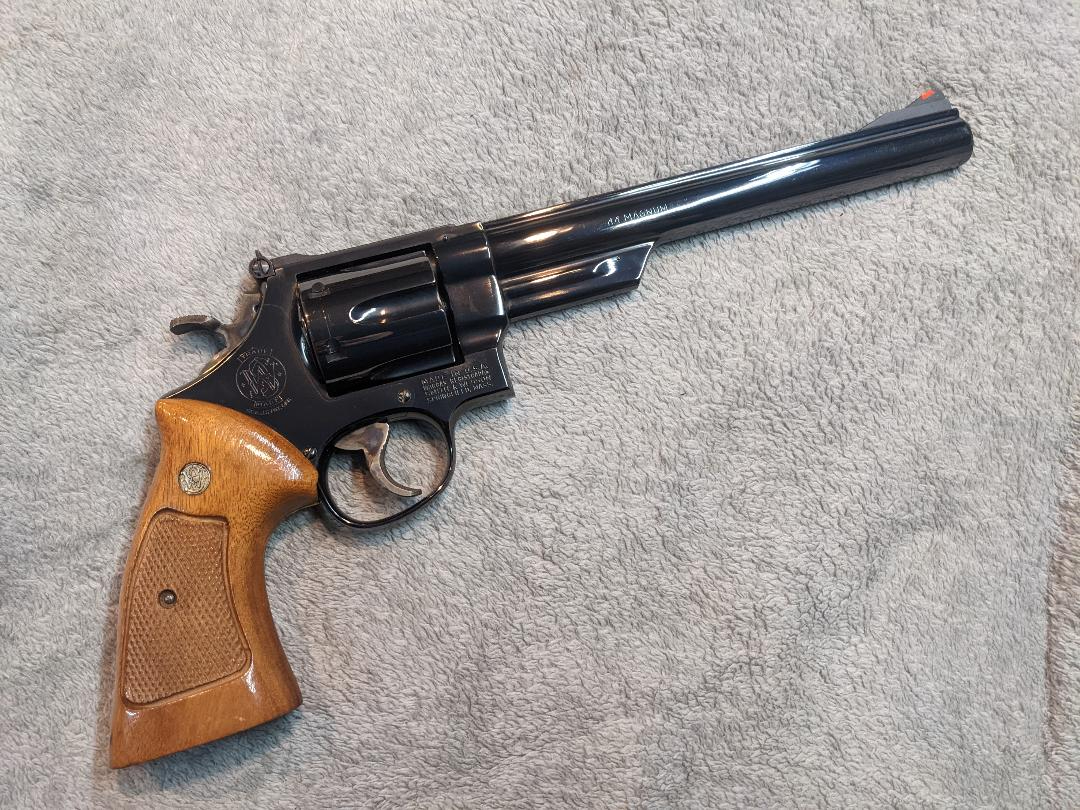
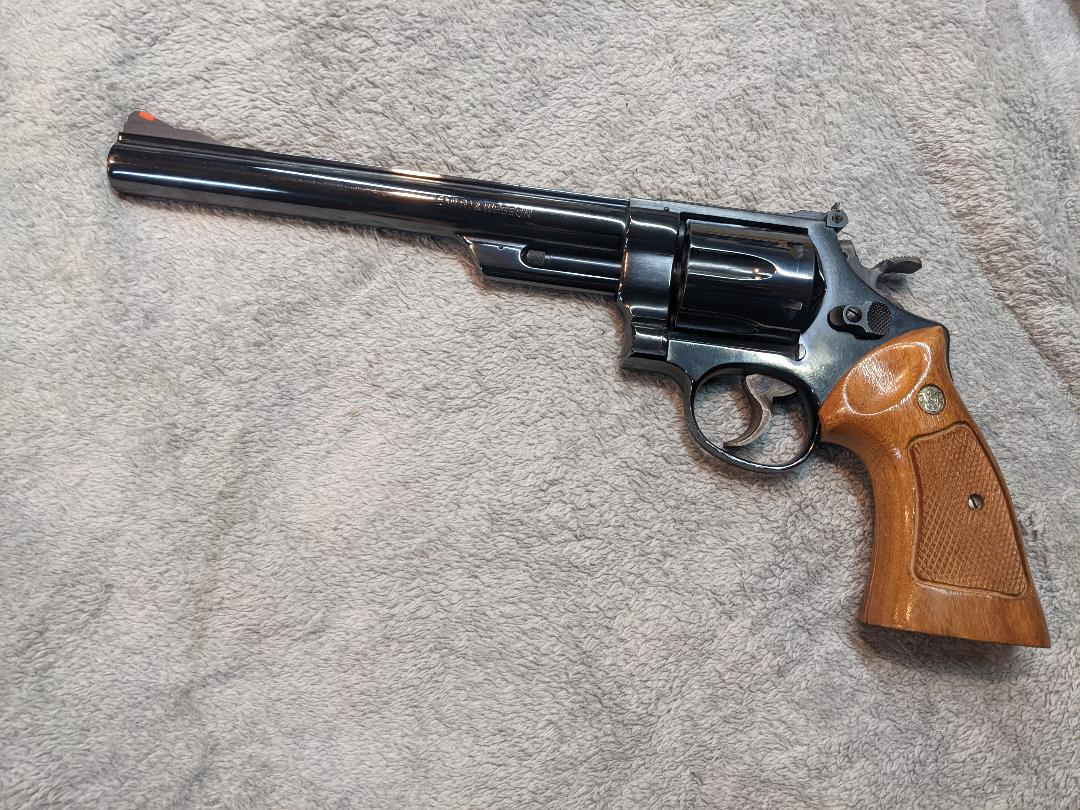
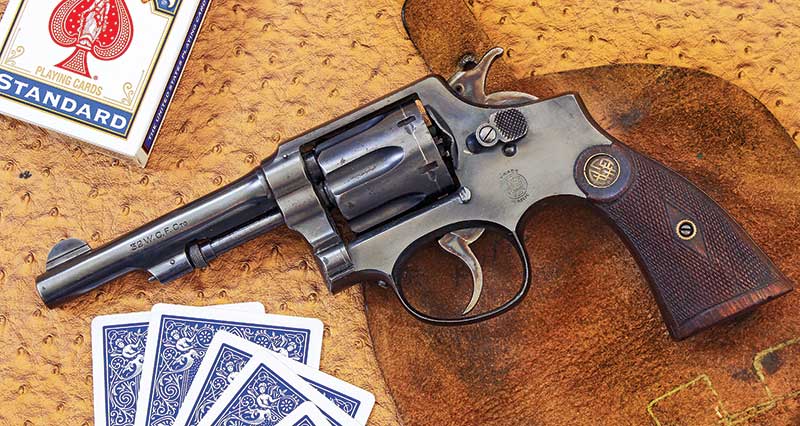
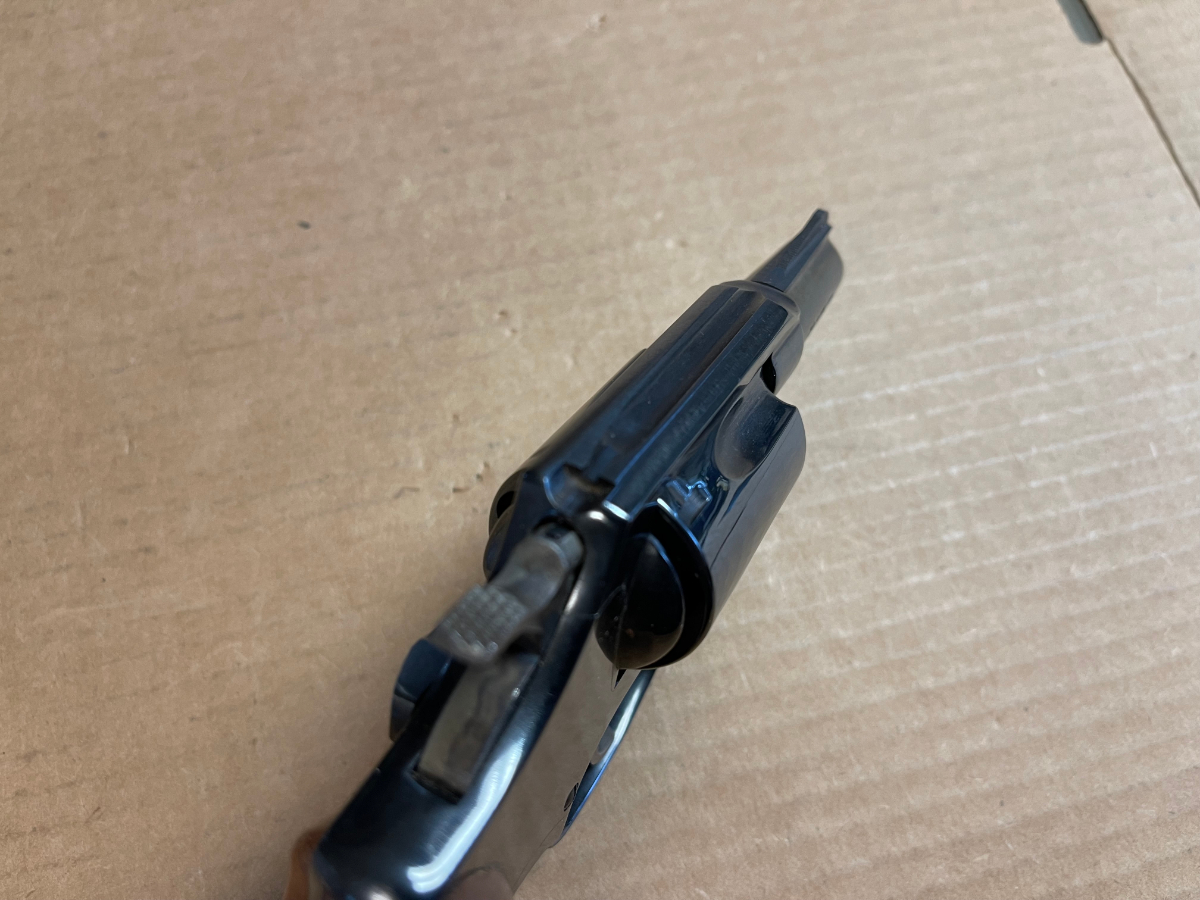
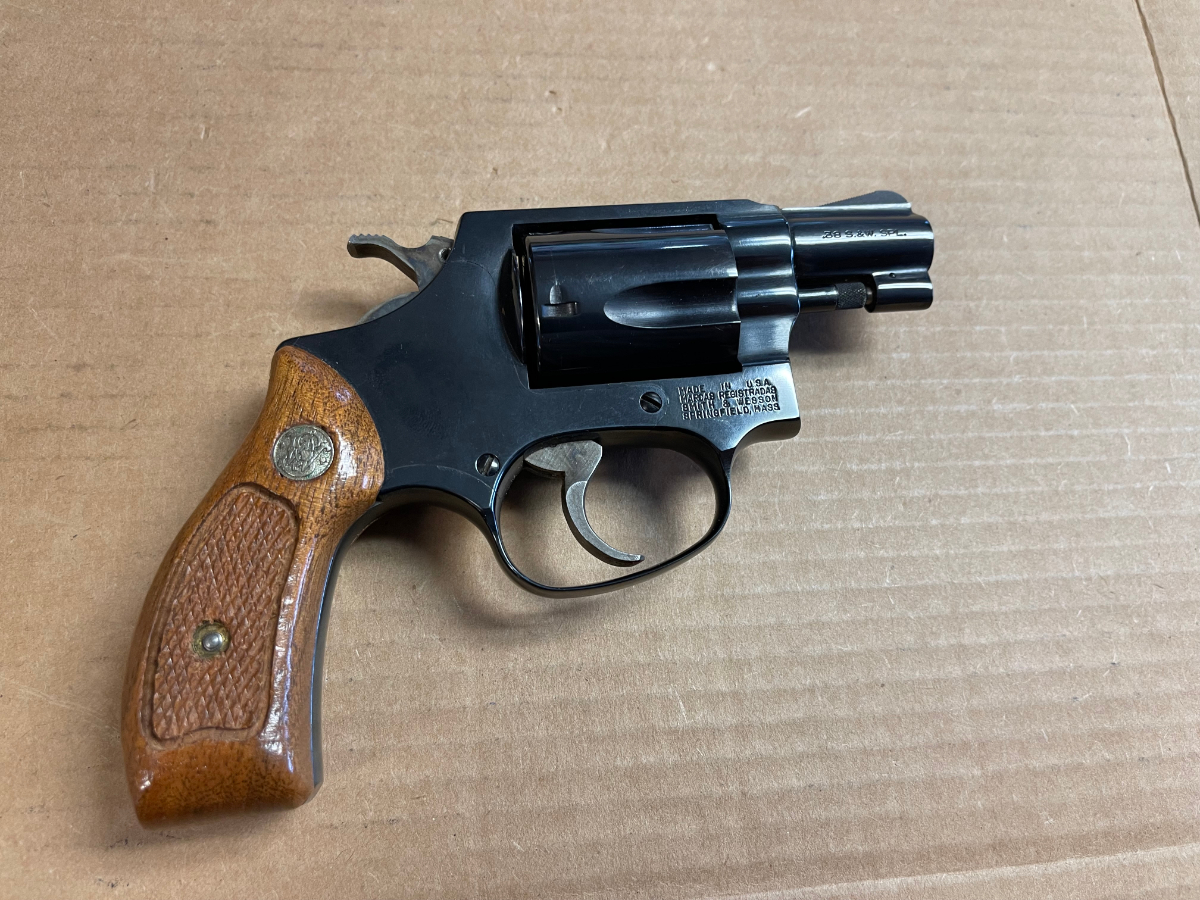
Is it or isn’t it? This Armero Especialistas “Alfa” is a Spanish-made clone of the S&W .38 Hand Ejector
In an effort to piggyback off another’s good fortune, companies will inevitably rush in with similar-looking but inferior products. There’s a thriving black market for fake designer handbags and jewelry that seem like identical copies of their fancier counterparts — at least until they fall apart at the seams or stain your skin green. Your child’s room may have a mimic hiding in plain sight: perhaps a well-meaning relative bought your son a robot “Transmorpher” instead of an honest-to-God Transformer, or maybe your daughter owns a generic “Ice Princess” masquerading as Princess Elsa from the Frozen movies.
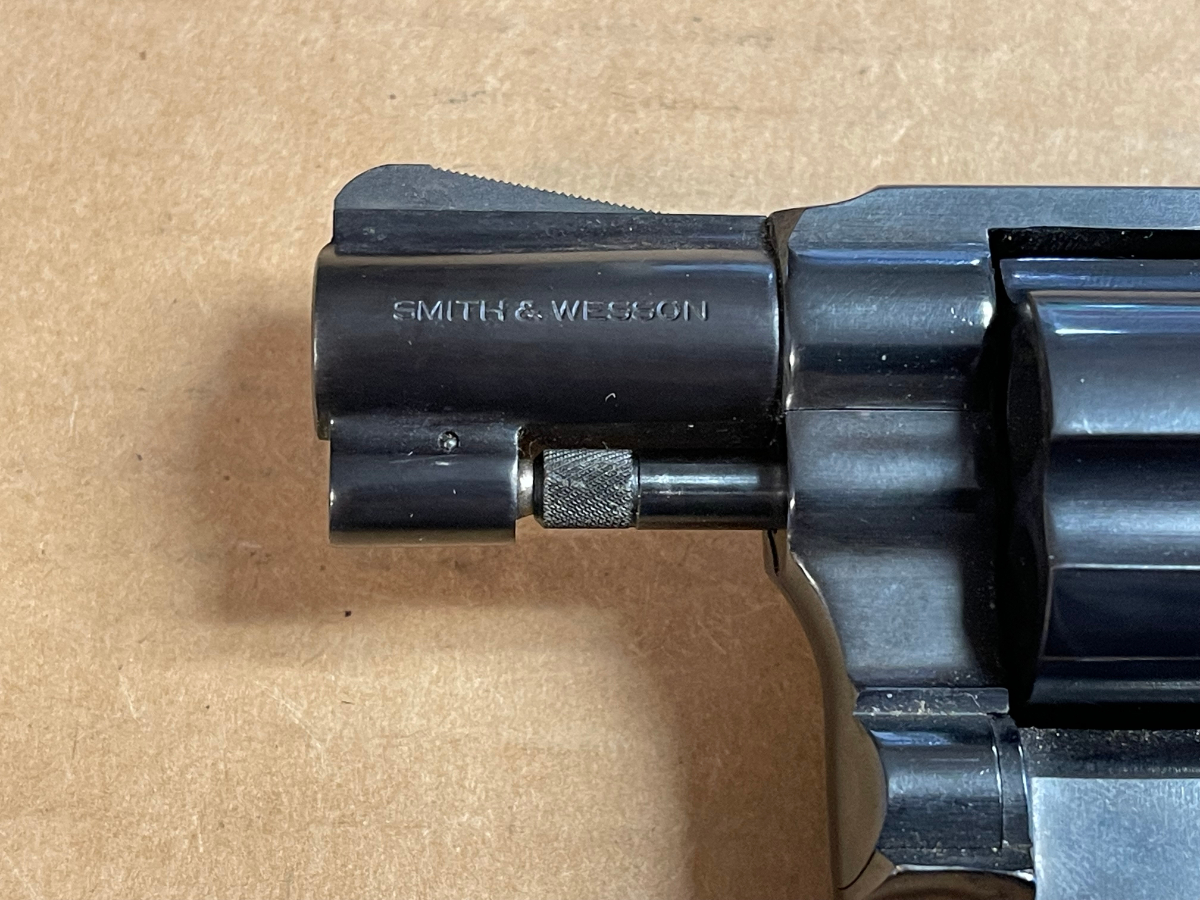
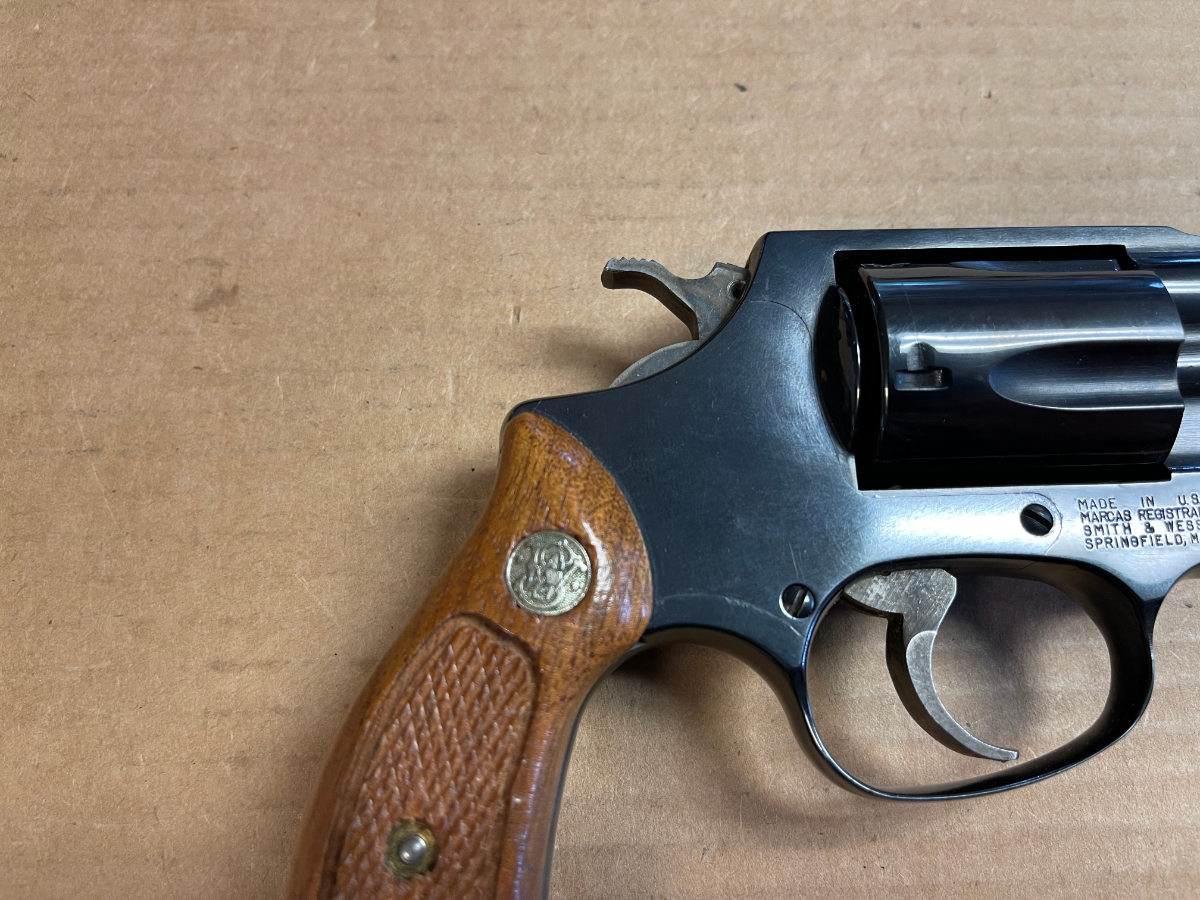
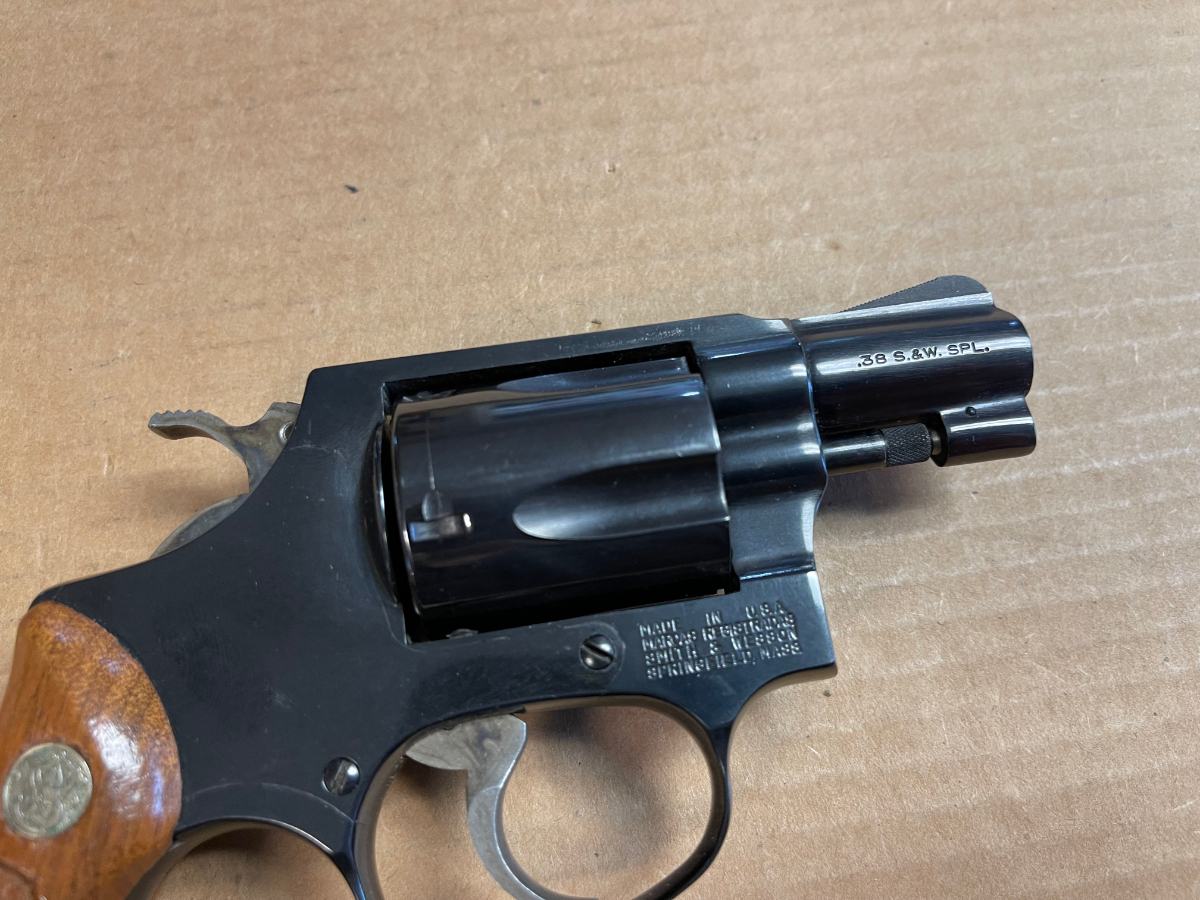
We often make the mistake of thinking knockoff goods are a modern problem. In fact, one of the most well-known firearm brands still carries an interesting reminder of a time when its counterfeits saturated the market. On the side of every modern-era Smith and Wesson revolver, you’ll find what collectors call the “four line” rollmark. The first line reads: “Made in U.S.A.” The final two read: “Smith & Wesson” followed by “Springfield, Mass.” But somewhat oddly, the second line is Marcas Registradas. It’s a Spanish phrase translating to “Registered Marks.”
To understand how the line came to be, I call your attention to the “Spanish clones” of the old .38 Hand Ejectors — the parents of the venerable “Model 10” revolver S&W still sells today. My clone, technically known as an Armero Especialistas, “Alfa” model, proves to be an especially fascinating chameleon.
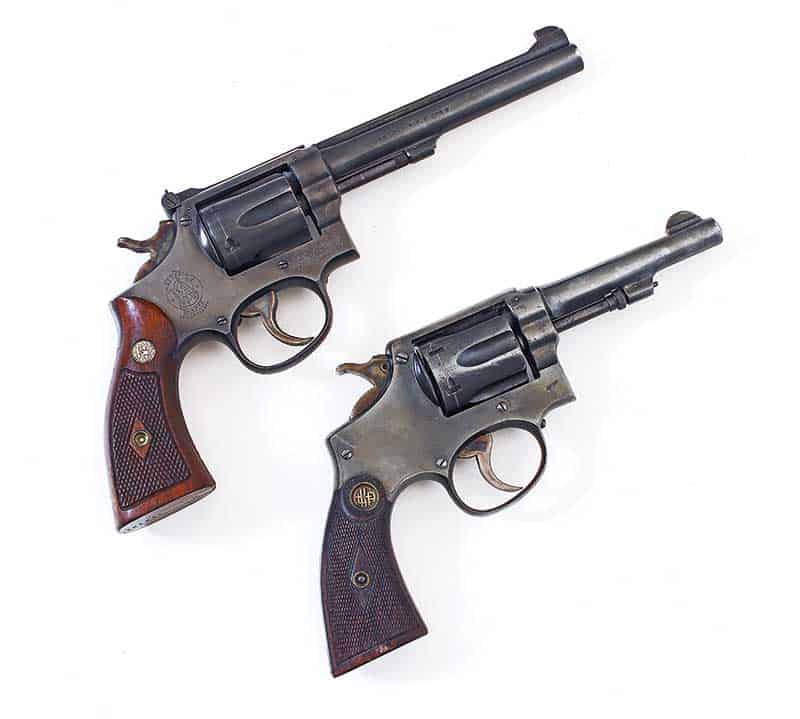
The Alfa below a K-Frame S&W. A convincing fake, no?
History Lesson
Around the turn of the 20th century, Smith and Wesson’s flagship K-Frame became big news and big business for the Springfield firm. Innumerable Spanish competitors decided they wanted in on the action and began producing a bewildering variety of blatant copies in an effort to meet demand for the awesome guns — and undercut the existing market.
Naturally, S&W found out about this skullduggery and attempted to put a stop to things. While they had some legal success going after American importers on the grounds they were intentionally attempting to defraud consumers, the sovereign nation of Spain essentially told them to pound sand — they didn’t recognize their American trademarks. S&W did eventually secure patents abroad but only after the knock-offs existed on the international market for several decades. S&W added the Marcas Registradas as a way of saying “Stop copying this design!” in a language its counterfeiters would definitely understand but by then, the damage was done.
So what to make of these guns as a whole? First, let’s start with the reality many of the Spanish copies were downright janky. On the low end, there are several design elements that stick out even to the casual observer as being not right at all. It’s common to find design details appearing to be sketched out from memory. Cylinder releases can be of strange teardrop or circular contours, dimensions can look squashed or stretched and often hammers tend to have unusual shapes.
Hilariously, some rollmarks claim the guns are made in “Sprangfeld, Mus.” Others attempt to vaguely match the iconic S&W “Trade Mark” logo with a blobby, sloppily rollmarked forgery. Often, the substandard finishes have worn completely away in the last hundred years and metallurgy is so questionable firing the guns is generally regarded as a bad idea. There are many, many unconvincing fakes.
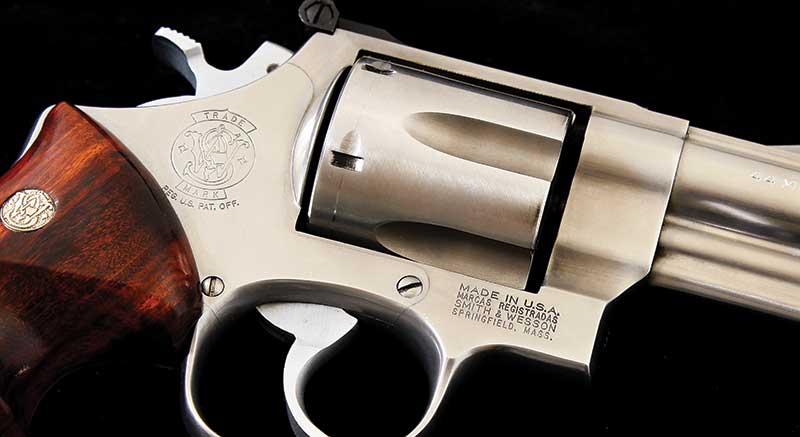
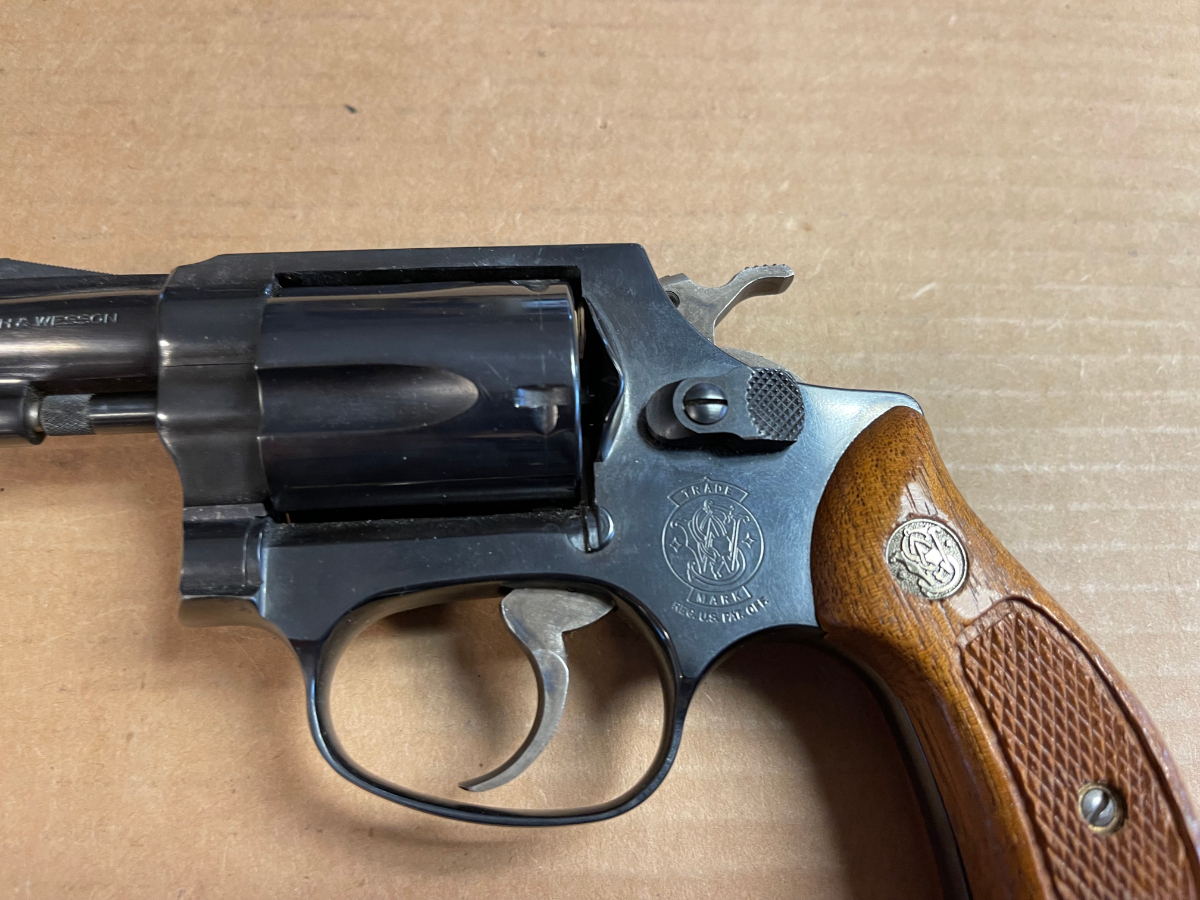
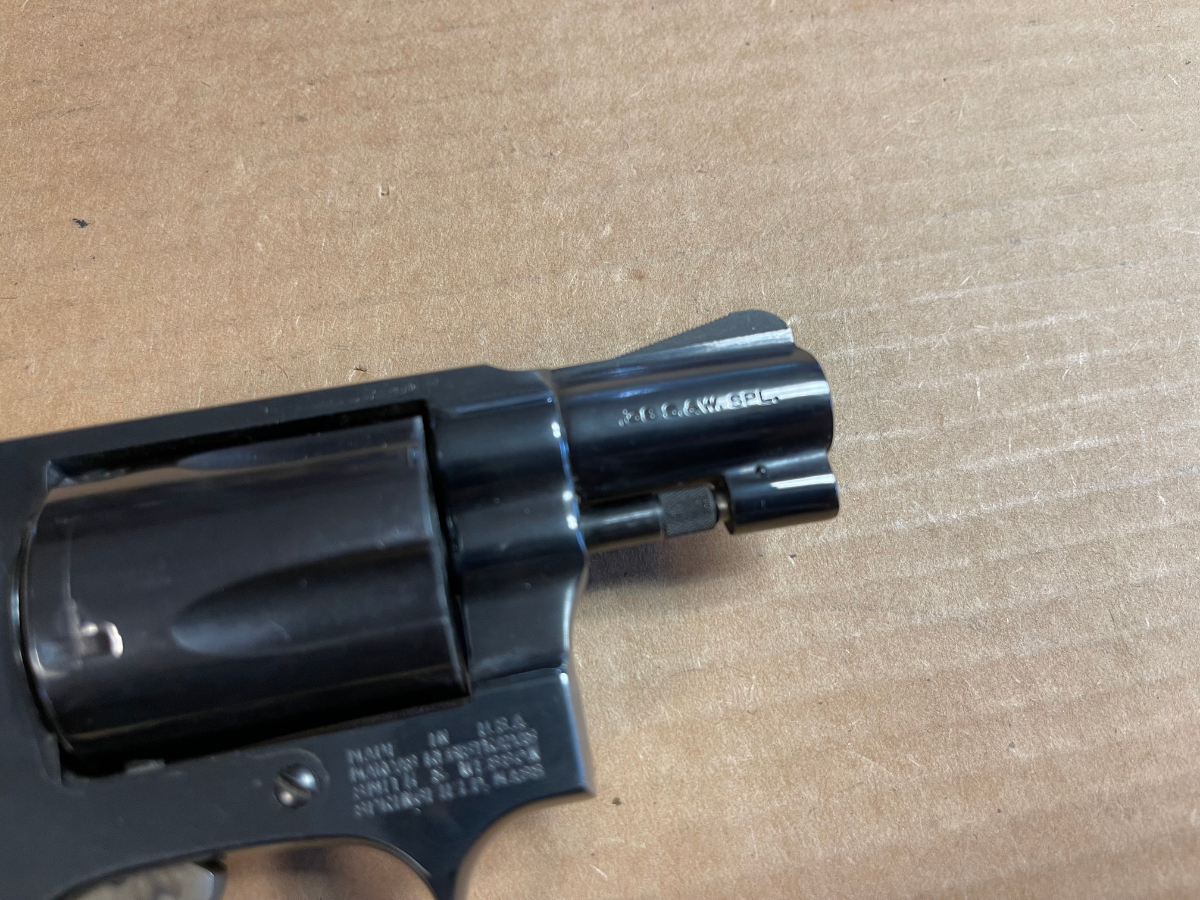
The infamous Marcas Registradas, still present in modern-make Smiths.
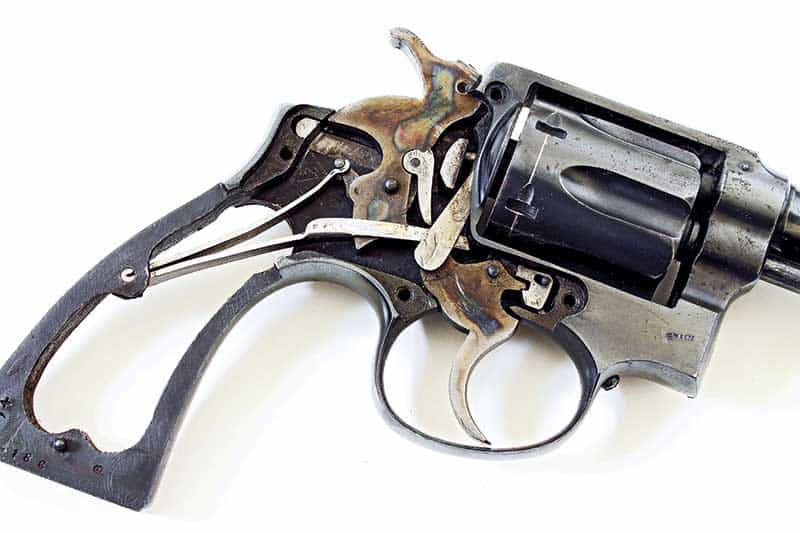
Internally, the Spanish clones are more Colt than Smith, with a massive
V-spring powering the lockwork — and making for a horrific trigger pull.
Some Aren’t Bad
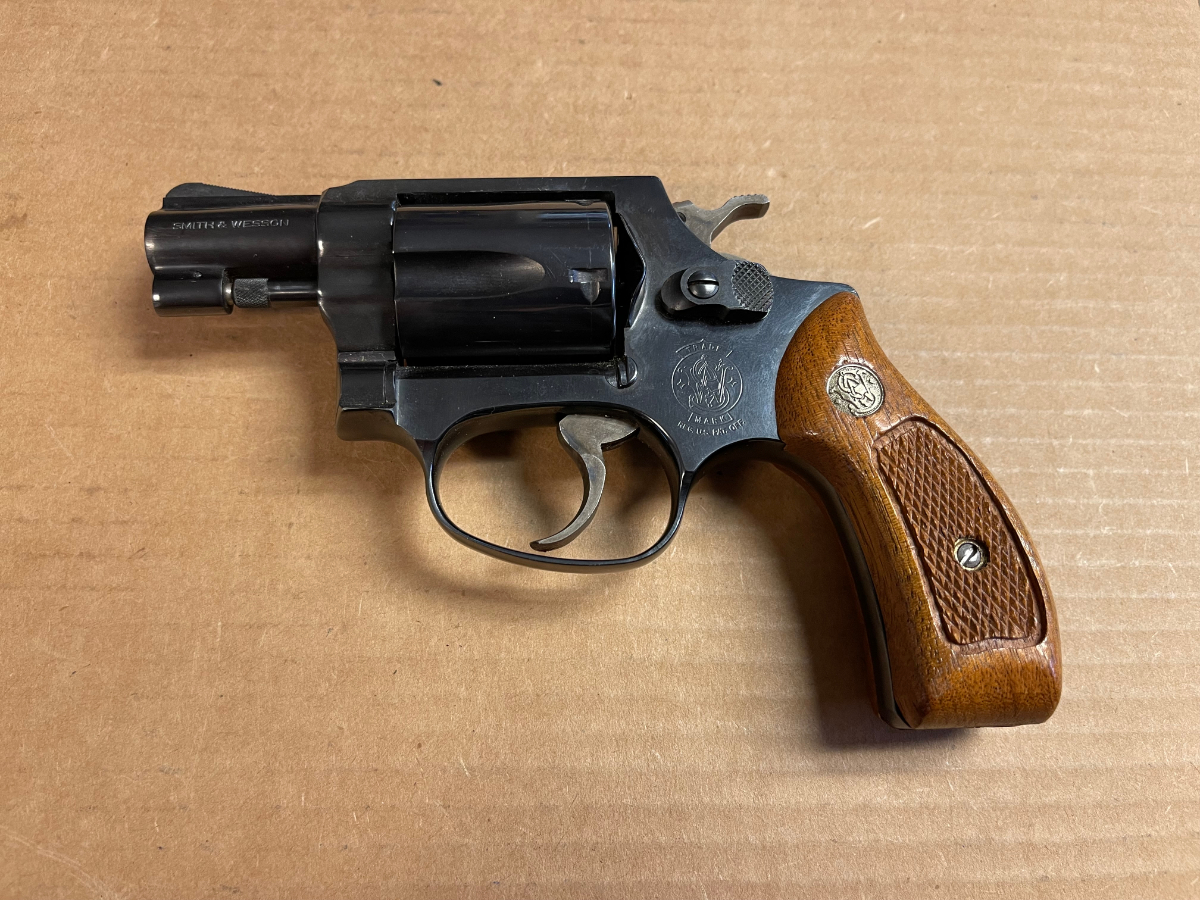
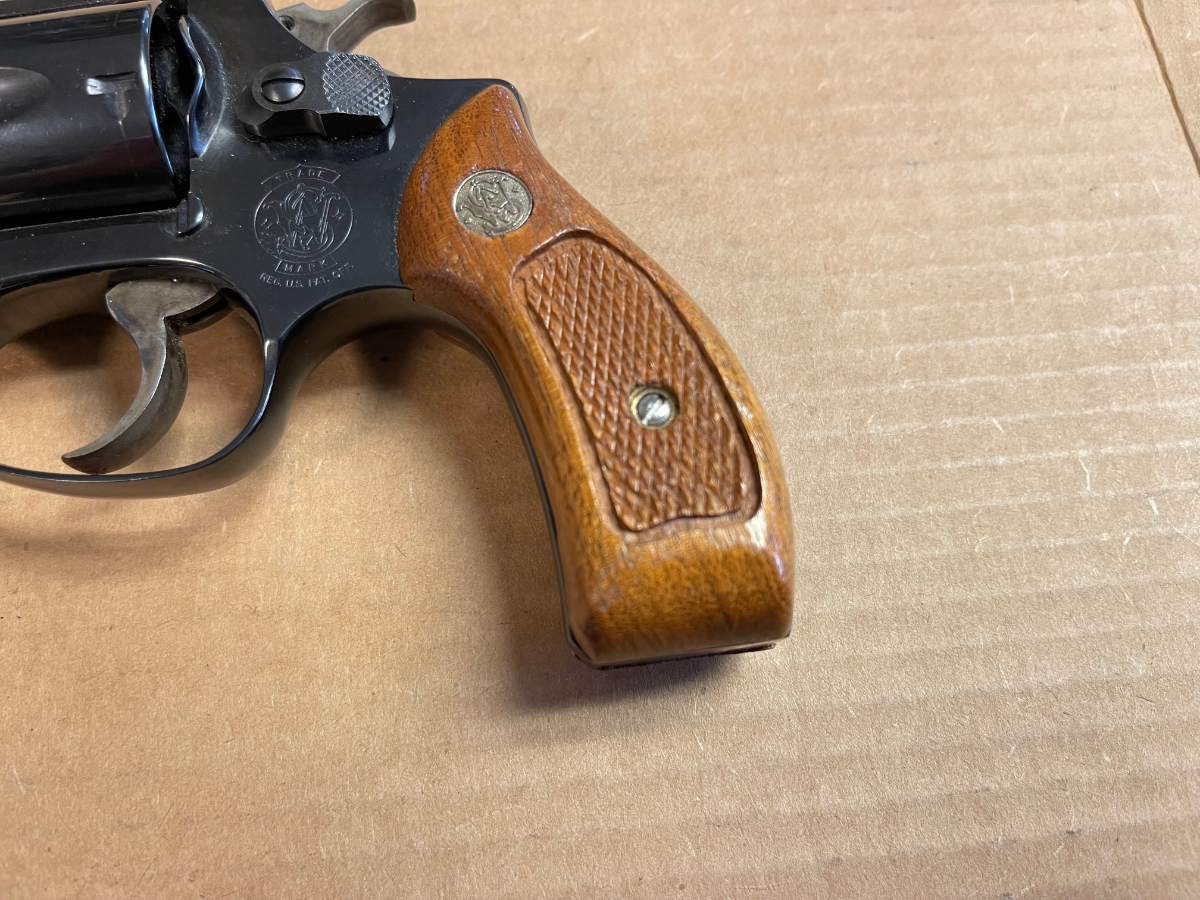
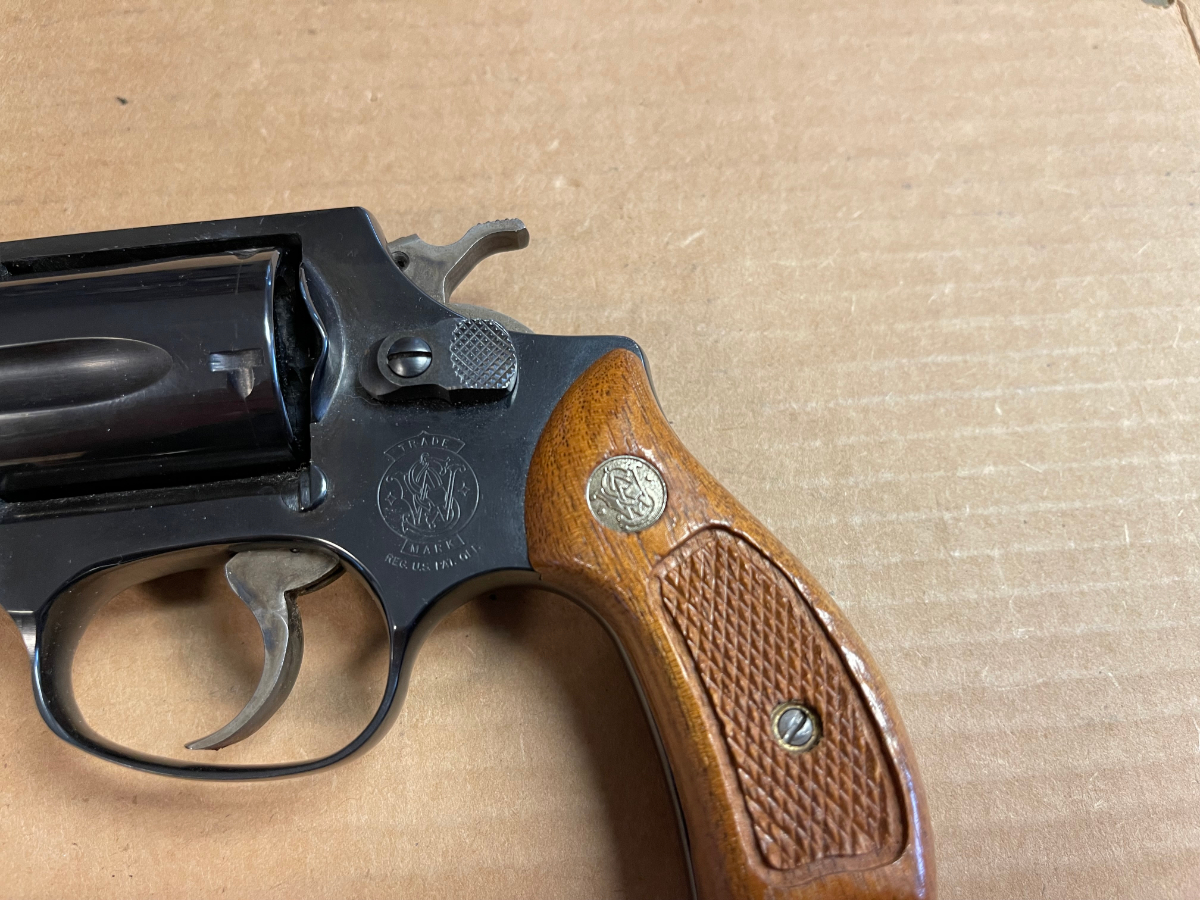
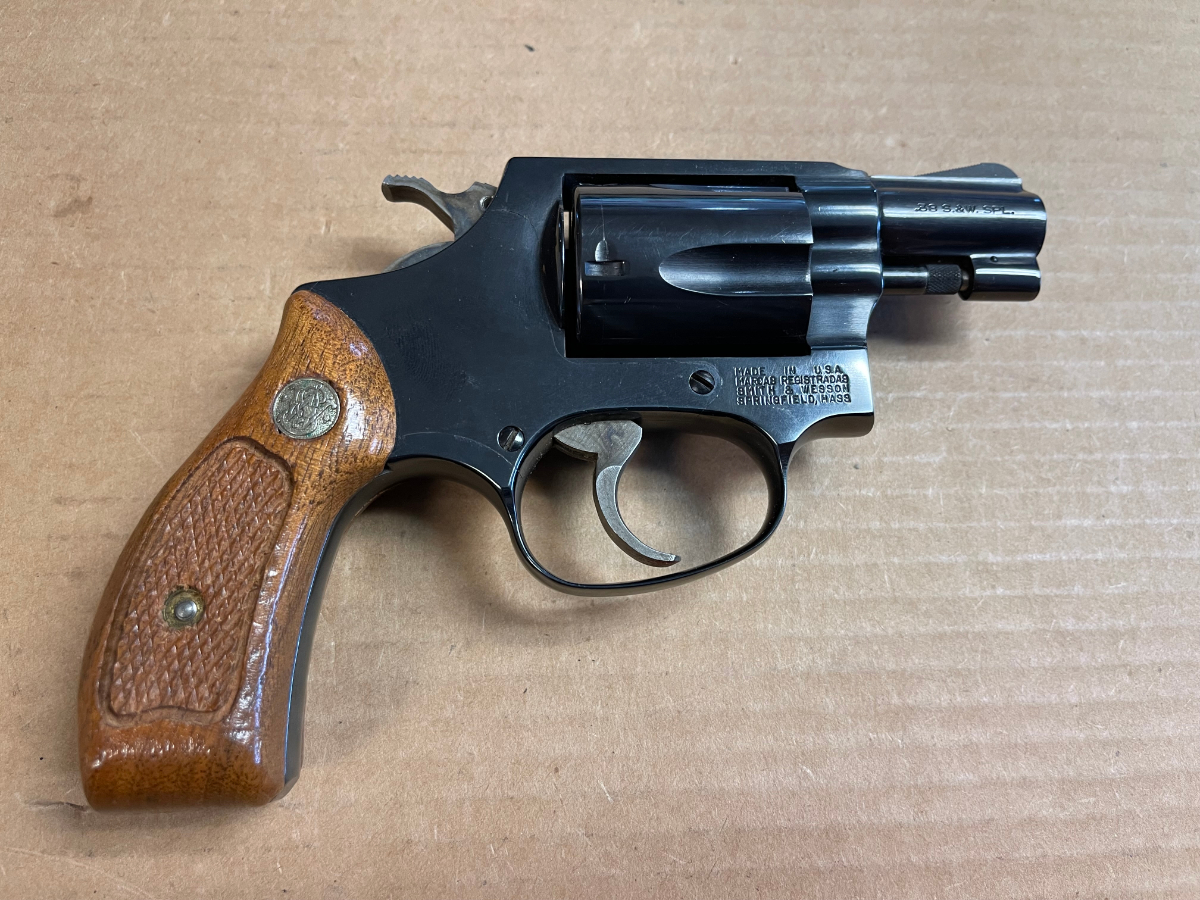
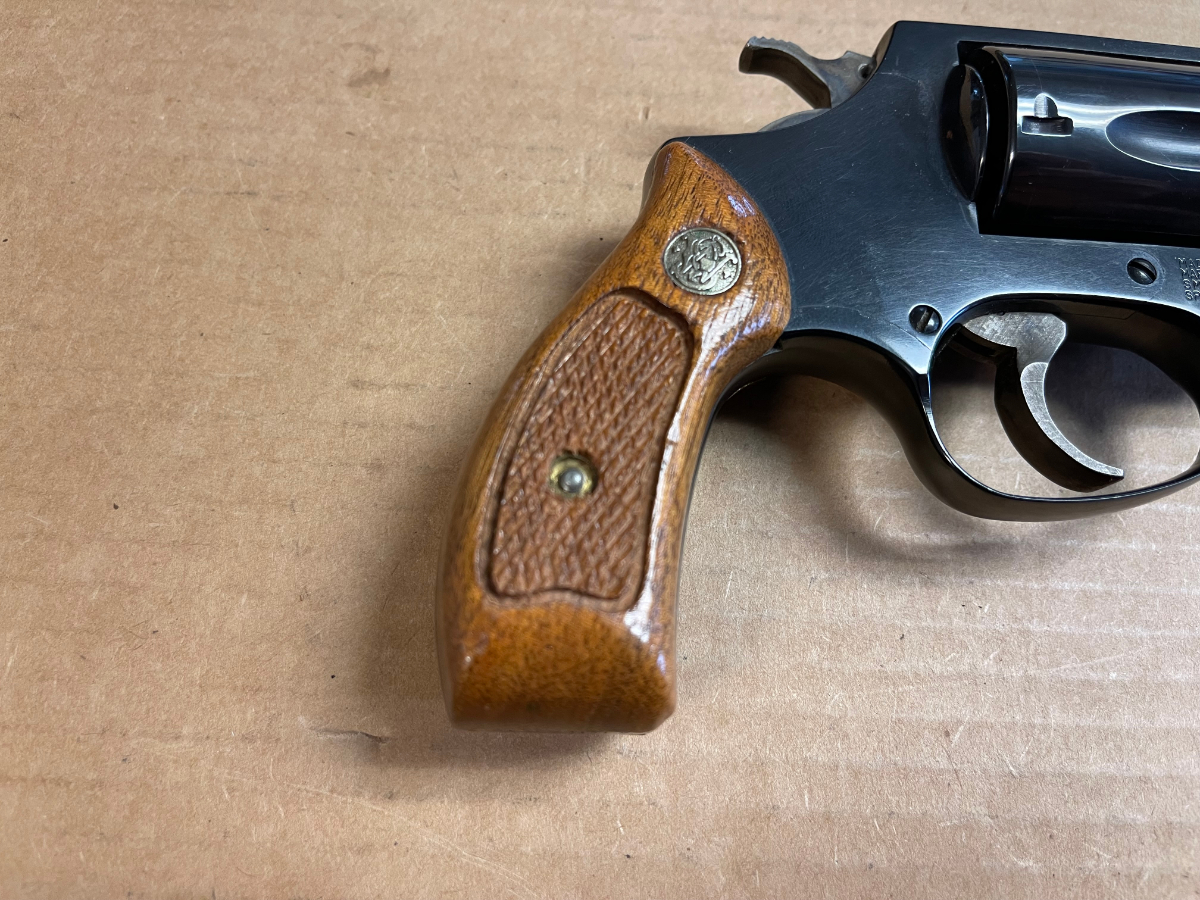
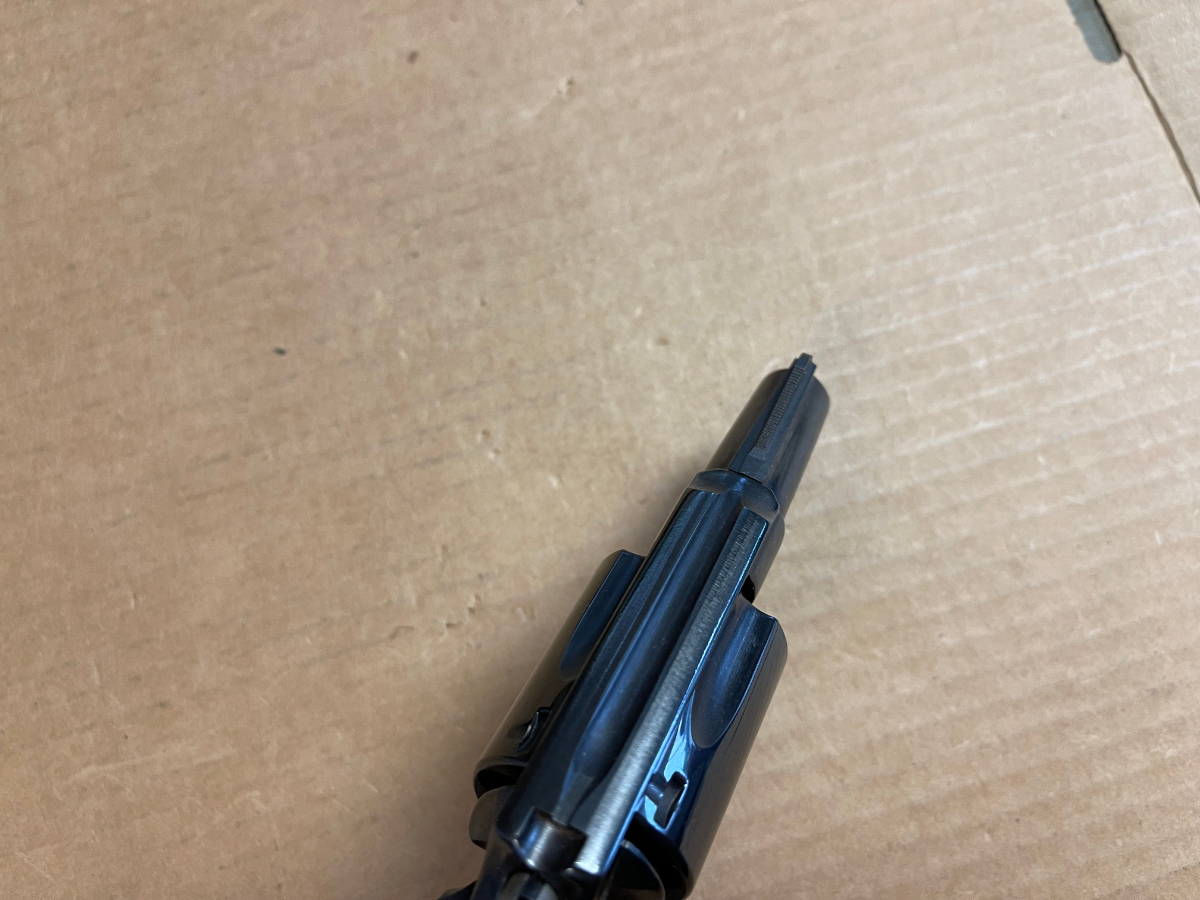
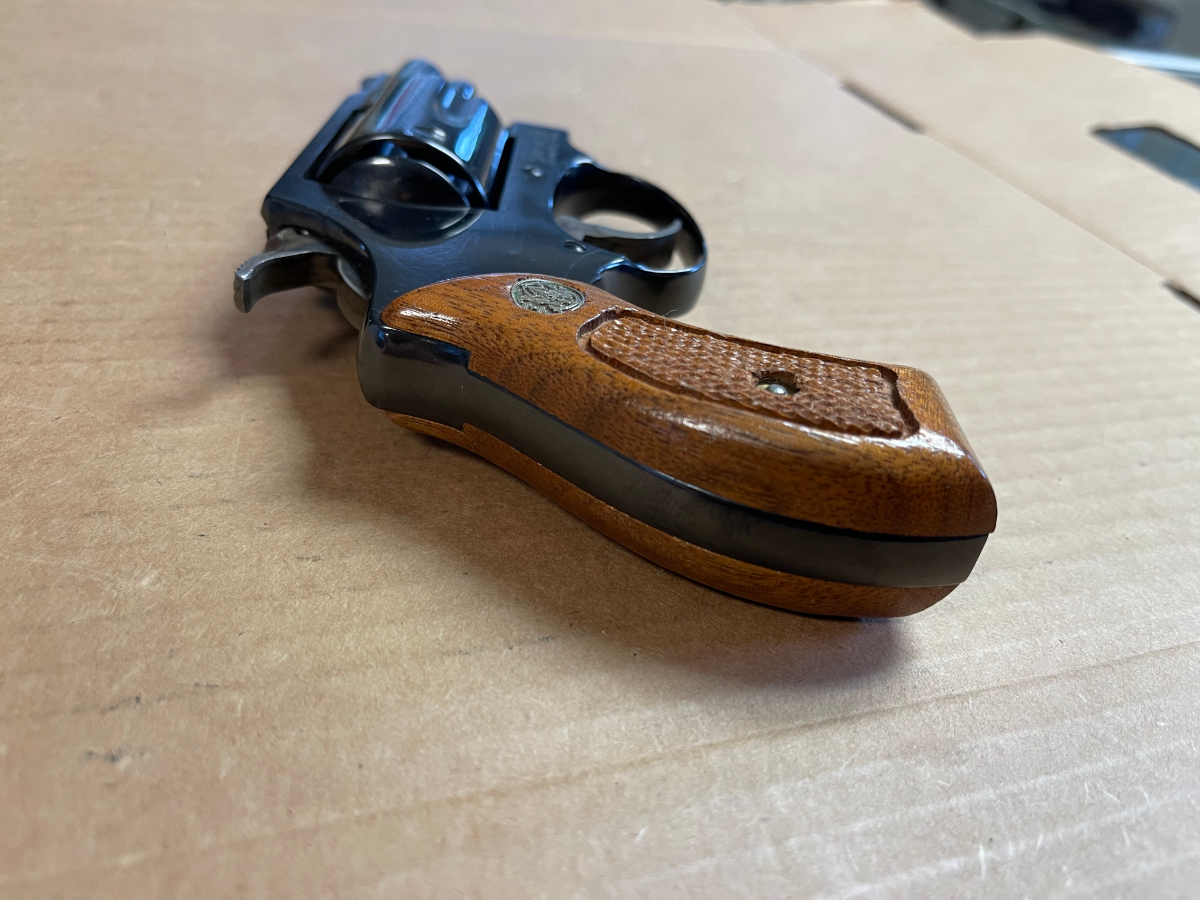
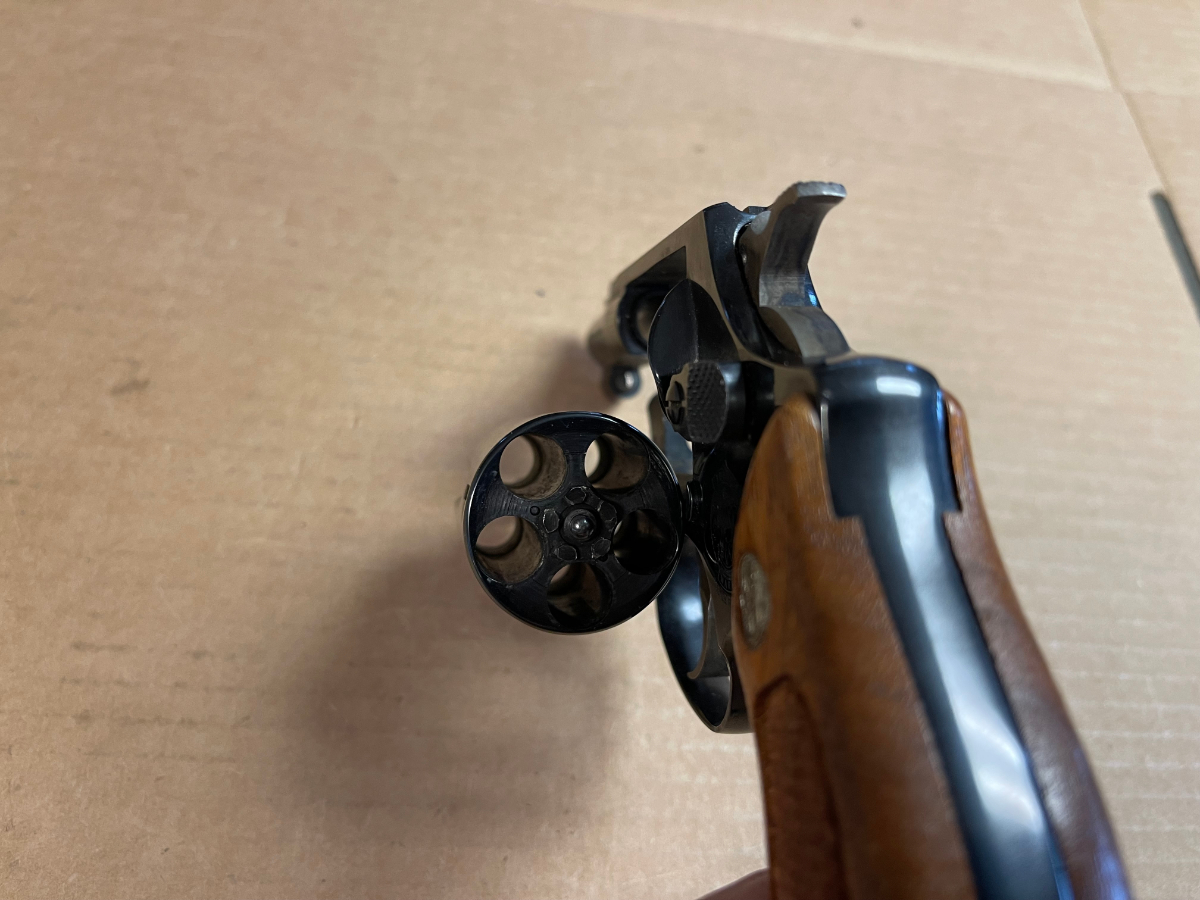
This “Alfa,” however, is a pretty damn successful copy. Every signature contour of the Smith-pattern revolver is mostly intact here down to the smallest of details. The front sight blade, ejector rod, hammer, cylinder release, grip shape, frame dimensions, screw orientation, sight groove and frame detailing are all basically dead ringers for the real thing — it’s almost insidious, really. The barrel appears to be pinned and the quality of walnut stocks are top notch. Even the machining on places like the cylinder ratchet, hand and lockwork is pretty good, and the bluing looks great for being about a century old!
With all this in mind, it helps to remember Spain has a rich history of firearms production stretching back centuries. Consequently, a lot of gunmakers weren’t exactly banging rocks together when they made these guns. There’s clear craftsmanship here — even some “improvements.” For example, many of the Spanish copies used a single beefy V-Spring — not unlike a Colt — in place of three separate springs on the original S&W design. On paper, this made the design slightly less fragile, and in theory, better-suited to military service. The French government went so far as to order many “Spanish Model 92s,” as they were then known, as fighting handguns during World War I.
This robustness, however, has a clear cost. While just about any S&W revolver has a pedigree of being something you can pick up and shoot quite easily, the trigger on this copy flat-out sucks. The double-action mode is easily on par with the worst revolvers I’ve ever shot: the V-Spring stacks for days at the end of an already-stiff travel. But even more impressive in its awfulness is the single-action trigger, which is just as heavy. Mechanically, one spring is both keeping the hammer under tension and pushing the trigger forward, whereas on legitimate S&Ws these are two separate jobs parted out to separate springs.
The effect is a single-action trigger pull in the vicinity of 11 lbs. Yes, 11 lbs. It’s definitely over the 10-lb. limit of two separate trigger gauges I have laying around so the additional pound represents a conservative estimate. I’ll note I can’t attest to mechanical accuracy of the gun: Given my nagging concerns of the metallurgy of any Spanish clone, even one as seemingly well-built as the Alfa, I’ll likely never shoot it. However, given the horrendous trigger, I doubt I’d be fruitful in obtaining any trustworthy data related to how it groups. Also — I have actual Smith and Wessons more deserving of range time.
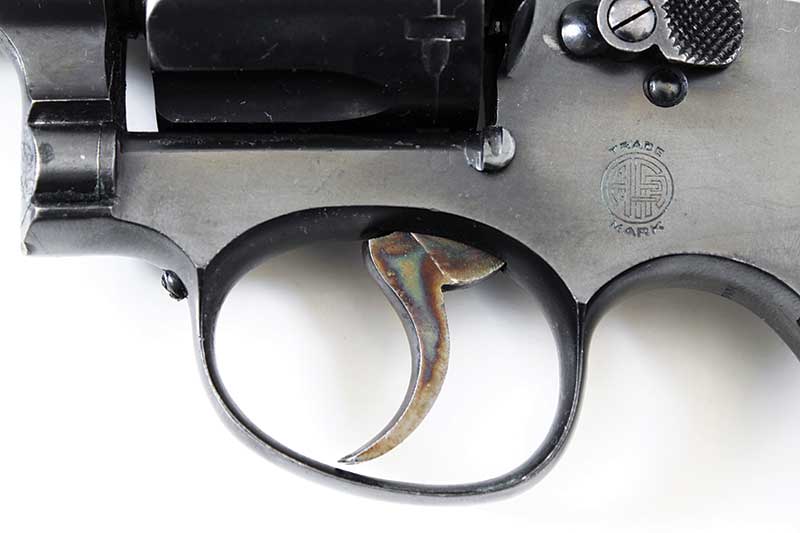
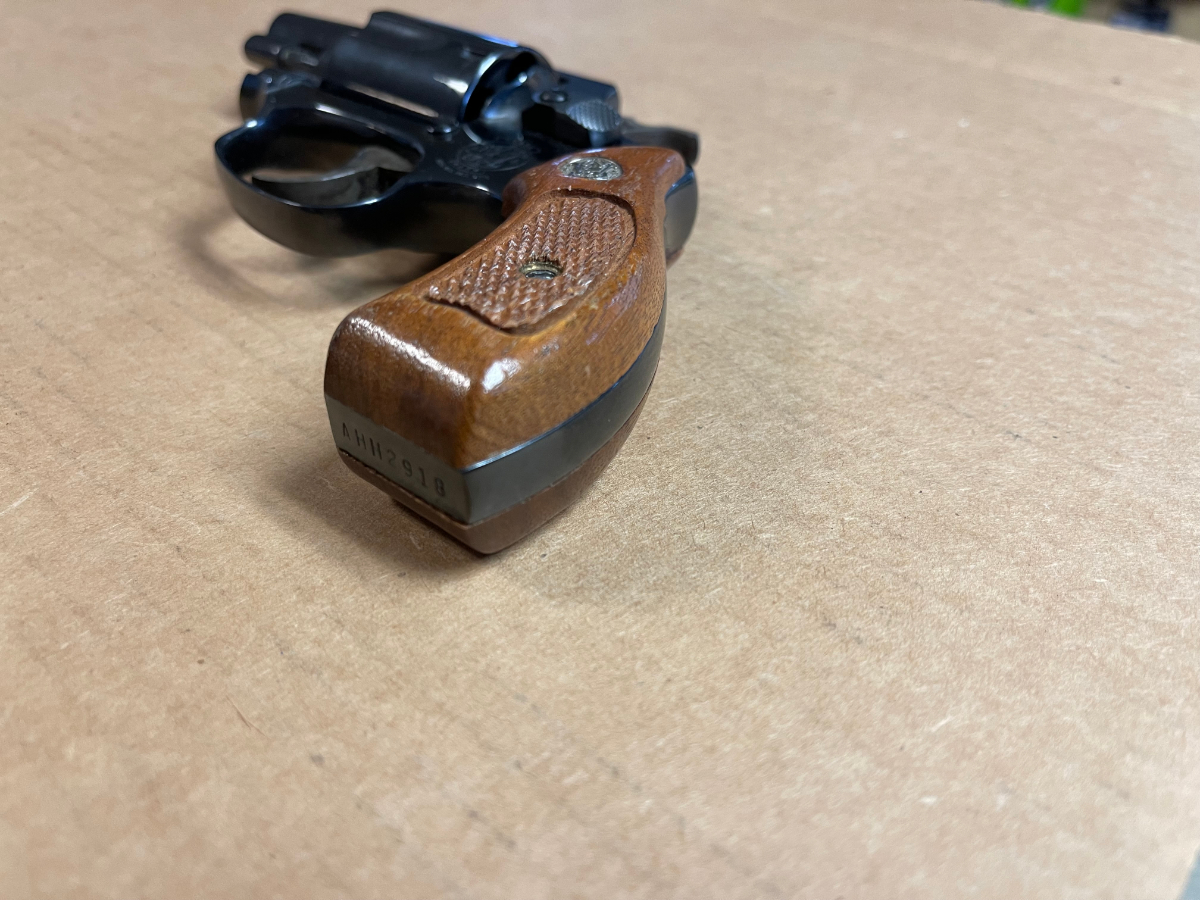
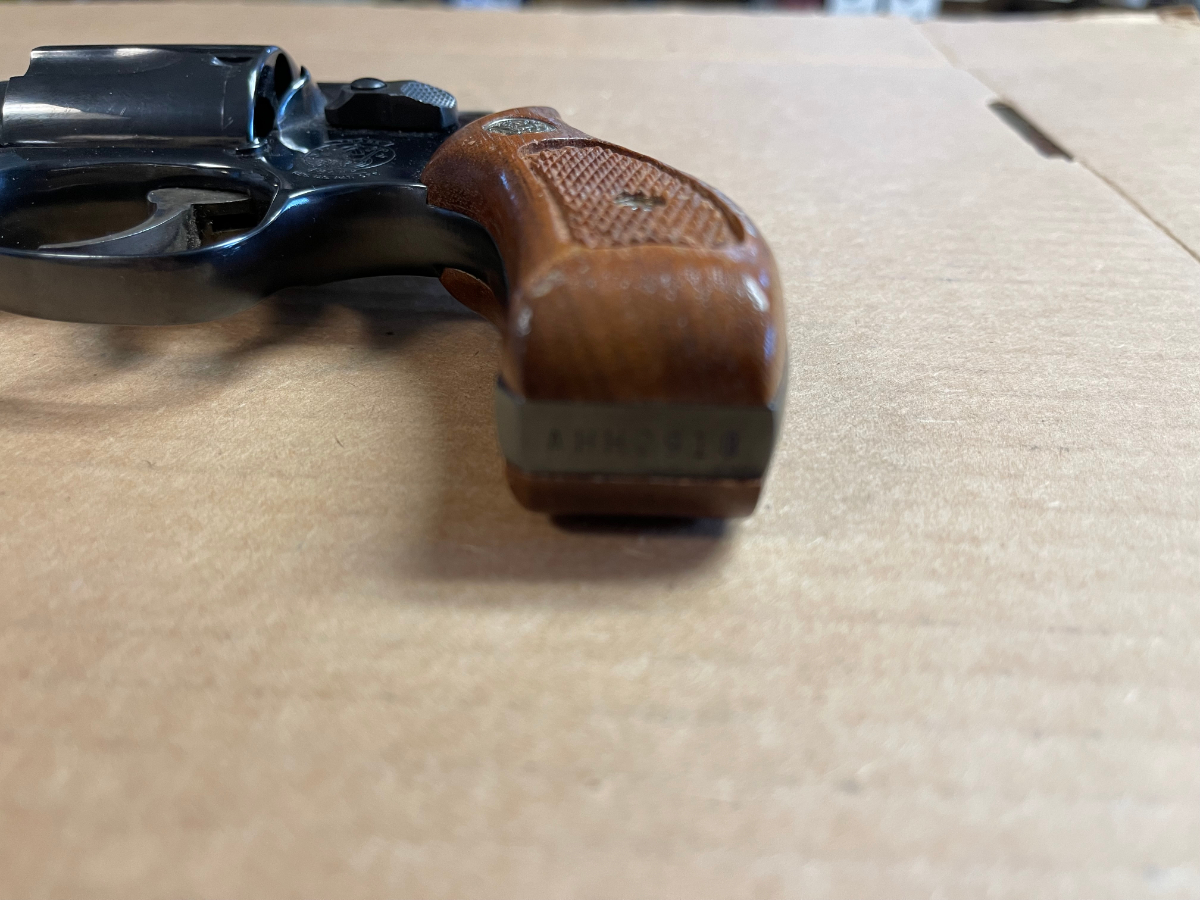
Surprising quality details abound on Clayton’s Alfa, like a case-hardened hammer and trigger.
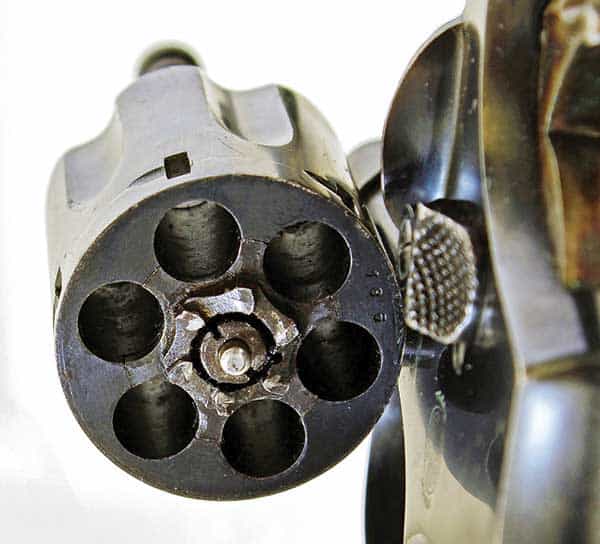
Non-visible machining is decidedly inferior, evidenced by this ugly, rough ejector star.
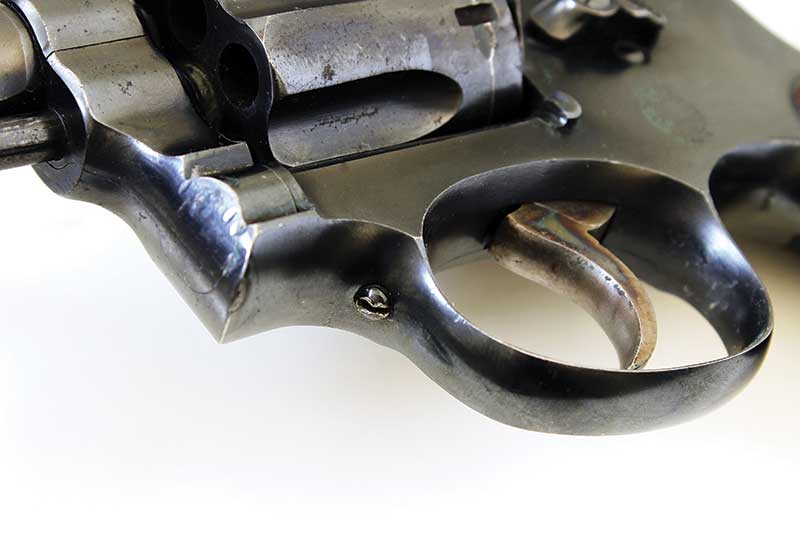
Brutalized screws can be tell-tale signs of softer steels, as much as “Bubba” gunsmithing.
Pop Quiz
Let me end by asking you this: Had I not told you this was a Spanish clone, would you have been fooled? Admittedly, I overpaid to get the best fake I could.
Some eagle-eyed S&W fanatics would have examined the grip logos and the slight, slight difference in the shape of the trigger guard and immediately suspected something was amiss from your standard five-screw M&P. Would-be sleuths also have the internet now, so it’s easier than ever to pull up side-by-side photo references of a legit gun to compare with the copy.
But say you’re a vaquero in the 1920s who goes into a local gun store looking for one of “those new Smith & Wesson revolvers,” and the guy behind the counter says, “Sure, we have those! And at a cheaper price than you were expecting!” Or, maybe you’re an American shooter who wants one of these nifty double-action revolvers with a swing-out cylinder in .38 special. You know, just like the one you shot at your brother-in-law’s last summer — doesn’t the gun behind the counter look just like what you remember? Long story short, I imagine the tricksters at Armero Especialistas were extremely successful at cutting into Smith & Wesson’s business.
Today, the Spanish copies are little more than a historical curiosity. While I would certainly have no qualms taking a well-worn example of an actual S&W .38 Hand Ejector to the range or conscripting it for self-defense if it were all I had, the Spanish clones are a poor choice for sport or social work. That being said, I think every serious S&W collector should have one or two clones in their collection. They are fantastic conversation pieces, not particularly expensive and hearken back to a profoundly interesting time in the company’s history.
Categories