, Serial No. 3706. The rifle has been upgraded and overhauled multiple times during its service life. All that remains that was present during the test is the receiver.
Photos courtesy of authors.
Due to its impressive combat performance during the Second World War, Gen. George S. Patton dubbed the M1 Garand “the greatest battle implement ever devised.” That said, the Garand did suffer some setbacks over the course of its design, trial and ultimate adoption by the U.S. military. One of the most commonly held misconceptions of the entire process is the claim that the United States Marine Corps was entirely uninterested in a semi-automatic service rifle but finally came to adopt and love the M1 Garand and, with that, replace the time-honored M1903 Springfield.
One frequently repeated notion is that the Marines fought the adoption of the Garand because of a belief that it would waste ammunition and degrade their foundational “every Marine is a rifleman” ethos. The story goes: The “Old Guard,” who were more conservative and resisting change, delayed the adoption as long as they could. It wasn’t until after the Guadalcanal campaign in 1942, when Marines fought the Japanese alongside U.S. Army troops carrying the M1 Garand service rifle, that they saw the errors of their ways and left their M1903 bolt-action rifles in the past to adopt the new semi-automatic rifle.
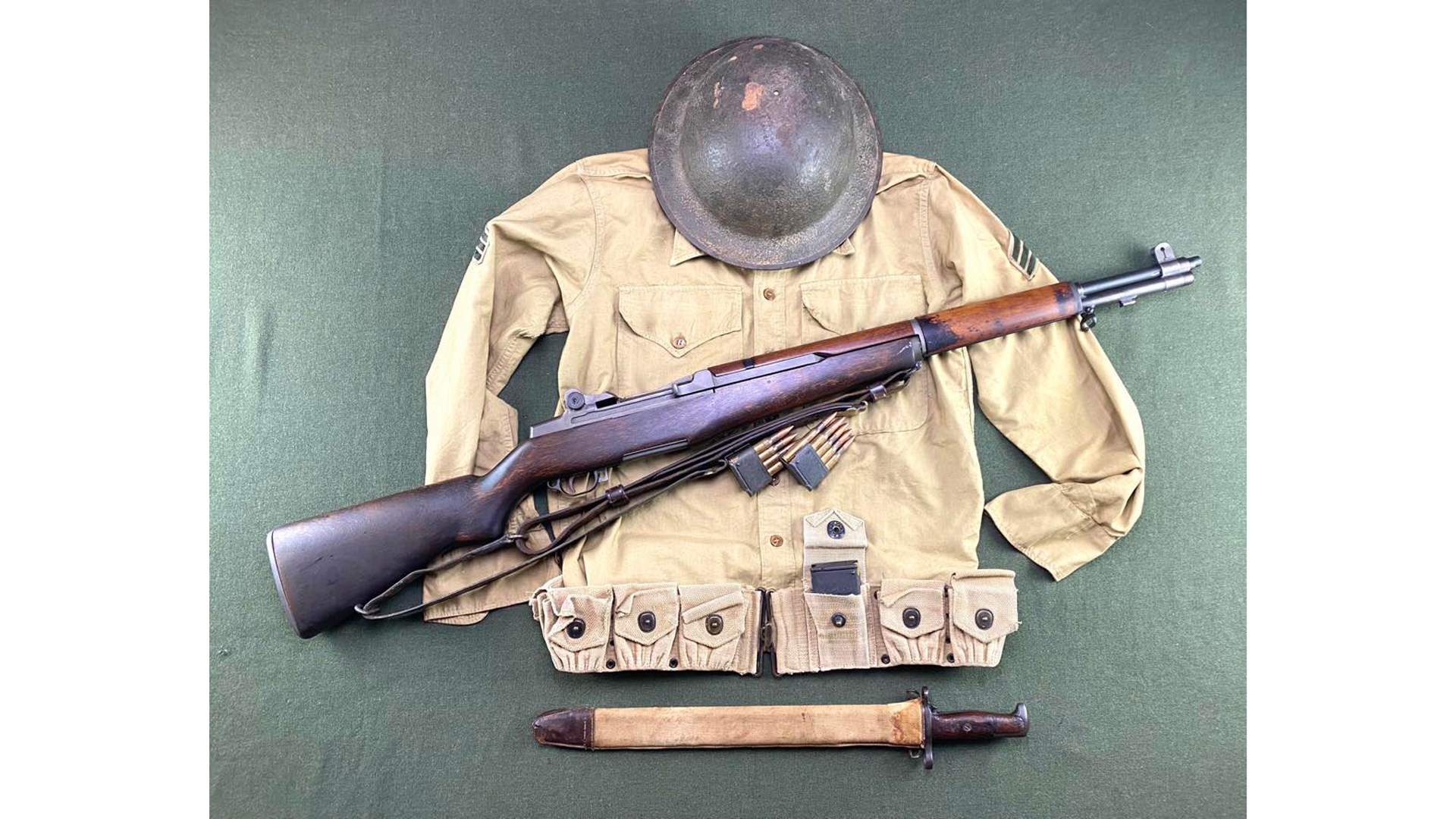
While it’s a plausible theory, especially given the historical conservative nature of military decisions makers, in truth, it is mostly apocryphal and certainly does not tell the story contained in primary source documentation at the National Archives. These documents show a more nuanced relationship between the Marines and the M1 Garand. The chief of ordnance saw the value of an infantryman wielding a semi-automatic rifle against an enemy that would likely field a bolt-action rifle. One of the earliest accounts of this is suggested at Springfield Armory in 1902. However, at that time, they could never get it to work correctly. Even during the First World War, the U.S. Army continually looked for the technological edge on the battlefield in the hands of the rifleman, even investing heavily into the ultimately unnecessary 1903 Mark I and M1918 Pistol (Pedersen Device).
Although that project will go down in U.S. military history as a colossal failure, it didn’t stop the U.S. military. In the early 1920s, two prominent designers were the front-runners in designing the next U.S. infantry rifle on a semi-automatic platform. Those were John D. Pedersen and John C. Garand. Ultimately, John Garand would win the competition, but his story with the Marine Corps is complex.
Initial Interest and Orders
Through the Department of the Navy, the Marines’ interest in the M1 Garand predates the jungles of Guadalcanal by a decade. In 1932, Secretary of the Navy Charles Francis Adams III suggested field trials of John Garand’s experimental semi-automatic rifle (T3E2) chambered in .276 Pedersen. He mentioned that the final test of any tool is its performance in combat. Owing to that fact, he suggested that Nicaraguan National Guard Detachment, which is composed of personnel of the Marine Corps and is frequently engaged in combat in that area, would perform a suitable combat trial. He requested 10 of these rifles with 30,000 rounds of ammunition to conduct a test. General Douglas MacArthur issued a reply in March 1932 that such a test could not be authorized. It should be noted that this predates the adoption of the Garand in .30-06 Sprg., and this suggestion was made while the Garand was still chambered for its original .276 cartridge.
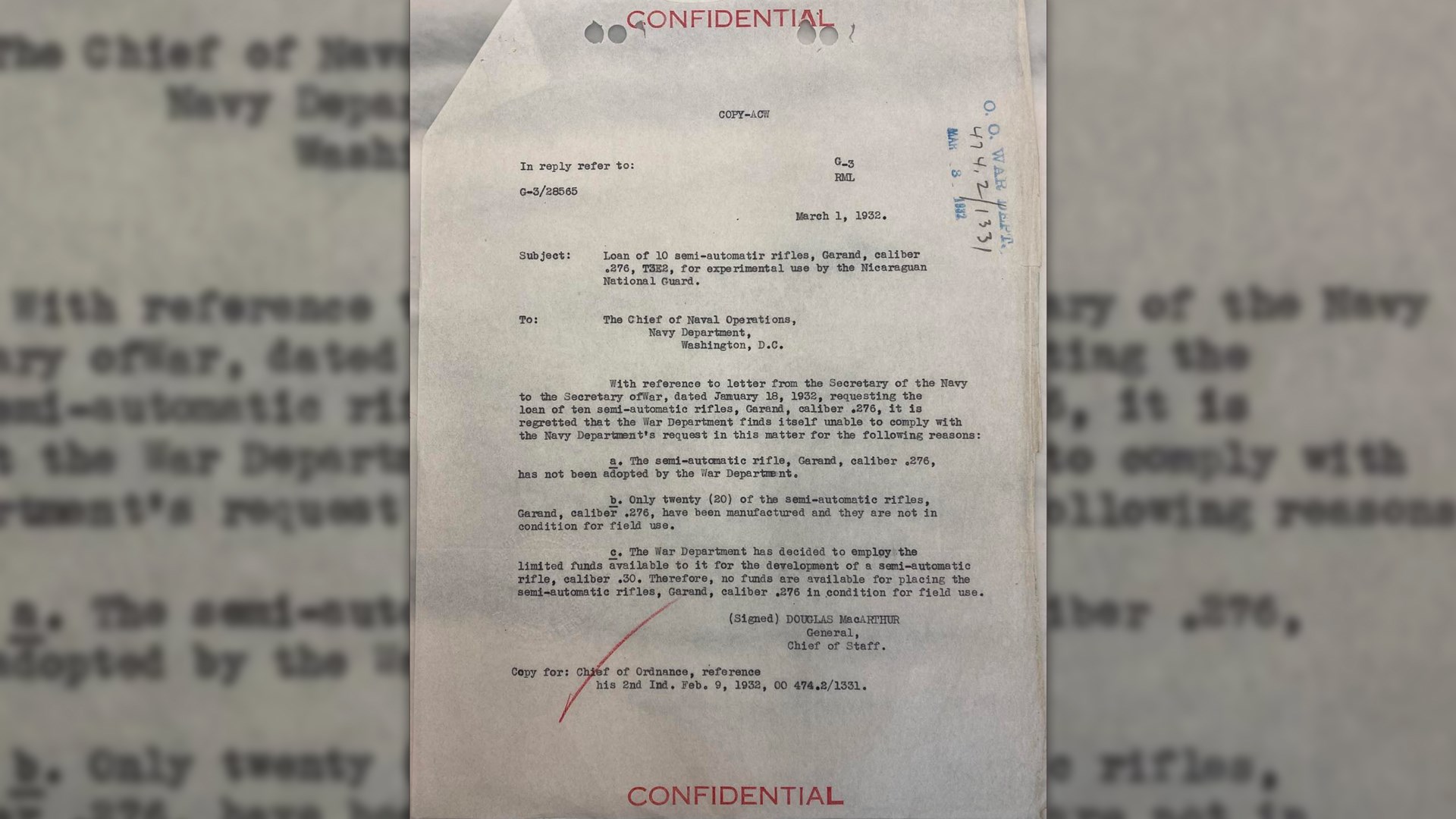 General Douglas MacArthur denies the Marine Corps field test of the Garand semi-automatic rifle (T3E2) in .276-cal. Photo courtesy of Archival Research Group.
Although the request was denied, the Marines’ interest in the Garand persisted. On Oct. 3, 1935, Victor H. Czegka wrote to Maj. Julian Hatcher of the Ordnance Department that he intended to visit Springfield Armory with Melvin Johnson, a reserve officer of the U.S.M.C. at the time. Specifically, they mentioned they would greatly appreciate the privilege of viewing the new “Garand gun.” It should be pointed out to the readers that Johnson and Czegka were both active in the firearms industry at that time, with Johnson later developing the Johnson Automatic Rifle (itself being eventually evaluated and fielded by the Marine Corps), and Czegka winning the prestigious Wimbledon Cup, a celebrated long-range shooting event. They were well-known personalities, yet on Oct. 10, Lieut. Col. S. H. MacGregor denied their request with a simple “permission can not [sic] be granted to you to examine this weapon.”
The Marine Corps’ persistent interest would continue into early 1936 when the commandant of the Marine Corps placed an order with the chief of ordnance for:
“400 rifles, U.S., semiautomatic, caliber .30, M1, complete with spare parts, equipment common to the caliber .30 M1903 rifle, and except that only four clip-loading machines should be supplied.”
This order amounted to $44,400 plus $100 shipping and handling. This price was later amended by the Paymaster General of the Navy Department to $54,100.00 (with the $100 shipping charge). To add context, this would reflect a price tag of $1,180,714.99 ($2,182.47 shipping and handling) adjusted for inflation to the year 2023.
The first 100 M1 Garand rifles were received at the Philadelphia Depot on March 12, 1938, and retained, awaiting further instructions by the quartermaster of that depot. The following month, on April 8, 1938, Lt. Col. S. P. Spalding wrote the quartermaster of the depot, noting his verbal request that all 400 rifles be provided at approximately the same time. Because of this, and because the Army urgently needed the rifles, it was agreed upon that the U.S.M.C. would return those first 100 rifles to the Army, with 400 rifles earmarked for the Marines after June 30, 1938. On April 22, a memorandum was drafted indicating that the 100 M1 Garand rifles were shipped to the ordnance officer at Fort Benning, Ga., by the Merchant’s Mining Company on April 11th. The Marines’ opportunity to test a semi-automatic rifle would have to wait.
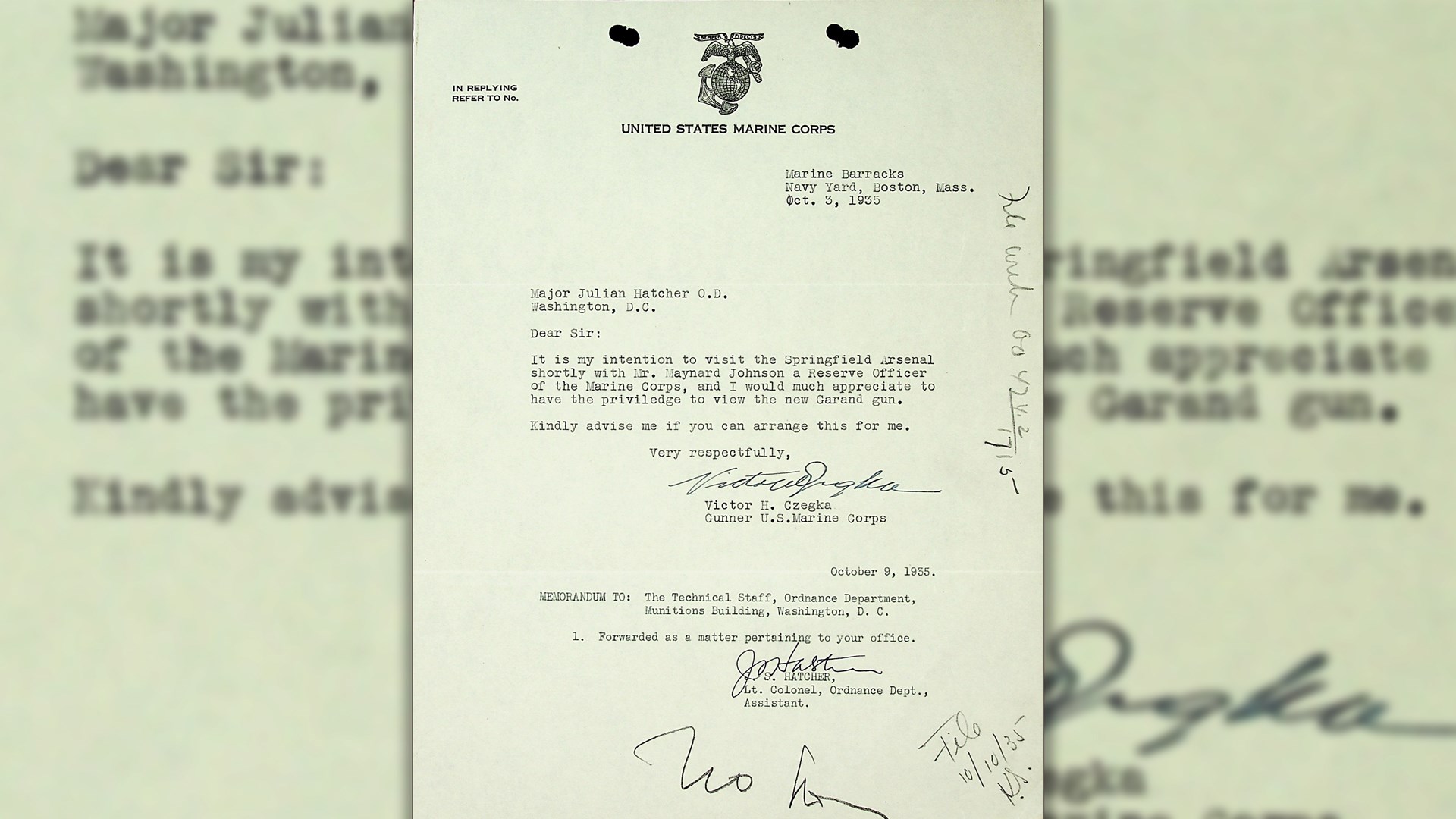 Victor H. Czegka with Melvin Maynard Johnson eagerly requesting permission to see John Garand’s new rifle semi-automatic rifle. Photo courtesy of Archival Research Group.
The Ordnance Department finally sent some much-awaited news that they would ship 398 rifles to the U.S.M.C. Depot of Supplies on Sept. 15, 1938, and that two rifles had been sent to Marine Corps schools in Quantico, Va., earlier that month. Army Ordnance also wanted to make the U.S.M.C. aware of the long list of difficulties accompanying the rifles and their testing. One of the primary issues was that the standard cleaning rod used was too long. Because the rifle had to be cleaned from the muzzle instead of the breech, it caused damage to the rear wall of the receiver and the head of the bolt, something that was being addressed with the production of a shorter cleaning rod.
Finally, on Nov. 19, 1938, the director of the Division of Operations and Training wrote to the commandant of the U.S.M.C. that a marksmanship and field test should be conducted to determine whether the new rifle, U.S., caliber .30, M1, should replace the M1903 Springfield rifle. He further noted that the current strength of rifle units in an infantry battalion of the Fleet Marine Force (FMF) is approximately 255 enlisted men (armed with the rifle). Owing to the fact the number of rifles ordered (400) provided a sufficient number to equip the rifle units of one battalion, an additional platoon, and furnish several Marine Corps Schools and Basic Schools that, a distribution of the following should be made:
| 6th Marines |
300 |
| 5th Marines |
35 |
| Basic School |
35 |
| Marine Corps Schools |
10 |
| Depot of Supplies (for spares) |
20 |
| Total |
400 |
On Jan. 3, 1939, the commandant of the U.S.M.C. notified the commandant of the Marine Corps Schools at Quantico that they would receive 10 rifles from the Depot of Supplies, which includes two that had already been accepted. He further notified him that the school would be receiving the following:
- Essential parts and accessories.
- Basic Field Manuals for the U.S. Rifle, Caliber .30 M1
- Charts for Instruction
- 1,056 cartridges, ball caliber .30 M1, loaded on clips of (8) cartridges each (1 box containing 132 loaded clips).
The Basic School at Philadelphia would receive the same components above, except getting 35 rifles instead of 10 and 13,728 cartridges instead of 1,056. It was requested that reports be made and returned to the U.S.M.C. Commandant by June 30, 1940, and the reports should contain the following:
- Total ammunition fired.
- Rounds were fired from each rifle.
- Classes of stoppages, causes, and corrective measures for each rifle.
- Malfunctions or broken parts for each rifle.
- Injuries caused by rifles, if any, to personnel.
- A tabulation of firing results for experts, sharpshoots, marksmen, and unqualified personnel.
- Results of musketry and combat firing were tabulated and compared with similar firings done with the M1903 rifle and Browning Automatic Rifle.
- Accuracy of the M1 rifle as compared with M1903 and Browning Automatic Rifle
- Suitability or use in bayonet use.
- Simplicity of mechanical construction.
- Each and Simplicity of assembling and disassembling.
- The suitability of the sights.
- Fatigue from firing the M1 rifle as compared with firing the M1903 and Browning Automatic Rifle.
- Recommendations, if any, for correcting mechanical deficiencies of the rifle.
- Recommendations as to spare parts that should be furnished with each rifle.
- Does the M1 rifle perform satisfactorily in the capacity in which intended, namely as a replacement for the M1903 bolt action rifle?
- Any other information of pertinent nature is not covered above.
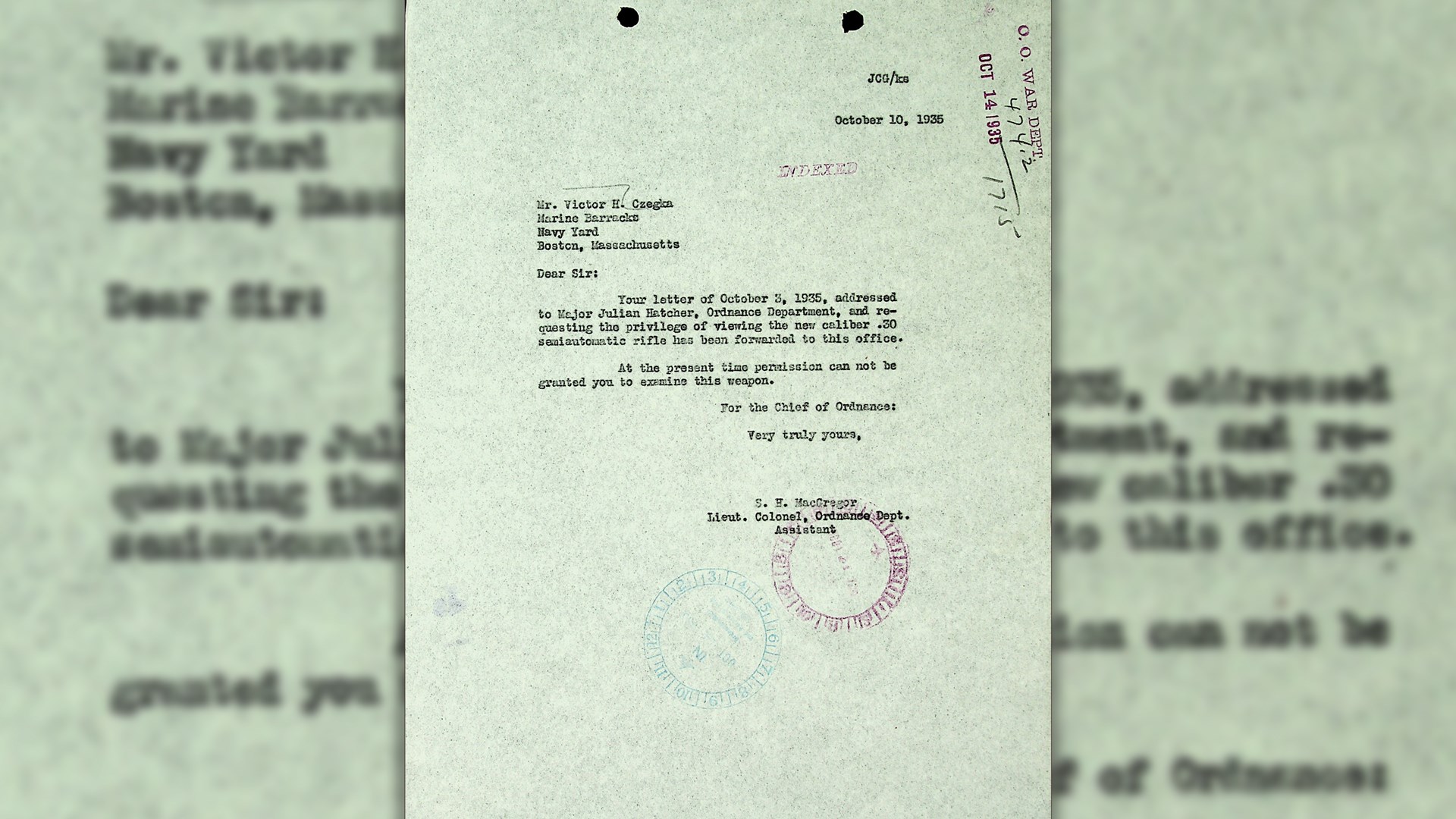 Lieutenant-Colonel MacGregor of the Ordnance Department very concisely gave Czegka and Johnson a curt “no” in their request. Photo courtesy of Archival Research Group.
By February 1939, reports came in from the 6th Marines, 2nd Marine Brigade and Fleet Marine Force in San Diego that many new rifles received had rusted (pitted) barrels when they were received. Reports of any defects were to be reported to the U.S.M.C. commandant at the earliest practicable date. On Feb. 17, 1939, the commanding officer of 1st Btn., 6th Marines, notified the U.S.M.C. commandant of the news. Specifically, he reported that 300 rifles had been received in new arms chests and were packed with heavy oil but not cosmoline. He described the following:
“In general, the rifles were found to be dirty and rusty. Large carbon deposits and powder fowling [sic] were found in the bores and also in the gas cylinders, and rust was noted on some working parts as well. The bores of the rifles were found to be badly pitted to the extent of about 1 in 12 rifles, slightly pitted in about 1 out of 2 rifles, and very slightly pitted in 1 out of about 6. Precisely of the 263 rifles issued and covered by the enclosures, the following conditions were found:
Badly pitted bore…………………….22
Slightly pitted bore……………………152
Very slightly pitted bore………………45.”
Later that month, the Marine Corps Schools at Quantico reported that the 10 rifles it received had no defects upon inspection. The Marine Basic School in Philadelphia noted that its 35 rifles had received prior inspection for defects; each rifle was disassembled and thoroughly cleaned. The barrels and chambers of all rifles were found to be free from defects. However, upon cleaning the grease from the bores, it was noted that the cleaning patches from several rifles came out very black, indicating these rifles had not been cleaned as prescribed and were lucky to escape damage.
The commanding officer of the 6th Marines, 2nd Marine Brigade FMF followed up with a previous report denoting that 13 of the 14 rifles sent to Philadelphia as being pitted and were found mechanically defective from “cuts, flaws and tool marks.” Eight of them were so defective as to be unserviceable. He further noted that a large percentage of the new rifles were not of the type of workmanship that his officers were accustomed to handling.
This parallels a previous report from the commandant, who had noted that Springfield Armory had experienced some issues in the quality of the steel stock purchased for the manufacture of the M1 rifle. The flaws encountered by the Marines in the finished product support this. He further noted that Springfield Armory informed him that it will take some time to adjust the new machines to the type of steel they are using. This accounts for some barrels with tool marks and occasional cuts in the bore. The M1 Garand was going through some significant growing pains before turning into the finished product that served admirably throughout World War II.
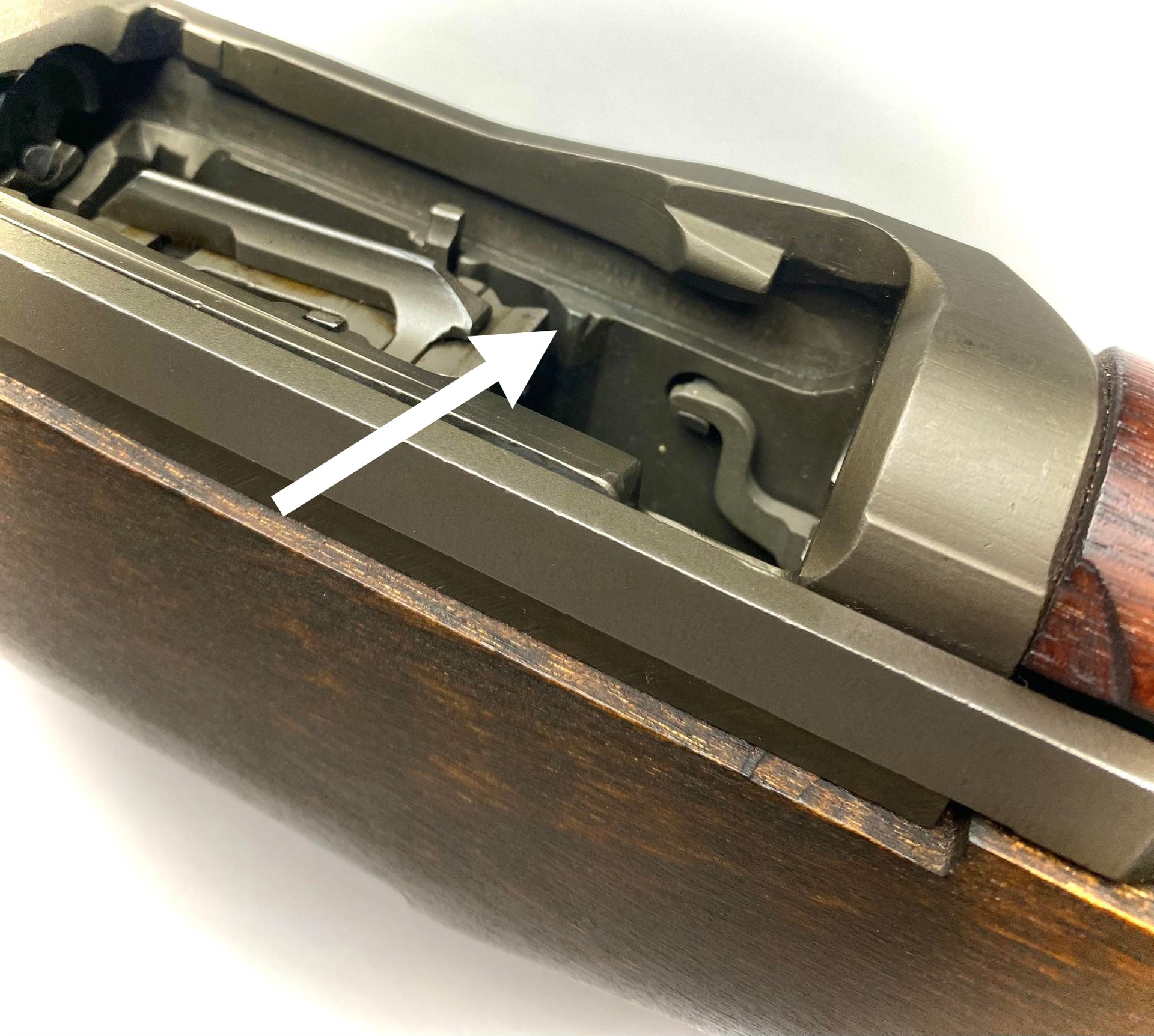 The modification (arrow) on the inside of the receiver showing the modification to fix the “7th round stoppage.” The discoloration on the “rib” showing where extra metal was welded to fix that problem
The situation would get even more complicated when the commanding officer of Co. B, 1st Batn., 6th Marines, 2nd Marine Brigade, stated that the rifles were carefully inspected upon receipt. He noted:
“All rifles were received with bores in a very dirty condition. They have the appearance of having been fired, then greased and packed without previously completing a course of cleaning suitable for prolonged storing. The bores were coated with a medium but sufficiently heavy coat of grease. The mechanical parts were dry, and in some cases, and on a few rifles, rust had begun to appear.” He further noted that, in nearly all cases, the gas cylinders were found to be pitted after cleaning, and the gas cylinder plug was covered with a heavy coat of carbon.
It’s clear that the Marine Corps’ desire to test a semi-automatic rifle was off to a rocky start, and it wasn’t until May 1940 that a full report could be written on how the rifles performed. It should be emphasized that the rifles were first ordered in 1936, and the test wasn’t concluded with a final report until the middle of 1940.
The report indicated that they fired a total of 244,845 rounds in testing during the 1939 targeting year. The report also recorded 131 stoppages, malfunctions or broken parts (this includes disregarding gas cylinder plugs out of line, cracked stocks, etc.). It also reported that 22.1 percent of the present rifles had some stoppage or malfunction that would have put the rifles permanently out of action in the field. Other notable comments were as follows:
- In every instance except one, the M-1 proved superior to the M-1903 in musketry and combat exercises when reduced to the everyday basis of the number of hits scored per round per minute.
- All reports indicated that the M-1 rifle was more accurate than the Browning Automatic Rifle but less accurate than the M-1903.
- M-1 was suitable for bayonet combat.
- The M-1 is easier to assemble and disassemble than the Browning Automatic Rifle.
- There is considerably less fatigue from firing the M-1 rifle than is experienced with the M-1903 or Browning Automatic Rifle.
- The effective rate of fire is 16-20 shots per minute.
- Clips must be handled carefully to prevent rust, denting, or other damage which will cause malfunction.
- It is believed that salvaged clips can be used for a limited time and that most of the ammunition for the M-1 rifle should be purchased already loaded on clips to obtain the best results. Reloading the clips is a slow process.
- The rifle must be fieldstripped for cleaning, which improves the protection of several working parts from loss and dirt during the process.
- The bolt and receiver assembly becomes loose due to wear on the locking lugs.
The M1 debut with the Marine Corps proved rocky but favorable. But the U.S.M.C. understood the M1 was in its infancy and would have improvements made on later models. Some of those recommended improvements included:
- Change the front sight blade to .05 or .06 inch width.
- Reduce the size of the rear sight aperture slightly.
- Improve the design of the rear sight
- Provide a better quality of metal and the fit of the trigger pin.
- Change the design and material in the front hand guards to prevent cracking.
- Modify the method of holding the receiver group in stock to eliminate play which develops due to wear on the locking lugs
- Improve the type of chamber cleaning tool.
And lastly, the most critical question: “Does the M1 rifle perform satisfactorily in the capacity intended, namely a replacement for the M1903 bolt-action rifle?” The report answers this question in this way:
“There is serious doubt as to the suitability of the M1 rifle in its present state of development as a replacement for the M1903 rifle because of: the number of malfunctions experienced, even under satisfactory conditions under which the majority of those tests have been confirmed; the fact that the rifle requires extreme care and lubrication to ensure that it will function properly; and the defects reported by the 1st Marine Brigade FMF, as a result of the limited field test conducted at Culebra. This is especially true when one considers the type of service the Marine Corps as a whole in small wars and landing operations.”
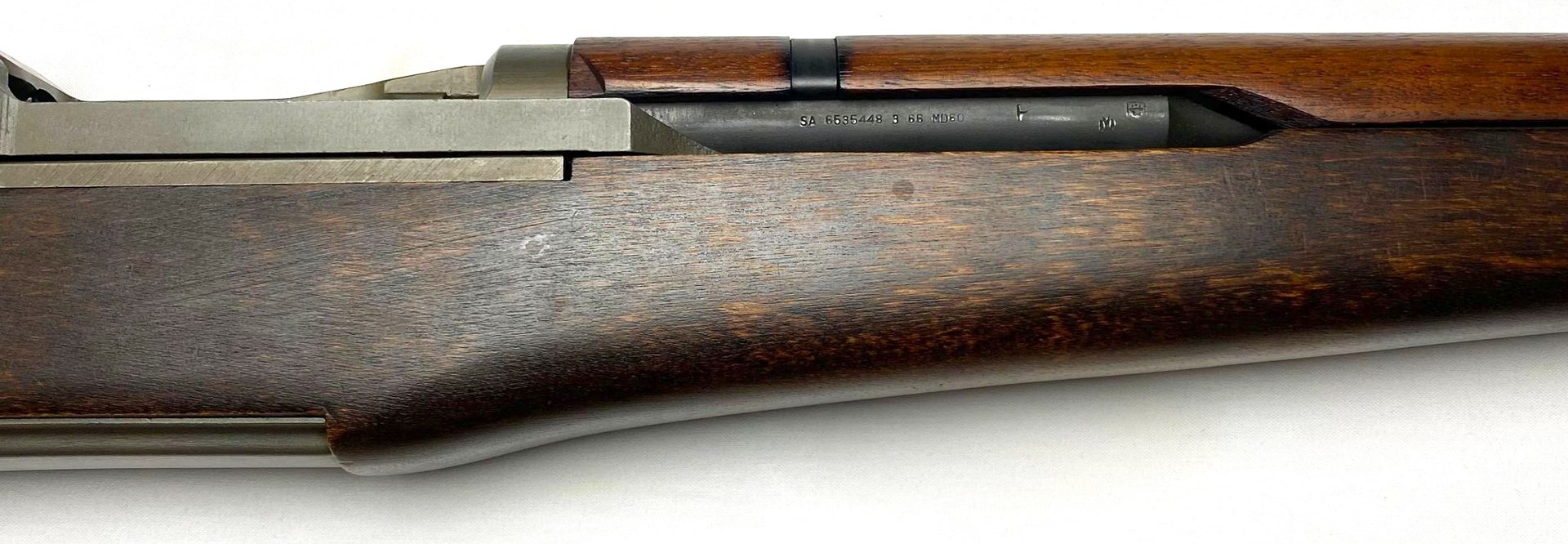 Between the wood is a March 1966 barrel stamp, which was likely due to the Department of Defense overhaul of M1 Garands beginning in 1963.
The Marines saw value in the new M1 rifle, but it also noted that it was going through some “growing pains.” It also pointed out that the Ordnance Department recently changed the design of the barrel, gas cylinder and gas plug assemblies, and these improvements will go into mass production at Springfield Armory in mid-May 1940. This is when the design evolved from the “gas-trap” Garand to the “gas-port” Garand. These improvements were significant, as they would correct several problems encountered with the earlier designs.
In November 1940, the U.S.M.C. conducted yet another test. This was a competitive test between the M1903 Springfield Rifle, M1 Garand, Johnson Automatic Rifle and a Winchester semi-automatic Rifle. This test concluded that the M1 was superior to the M1903 under favorable conditions and that the M1 was considered suitable for arming components of the Marine Corps, which generally would not be called upon to operate under conditions approaching those of more severe tests. The most interesting comment was, “Judging by the experience with other rifles in the past, and the improvements which have been made and contemplated in the U.S. Rifle Caliber .30 M1, it may be expected that the operation of this rifle will be improved still further.” While the Marine Corps certainly saw the merit in the M1, it just concluded that, in the gun’s present state, it wouldn’t be suitable for front-line combat. The Marine Corps formally adopted the rifle on Feb. 18, 1941, a mere five years after the first purchase order.
Relics From The Tests
One rifle actually used in the early U.S.M.C. trials has been secured for photographs. Its serial number is 3706, and it first appeared on the inspection report from the commanding officer of Co. B,” 1st Btn., 6th Marines, 2nd Marine Brigade, on Feb. 10, 1939. It was noted that, upon inspection, the barrel had pits on lands at a point 5″ from the muzzle, and the gas cylinder was slightly pitted. It appears later in the report from May 1940 where it is recorded it had 260 rounds fired through it during the tests.
Technical Specifications:
Serial Number: 3706
Receiver Drawing Number: D 28291
Barrel Date: 3-66
Stock: Letterkenny Replacement
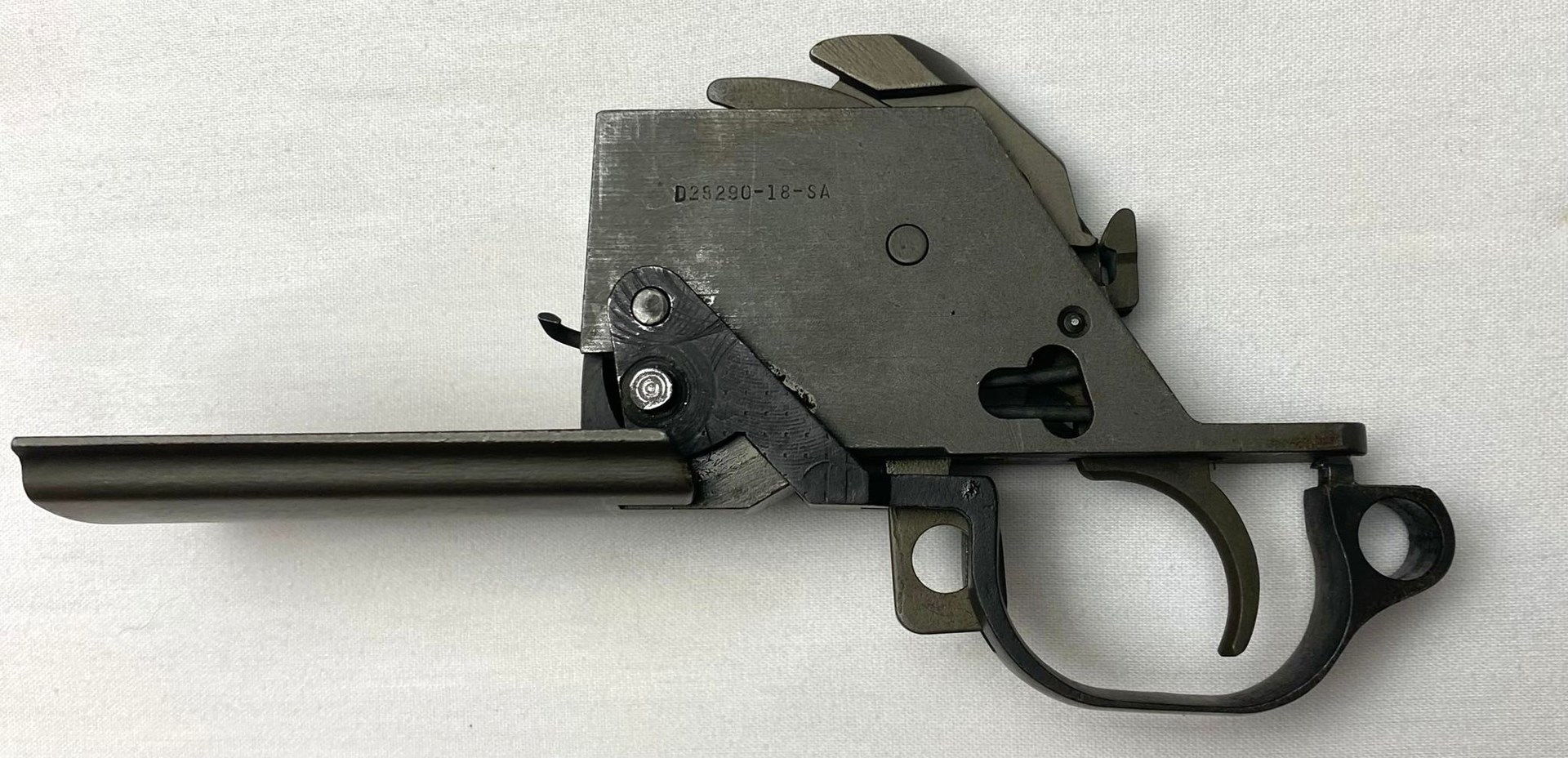
Trigger Housing: D28290-18-SA
Bolt: D28287-12SA
It’s unclear how long this rifle stayed in Marine Corps custody, because it appears to have returned to the Army at some point in its service life. In April 1941, the Ordnance Department acknowledges an inquiry from the Marine Corps quartermaster concerning the conversion of (gas trap to gas port) 400 rifles on hand at the Philadelphia Navy yard. The Ordnance Department suggests shipping those rifles to Springfield Armory to be converted. It is unclear if these rifles were in fact shipped to Springfield Armory, if they were exchanged for new rifles or if they were converted and shipped back to the quartermaster.
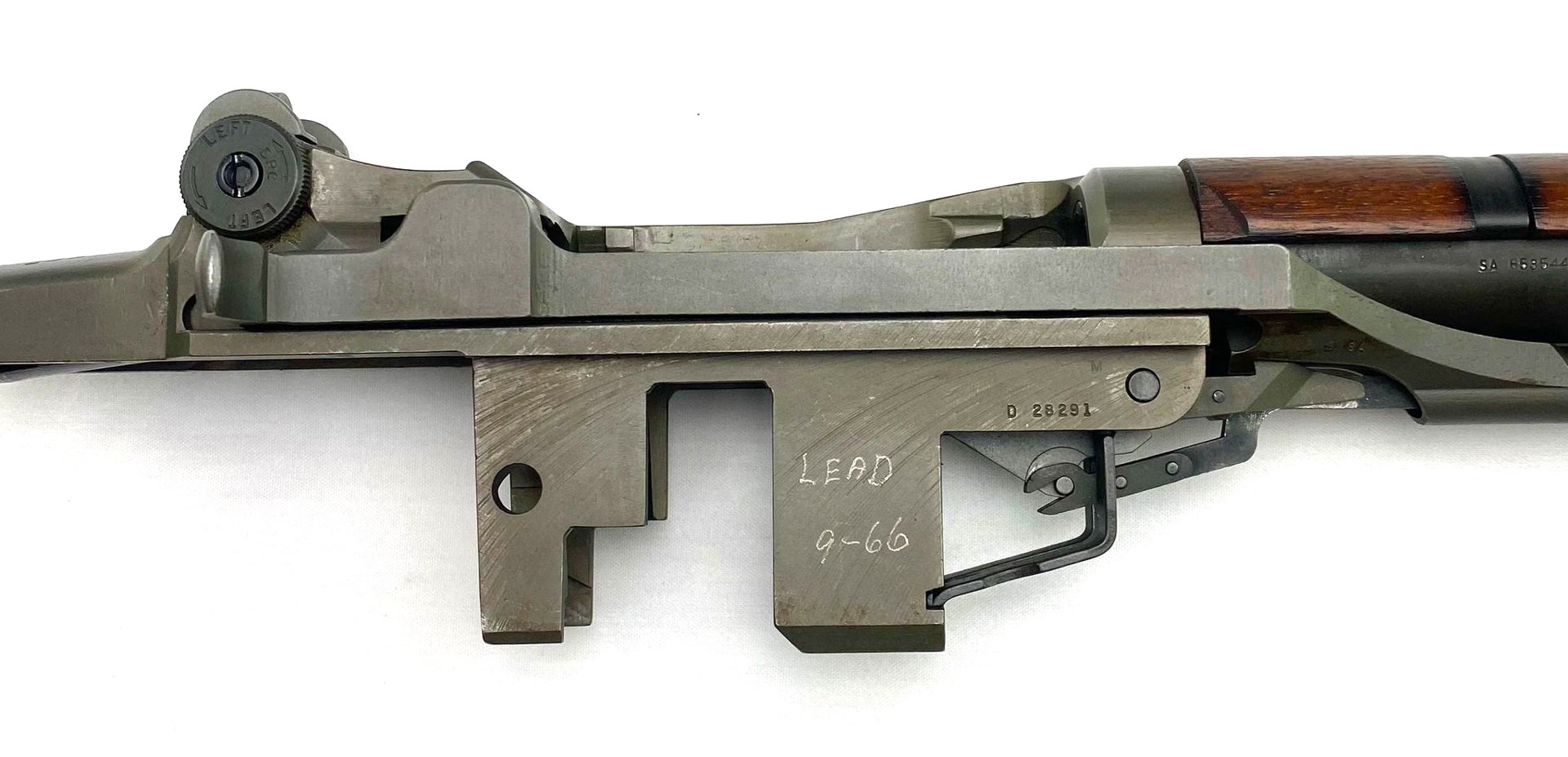 Receiver leg electro-penciling “LEAD” indicating overhaul at Letterkenny Army Depot in September 1966.
The toe of the receiver is marked “LEAD 9-66,” which stands for Letterkenny Army Depot with the month and year of its overhaul. Beginning in early 1963, the Department of Defense began a plan of overhauling M1 Garands starting at Springfield Armory. Still, it would carry over into other arsenals around the country. The stock also possesses the “red triangle,” which is the mark of a Letterkenny replacement stock.
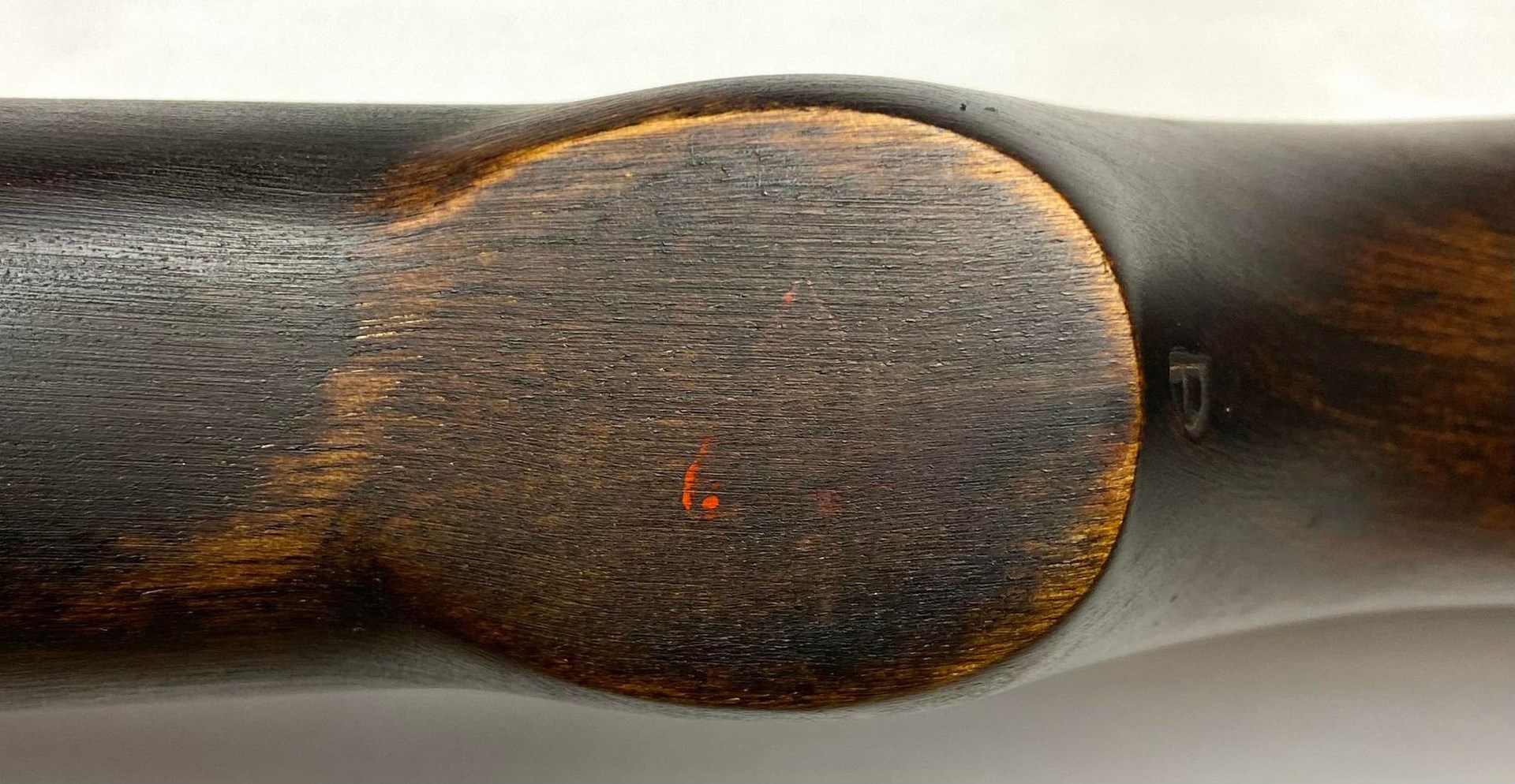 Red triangle marked stock which is a Letterkenny replacement stock.
It has been long believed that the U.S.M.C. fought tooth and nail against adopting the M1 Garand, that the corps wanted to maintain its treasured M1903 Springfield rifle until the Guadalcanal campaign changed their mind. However, looking through primary source documentation, it is clear that this was actually not the case. It’s now known that the Marines took a very early interest in a semi-automatic rifle, dating all the way back to 1932. They would make their first orders in 1936 but would not be able to complete testing and file reports until 1939, due to a series of obstacles. The Marines would then conduct a second test against other possible semi-automatic platforms in late 1940.
The Marines also understood that there was significant value in the M1 Garand specifically. Still, they also understood that, as it stood in its early stages, it needed substantial improvements to reach the level of combat reliability they required. Accordingly, they took a more pragmatic approach to the problem: adopt it as an auxiliary firearm that would be issued to the troops away from the front lines. As the design improvements were adopted, the rifle became more reliable and expanded outwards. Once the supply was sufficient, the front-line combat troops would switch from the M1903 to the M1 Garand. Evidence of this was documented in February 1943 when the U.S.M..C stated it was receiving the M1 in sufficient supply and would transfer excess M1903s to the U.S. Navy. The rest is history.


 10 / 10
 This painting depicts the attack of the
 and the 93rd Sutherland Highlanders against the Levee Redoubt defended by the US 7th Infantry.