
Category: Good News for a change!
Categories
A Victory! COOL!!!!!!!!!!!!!!!!! Dear Grumpy Advice on Teaching in Today's Classroom Good News for a change! Hard Nosed Folks Both Good & Bad I am so grateful!! Interesting stuff Leadership of the highest kind Manly Stuff One Hell of a Good Fight Our Great Kids Real men Soldiering Stand & Deliver This great Nation & Its People War
Smedley Butler: The Marine Who Earned Two Medals of Honor by Will Dabbs
Major General Smedley Butler collected two Medals of Honor, fought across the globe, battled corruption at home, and later claimed powerful businessmen wanted him at the center of an American coup.

Before Smedley Butler, Let’s Talk About Names
My name is Willis. I might have preferred William, but I didn’t pick it. Mine is a family name. As such things go, it certainly could be worse.
Many famous individuals, particularly actors, often choose a new name if their original names seem insufficiently photogenic. John Wayne entered the world as Marion Robert Morrison. Cary Grant was born Archibald Leach. Michael Caine was Maurice Joseph Micklewhite. Charlie Sheen was Carlos Irwin Estevez. Comedian Jonah Hill was originally Jonah Feldstein. Vin Diesel began life as Mark Sinclair. Diesel changed his name at age seventeen when he became a professional bouncer at a fashionable New York nightclub.
There are countless examples. Famed British actress Helen Mirren was originally Ilyena Lydia Vasilievna Mironov. Olivia Wilde was Olivia Jane Cockburn before she became enamored with the playwright Oscar Wilde. Natalie Portman was Natalie Hershlag, but changed her name in a failed effort at protecting her privacy.
Caryn Elaine Johnson had such a problem with passing gas that her coworkers called her “Whoopi Cushion.” When her show business career began to take off, she adopted Whoopi Goldberg because somebody told her that folks with Jewish-sounding names did better in Hollywood. Apparently, it worked. She’s worth $60 million today.

The point is simply that some names can make surviving Second Grade pretty tough. Despite having been saddled with an objectively awkward moniker, Smedley Darlington Butler went on to do some pretty amazing things.
Butler was one of only two Marines in American history to have been awarded the Medal of Honor twice for two different combat engagements. In 1933, he was also tagged to lead a military coup to overthrow President Franklin Roosevelt. That effort kind of fizzled, but Smedley Butler was nonetheless a simply fascinating guy.
Smedley Butler Before the Legend: A Quaker Goes to War
Smedley Butler was born on 30 July 1881, in West Chester, Pennsylvania. He was the oldest of three sons born to Quaker parents. Butler was an accomplished athlete in High School, serving as captain of his baseball team and quarterback on the gridiron.
He quit school 38 days before his 17th birthday to enlist in the US Marine Corps. His dad was livid, but the young man was terrified he might miss the Spanish-American War. The administrators at his High School had mercy on him and granted him a diploma anyway.

Smedley’s dad served in the US House of Representatives for 31 years. He was chairman of the House Naval Affairs Committee under Presidents Harding and Coolidge. Having your dad managing the Marine Corps budget likely didn’t hurt the young Jarhead’s career prospects.
The younger Butler lied about his age and was granted a direct commission as a Marine officer. He arrived in Cuba just after the war ended. Butler piddled about the Marine Corps for another year but then mustered out. However, with the Philippine-American War now heating up, the young officer turned around and donned his uniform yet again, this time as a First Lieutenant.
From the Philippines to the Boxer Rebellion
Like many true warriors, Smedley Butler did not handle boredom well. When not in action, he drank excessively. He once got drunk and was relieved of command.
However, in October of 1899, Butler led 300 Marines to seize the town of Noveleta in the Philippines. Though he briefly panicked when his First Sergeant was hit, Butler regained his composure and led his Marines to rout the enemy. Once the carnage abated in the Philippines, Butler headed to China to put down the Boxer Rebellion.

During the Battle of Tientsin in the summer of 1900, Lieutenant Butler was shot through the thigh while rescuing a wounded Marine. Despite the grievous nature of his injury, Butler went on to help evacuate several of his troops under fire.
Four enlisted Marines earned the Medal of Honor in this engagement, but Marine officers were, at that time, not eligible for the award. However, Butler was granted the Marine Corps Brevet Medal, which also included a promotion to Captain. He was one of only twenty Marines in the history of the Corps to be so recognized.
Old Gimlet Eye and the Bloody Banana Wars
Having now tasted proper combat, Captain Butler just couldn’t get enough. He fought across Central America and the Caribbean in what has since come to be called the Banana Wars.
Even though Butler and his Marines were protecting American business interests, they still no doubt faced some profoundly fierce combat. Losing Marines in support of the United Fruit Company and similar corporate concerns made a deep and lasting impression.

In 1903, Butler took a detachment of Marines into Trujillo, Honduras, looking for trouble. Their primary mission was to secure the American consulate there. In a subsequent letter home, he said that he and his Marines were “Prepared to land and shoot everybody and everything that was breaking the peace.”
They landed amidst a 55-hour ongoing firefight between rebels and government forces. They found the American consul hiding in the rafters of the consulate, wrapped in an American flag. Once they got clear of the town with the American diplomat in tow, the opposing forces resumed killing each other.

At some point in all this traipsing about the jungle, Smedley Butler contracted a variety of bizarre tropical diseases. While rescuing the American consul, Butler was feverish with something or other and had sunken red eyes.
His men began calling him “Old Gimlet Eye.” A gimlet is either a cocktail made with gin and lime or a small tool designed to bore holes in wood. This was one of several respectful, though unsettling monikers bestowed upon him by his troops.
Vera Cruz and Smedley Butler’s First Medal of Honor
Butler subsequently fought all over South and Central America. He once led his battalion to relieve a besieged city on the island of Grenada while running a 104-degree fever.
In April of 1914, he led his troops in an assault on Vera Cruz, Mexico. The fight roiled across the city and ultimately cost American forces 17 dead and 63 wounded. Along the way, Smedley Butler earned the Medal of Honor.
His citation reads in part, “For distinguished conduct in battle, engagement of Vera Cruz, 22 April 1914. Major Butler was eminent and conspicuous in command of his battalion. He exhibited courage and skill in leading his men through the action of the 22d and in the final occupation of the city.” The rules had obviously been changed by then to allow officers to earn the rarefied decoration.
Haiti and Smedley Butler’s Second Medal of Honor
Six months later, Smedley Butler invaded Haiti. He first arrived in the lawless area around Fort Dipitie with 44 Marines. They were ambushed by a force of 400 indigenous Cacos and, surrounded, fought them off all night long. The following morning, Butler organized an infantry charge that repelled the enemy forces in disarray.

On 17 November 1915, Butler led an ad hoc battalion of Marines and sailors in an infiltration of Fort Rivière. The subsequent combat was hand-to-hand and pitiless. When they took the fort, 50 Haitians were dead, and Smedley Butler had earned his second Medal of Honor.
Here’s the citation: “For extraordinary heroism in action as Commanding Officer of detachments from the 5th, 13th, 23d Companies and the Marine and sailor detachment from the U.S.S. Connecticut, Major Butler led the attack on Fort Rivière, Haiti, 17 November 1915. Following a concentrated drive, several different detachments of Marines gradually closed in on the old French bastion fort to cut off all avenues of retreat for the Cacos. Reaching the fort on the southern side where there was a small opening in the wall, Major Butler gave the signal to attack, and Marines from the 15th Company poured through the breach, engaged the Cacos, took the bastion, and crushed the Cacos resistance.”
World War I Passed Him By, but Smedley Butler Kept Fighting
Butler was not granted a combat command during World War 1. There were several reasons for this, some political and others practical. Along the way, he had developed a reputation for erratic behavior. Butler subsequently came home to command the Marine Corps Base Quantico, Virginia.

From Marine General to Philadelphia’s Crime Fighter
This was a different time. In 1924, W. Freeland Kendrick had been elected mayor of Philadelphia and faced a city awash in Prohibition-driven corruption.
President Calvin Coolidge therefore released General Butler to serve as the city’s Director of Public Safety in charge of both fire and police forces. Butler reassigned his police officers to unfamiliar precincts to upset the inevitable protection rackets he knew to be active.
In his first two days on the job, Butler’s cops raided 900 illegal liquor clubs. He was quoted as having told his officers, “I don’t believe there is a single bandit notch on a policeman’s gun in this city; go out and get some.” I wonder how that might go over today….
The Business Plot: Smedley Butler’s Strangest Battle
Butler eventually retired and became an outspoken critic of war profiteering. In November of 1934, Butler claimed that there was a plot afoot led by prominent American businessmen to field a 500,000-man army of military veterans and march on Washington, depose FDR, and install MG Butler as dictator.
Along the way, Butler named names. The alleged conspirators dismissed the claims as bluff and bluster, but subsequent evidence came to light that lent credence to the plot. Regardless, Butler’s testimony before a House committee drove those behind it back into the shadows. Historians now call this sordid episode the Business Plot.

The Fighting Quaker’s Final Years and Legacy
Major General Butler finally retired to Newton Township, Pennsylvania, with his wife. In 1940, he fell ill and was found to be suffering from what was likely stomach cancer. He had a drinking history, and videos I tracked down in preparing this article sounded like he was a smoker as well.

“The Fighting Quaker,” also known as “Old Gimlet Eye,” succumbed to his disease in June of 1940. He was 58 years old. A real “Break Glass in Case of War” Marine, Smedley Butler was indeed a Leatherneck’s Leatherneck.
650-Pound Blue Marlin Caught off San Diego Coast Breaks State Fishing Record
The sports fishing charter, piloted by 32-year-old captain Alec Stockfelt, showed up at the docks of the Southern California city earlier this week, wowing onlookers as the nearly half dozen fisherman wrestled the giant fish to a weigh station at Fisherman’s Landing.
The previous blue marlin sports fishing title holder weighed in at 395, caught in the waters off San Diego in 2021.
The previous record at that location for any fish caught was some 598 pounds, the captain said.
An adult male grizzly bear weighs about 600 pounds, for comparison.
Anglers and captains expect 2026 to be a robust year for records due to El Niño weather patterns bringing in more exotic sea life.
Marlin belong to a rare group, less than 1% of fish species, that exhibit regional endothermy. They maintain a “heater organ” near the eyes and brain. This organ keeps neural tissue warm even when the fish dives into cold, deep waters to hunt.
In addition, this warm-blooded adaptation gives them a massive neurological advantage. Their visual processing and reaction times remain sharp at depth. Therefore, they can detect and pursue prey far more effectively than their cold-blooded targets.
The Pacific blue marlin world record, caught off Kona, Hawaii in 1982, stands at 1,376 pounds.

 Gun owners have plenty of reasons to be skeptical of politicians who suddenly discover the Second Amendment during election season. We’ve been through this before.
Campaign promises are easy. Following through is where things tend to get complicated.
That makes the second Trump administration worth looking at as a whole rather than judging it by whichever gun story happens to be dominating the news this week. There have been missteps, unresolved issues, and a few decisions that deserve criticism. But taken together, what the administration has done on the Second Amendment since returning to office represents a substantial shift in how the federal government approaches gun rights.
And arguably the biggest change isn’t coming from the White House itself.
It’s coming from the Department of Justice.
DOJ Is Actually Litigating for the Second Amendment
For decades, gun owners became accustomed to seeing the Justice Department on the opposite side of Second Amendment cases.
That’s what makes the creation of a dedicated Second Amendment Section within DOJ’s Civil Rights Division so significant.
The section isn’t merely advisory. DOJ says its mission includes investigating alleged patterns of Second Amendment violations by law enforcement, pursuing litigation, filing statements of interest, intervening in cases, and using amicus briefs to advance a broad interpretation of the right to keep and bear arms.
The federal government isn’t simply declining to defend a particular gun-control law. In several cases, it is actively suing state and local governments over restrictions DOJ believes violate the Second Amendment.
That includes challenges involving Los Angeles County’s handling of concealed carry permits, gun permitting practices in the U.S. Virgin Islands, Washington, D.C.’s ban on commonly owned semi-automatic rifles, Denver’s so-called “assault weapons” ban, Colorado’s magazine restrictions, California’s handgun roster and GLOCK restrictions, Virginia’s recently enacted semi-automatic rifle ban, and Montgomery County, Maryland’s expansive “sensitive place” restrictions.
The Denver rifle-ban lawsuit and Colorado magazine-ban lawsuit are particularly notable because DOJ isn’t dancing around the central issue. The government is arguing that commonly owned semi-automatic rifles and standard-capacity magazines are constitutionally protected arms.
That’s the kind of position gun-rights organizations have been arguing in court for years.
It Started With Trump’s Second Amendment Executive Order
On February 7, 2025, President Trump signed an executive order titled Protecting Second Amendment Rights, directing the Attorney General to review federal regulations, guidance, policies, international agreements, and other government actions that potentially infringed on the right to keep and bear arms.
That review included Biden-era firearms regulations and enforcement policies.
What could easily have become another symbolic executive order instead produced tangible changes throughout DOJ and ATF.
Among them was the end of the Biden administration’s so-called “zero tolerance” policy toward Federal Firearms Licensees.
The Department of Veterans Affairs also stopped reporting veterans to NICS as prohibited persons solely because they required fiduciary assistance managing their benefits.
Then there was the creation of DOJ’s Second Amendment Section itself.
Those aren’t campaign promises. They’re changes in federal policy.
ATF Has Been Moving in a Very Different Direction
ATF hasn’t exactly enjoyed a warm relationship with America’s gun owners.
That makes the agency’s current regulatory direction particularly interesting.
In April, DOJ and ATF announced a package containing 34 final and proposed rulemaking actions following the administration’s review of federal firearms regulations.
Some of the proposals are fairly technical. Others could have meaningful consequences for gun owners and FFLs.
ATF has moved to clarify the definition of an “unlawful user of or addicted to” a controlled substance, revise rules governing certain non-over-the-counter firearm transactions, and reconsider other regulations affecting dealers and gun owners.
Instead of searching for increasingly creative ways to expand existing statutory language, the agency is now publicly describing its regulatory work in terms of reducing unnecessary burdens and aligning regulations with current law and court precedent.
That’s quite a change from where ATF was only a few years ago.
The National Firearms Act remains one of the more complicated pieces of the administration’s Second Amendment record.
Congress eliminated the $200 tax on suppressors and short-barreled rifles, removing one of the NFA’s most recognizable burdens. Registration, however, remained.
That created an obvious legal problem.
If the tax that historically justified the NFA’s registration scheme disappears, what exactly is the constitutional basis for continuing to require registration?
That question is now being fought in court.
The administration has also taken positions suggesting suppressors receive at least some Second Amendment protection, an important development for challenges to state laws that ban them outright.
More recently, the government’s handling of the consolidated Silencer Shop v. ATF and Jensen v. ATF litigation has raised even bigger questions about whether DOJ intends to continue defending portions of the NFA registration regime.
TTAG covered the latest development when DOJ allowed the stay to expire, putting Silencer Shop’s NFA injunction into effect.
As of August 2026, that story is still developing.
What happens next could be one of the most consequential Second Amendment developments of Trump’s second term.
The Government Is Showing Up in Other Gun Cases, Too
DOJ’s direct lawsuits aren’t the entire story.
The federal government has also increasingly appeared as an amicus in major Second Amendment litigation.
That includes challenges involving so-called “assault weapon” and magazine bans, ammunition background checks, handgun rosters, and restrictions on where lawful gun owners may carry firearms.
The administration filed briefs in Wolford v. Lopez, for example, challenging Hawaii’s restrictions on carrying firearms on private property open to the public.
It has also participated in litigation involving California’s ammunition background-check system and Massachusetts’ handgun roster.
That matters because the Solicitor General and Justice Department carry institutional weight that another amicus brief from a gun-rights organization simply doesn’t.
It also creates something that has historically been missing from Second Amendment litigation: an executive branch willing to tell courts that state and local governments have gone too far.
There Are Still Reasons to Be Critical
None of this means gun owners should stop paying attention.
The administration’s record isn’t spotless.
DOJ has continued defending some federal gun laws, including portions of the NFA and the Gun-Free School Zones Act. Some of that is expected; the Justice Department ordinarily defends federal statutes. But gun owners aren’t obligated to pretend those positions suddenly become good policy because they’re being defended by a Republican administration.
There have also been questionable litigation decisions.
The government’s position on the scope of relief available to members of organizations involved in Second Amendment lawsuits created legitimate concerns about associational standing.
DOJ’s handling of Benson was another unforced error, with U.S. Attorney Jeanine Pirro’s office urging the D.C. Court of Appeals to rehear a favorable Second Amendment decision en banc.
Then there are the pardons that haven’t happened.
Gun-rights advocates have repeatedly raised the cases of individuals such as Patrick Adamiak and Matthew Hoover. Trump has demonstrated no reluctance to use his pardon and commutation authority elsewhere, making the lack of action in some firearms cases increasingly difficult for supporters to ignore.
There have also been comments from Trump and administration officials following high-profile shootings that haven’t exactly inspired confidence among gun owners.
Look at the Whole Scorecard
The mistake is judging the administration’s Second Amendment record based on one lawsuit, one comment, one ATF rule, or one disappointing decision.
Look at the entire scorecard.
The administration ordered a government-wide review of federal firearms policy. DOJ created a section of its Civil Rights Division specifically dedicated to enforcing the Second Amendment. The Justice Department is suing governments over rifle bans, magazine restrictions, handgun rosters, carry permit practices, and sensitive-place laws. The federal government is filing briefs supporting gun-rights challenges nationwide. ATF has reversed enforcement policies and begun unwinding or reconsidering regulations. Congress eliminated the NFA tax on suppressors and SBRs.
There are still significant fights ahead, particularly over the remaining NFA registration requirements and the administration’s willingness to challenge other federal gun laws.
There are also legitimate criticisms that shouldn’t be dismissed simply because the overall trajectory is favorable.
Gun owners have spent decades fighting against the institutional power of the federal government. For perhaps the first time in the modern Second Amendment era, at least part of that institutional machinery is being pointed in the opposite direction.
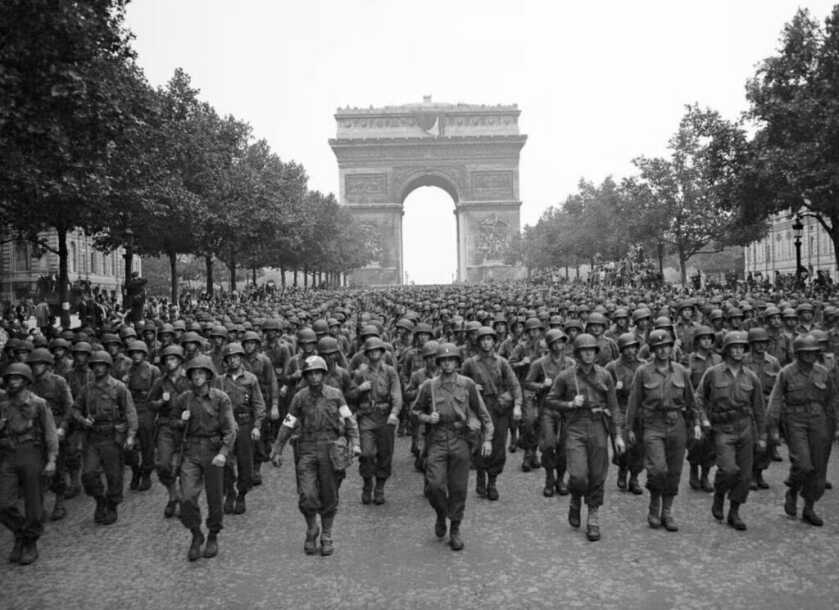
It is difficult to appreciate the scope of World War 2. We modern folk simply have no frame of reference. It was death, tragedy, and destruction on a scale beyond our imagining.
Sixteen million Americans served. More than 400,000 died. Roughly one in every forty American troops who answered the call never came home. One in forty. That’s what it cost to ensure that our world would be free from Nazi death camps, Japanese genocides, and Aryan supermen.
Table of contents
Hidden Treasures In Words
Thanks to Steven Spielberg, Tom Hanks, and Stephen Ambrose, we captured many of those priceless stories before it was too late. Their inspiration drove folks across the country to pin Grandpa down and insist that he tell his stories from the war while he still could. I chased those tales myself at every opportunity. What I discovered was poignant beyond my capacity adequately to describe.
So many of those great old guys were reluctant to revisit that world. However, whenever I saw an old WW2 vet in the clinic I would gently ask. What I got in return for those innocent queries was simply amazing.
One old gentleman ran a local hardware store before he retired. If you saw him in church or walking down the street you wouldn’t give him a passing thought. He looked like everybody’s grandfather—bald and slightly stooped with a shuffling gait. However, back in 1944 this guy was an absolute beast.
The Humanity of Total War
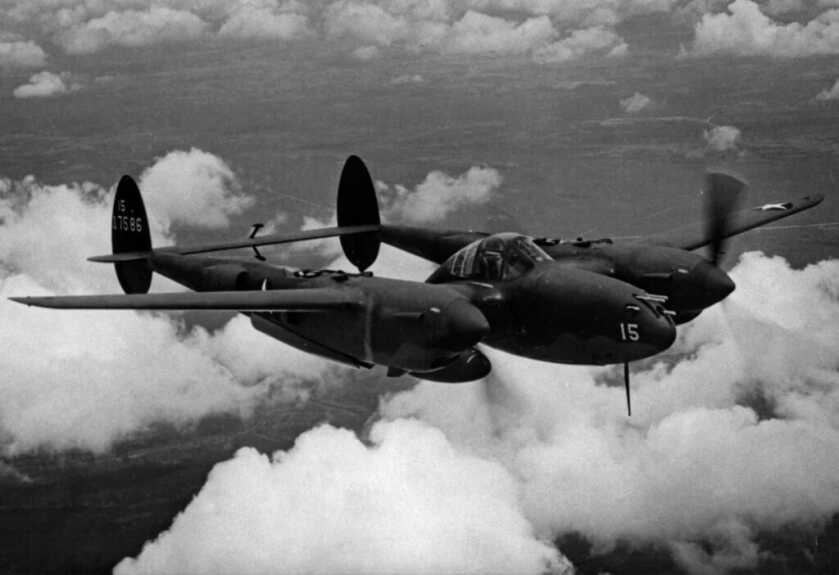
My buddy flew B-17 Flying Fortresses in Europe. He did his twenty-five missions and rotated home. He once mentioned that he had designs on an exceptionally attractive young lady in town before the war. He explained that another boy in his class fancied her, too. The girl chose the other suitor. My buddy then said matter-of-factly, “That other guy became a pilot as well. He flew P-38 Lightnings in the Pacific. He died fighting the Japanese.”
There was no emotion to the statement. It was simply a fact. This kid he went to high school with was blown to pieces in the skies over some forgotten South Pacific island, and he was just gone. That was the world in which he lived.
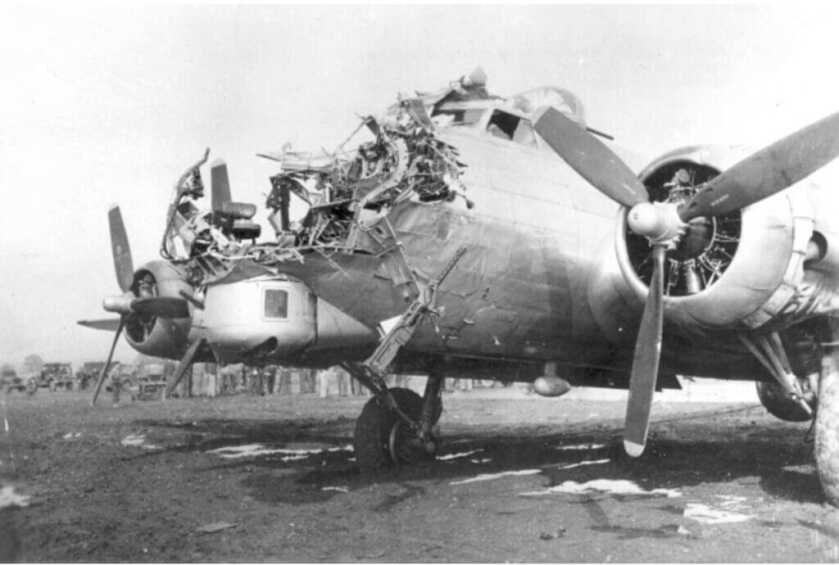
I once asked this man to tell me about his most memorable mission. He said he was in a low formation over Italy when somebody screwed up. The upper bomb group dropped their ordnance, and one errant five hundred pounder struck his Fort just ahead of the cockpit. The bomb did not explode, but it tore the nose off of his airplane, taking his bombardier and nose gunner with it. These were two of his closest friends in the world, and they died horribly five feet in front of his face. He wrestled with the mangled airplane for two interminable hours before landing it safely back at base. He told me this story as though he was describing the weather. There was no bravado or pride. He was simply relating facts.
Connections of Words
I sat mesmerized with him and a dozen or more others, all of whom came to see me for medical care. In my mind’s eye I tried to visualize the scene—the sounds, the smells, and the fear. In each case I’m sure my efforts were woefully inadequate. Some emotions are so intense they just don’t translate well into words.
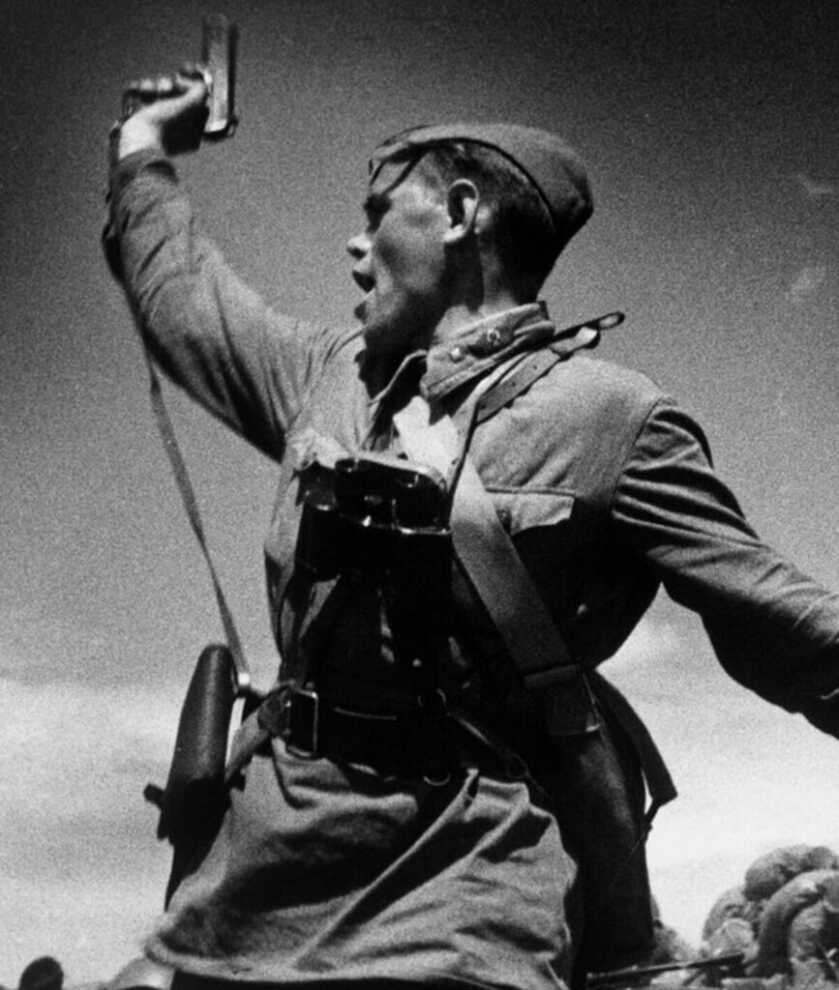
World War 2 was the first of humanity’s countless scraps to be thoroughly documented. All involved knew what they were doing would be studied, dissected, and potentially venerated for generations to come. Cameras were bulky and awkward by modern standards, but they were still available.
Personal Connection
My wife’s grandfather fought in North Africa, Sicily, and Italy. He dropped out of school in ninth grade to feed his family during the Depression, but he was a mechanical savant. He took a nice German camera off of a captured Wehrmacht officer and found undeveloped film in his Battalion S2 Intelligence section. He improvised a darkroom using an Army raincoat and a red lens flashlight and carefully cut the film by hand to fit his liberated camera. He scored a few chemicals and processed his own negatives the same way. After he died we found a shoebox full of little pictures he had taken during the war. They were all intriguing, but he had never been willing to explain the details. Regardless, these images offer some fascinating insights into what his life was really like during those long years of combat in Europe.
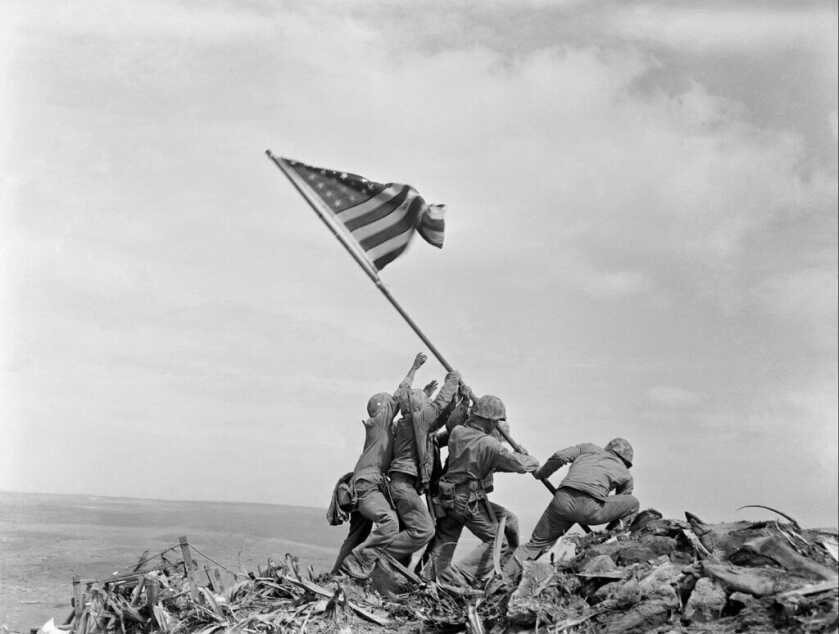
There are literally countless images to have come from WW2. Some were arcane or tedious. Others, like the raising of the flag over Mount Suribachi on Iwo Jima, were quite literally iconic. Each one tells a story. This story that follows was particularly compelling.
The Plane
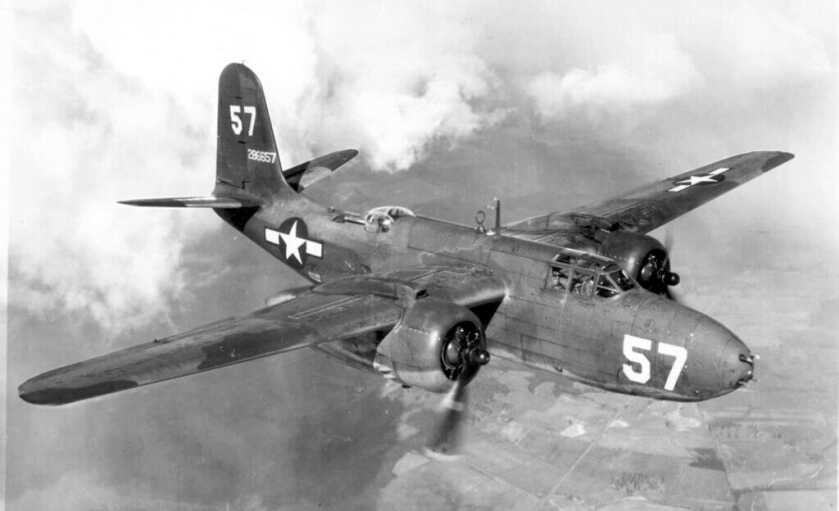
July 22, 1944, was a Friday. 1LT James Knarr and his gunner, SSG Charles Reichley, were up early to preflight their Douglas A-20G-25 Havoc medium bomber. Theirs was one of a dozen Havocs assigned to the 387th Bombardment Squadron of the 312th Bombardment Group. They were slated to attack a sprawling Japanese seaplane station and barge depot on the island of Kokas in the South Pacific. Their aircraft was loaded with 115 kg bombs optimized for attacking small ships in the harbor.
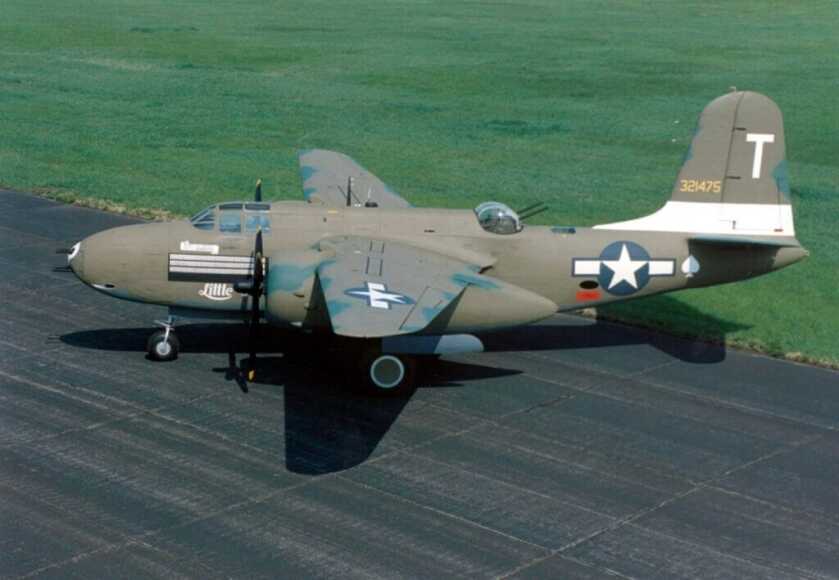
The Douglas A-20 Havoc was not as well-known as were the B-17 Flying Fortresses or B-24 Liberators. It even took a back seat to twin-engine medium bombers like the B-25 Mitchell and B-26 Marauder. However, the A-20 was a potent and effective ground attack platform.
First flown in January of 1939, the A-20 was designed from the outset as an attack plane. It was powered by a pair of 14-cylinder Pratt and Whitney R-2600-7 Twin Cyclone radial engines, each producing 1,700 horsepower. By war’s end some 7,478 airframes had rolled off the lines.
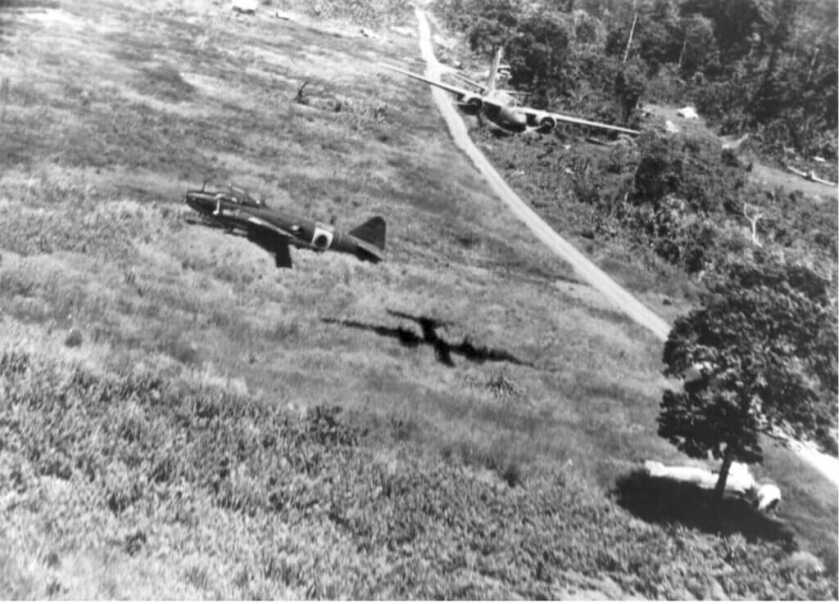
Technical Details
By 1944, the G-model A-20 was being used in the Pacific for low-level attacks against Japanese shipping. Under these conditions the bombardier and his vaunted Norden bomb sight were superfluous. As a result, these Havocs had their noses fared over and the bombardier position replaced with half a dozen Browning .50-caliber machineguns. The typical attack profile involved approaching a target at wavetop level and then skipping bombs into the sides of Japanese ships all the while sleeting the decks with massed machinegun fire. The Havoc was remarkably effective in this role.
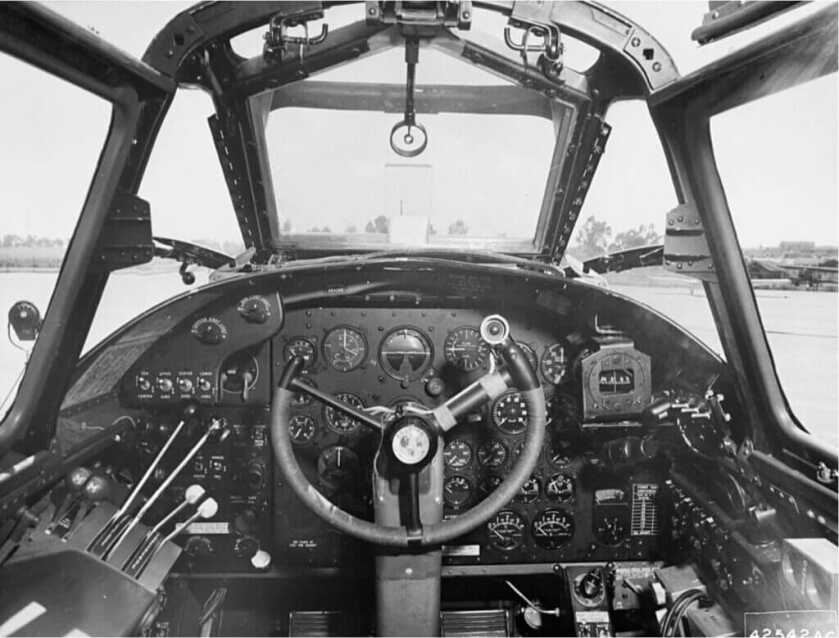
Without the bombardier, the typical crew of the Havoc was just the single pilot and a top turret gunner. With the assistance of their crew chief, 1LT Knarr and SSG Reichley made their mount ready for the day’s mission. Everything about the plane was armed, fueled, and in order.
The Mission
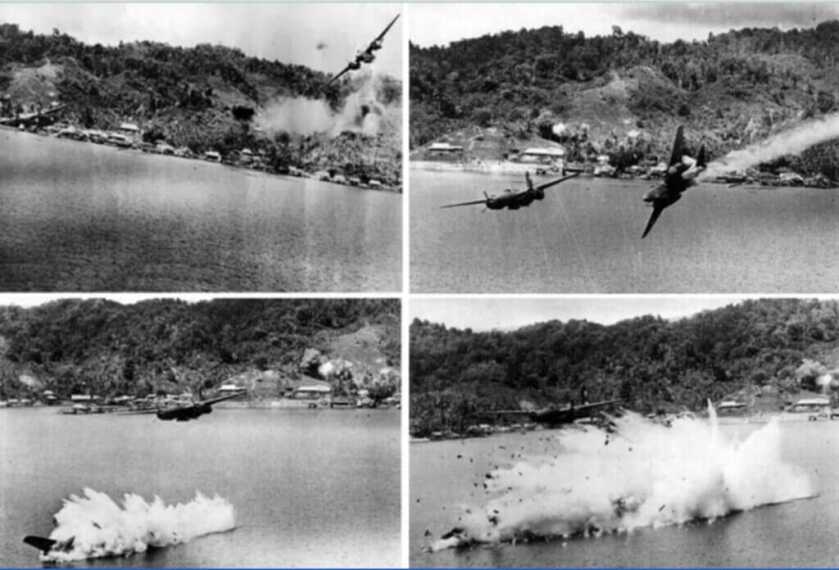
The approach to the target was unremarkable. The weather was perfect, and visibility was unrestricted. The limitless blue of the South Seas skies formed a placid backdrop to the unfettered carnage that was soon to come.
CPT Jack Klein was flight lead. 2LT Melvin Kapson was piloting the second ship. 1LT Knarr’s Havoc, tail number 43-9432, was third. The Havocs delivered their bombs just as they had been trained to do, raining death and destruction down on the Japanese barges and crews held at anchor in the harbor. However, by the time the attack planes turned on their egress the Japanese defenders had found their wits. Before they had a chance to close their bomb bay doors, the Japanese antiaircraft guns were clawing up toward them.
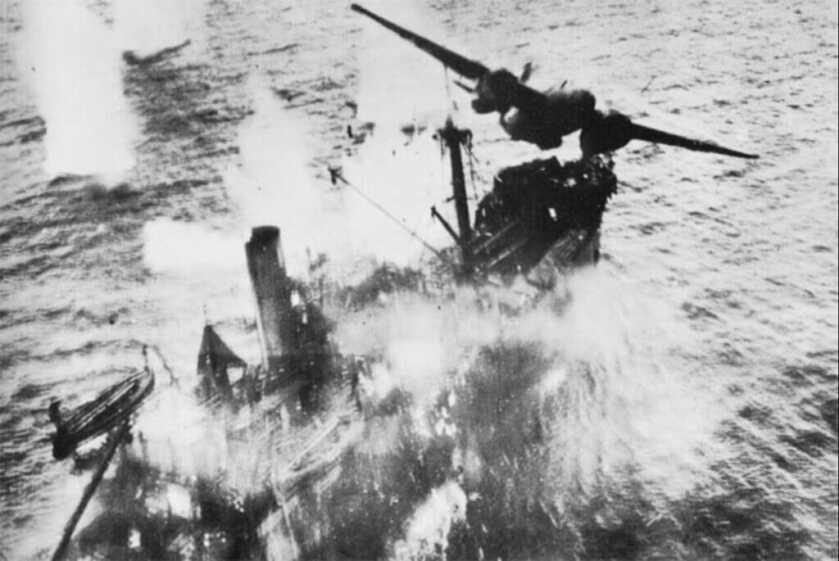
The formation was tight by design. Flying close meant concentrating firepower and shock effect. This also got the attacking aircraft in and out quickly, minimizing their exposure to ground fire. However, it still wasn’t fast enough.
Tragedy
One burst of antiaircraft fire connected with 1LT Knarr’s starboard engine. Both big radials were firewalled during the attack. 1LT Knarr was coaxing every bit of power out of the plants and every scrap of speed out of the plane. Suddenly the number 2 engine sputtered and died streaming oil. The big 11-foot, 3-inch propeller briefly windmilled.
In such close quarters and at such low altitude, there was just no time. 1LT Knarr was unable to get the prop feathered before the big plane began to roll. The ten-ton medium bomber snapped to the right, its wingtip contacting the smooth azure waters of the bay. In a literal instant, what had previously been a state-of-the-art attack plane manned by a pair of American aircrewmen was transformed into 20,000 pounds of debris. And just like that, 1LT Knarr and SSG Reichley were dead, literally pulverized in the impact.
Pictures Are Worth A Thousand Words
CPT Klein had been taking photos of the mission. His camera was remarkably advanced for the time and was capable of sequential frames. As luck would have it, his images captured the final seconds of 1LT Knarr’s airplane. The sequence became one of the most compelling of the war.
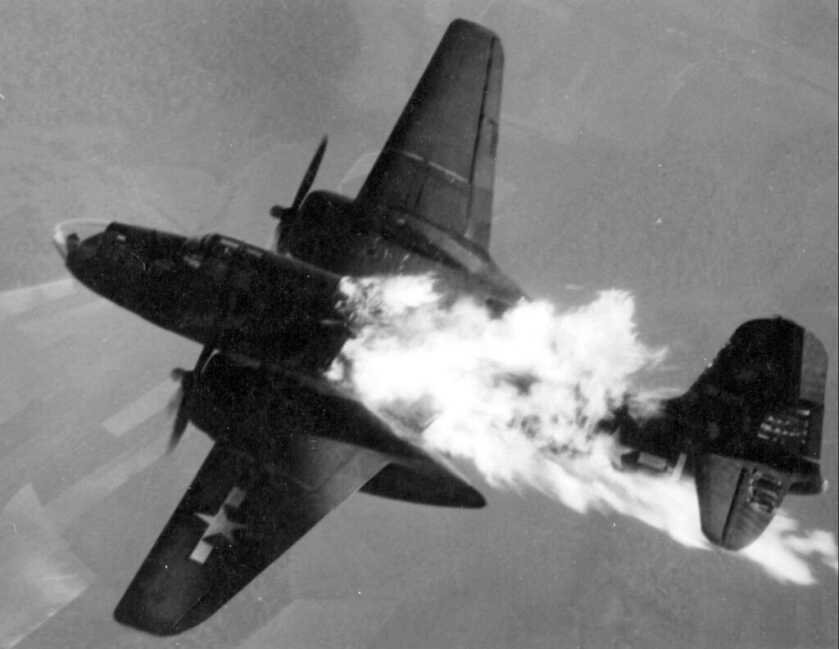
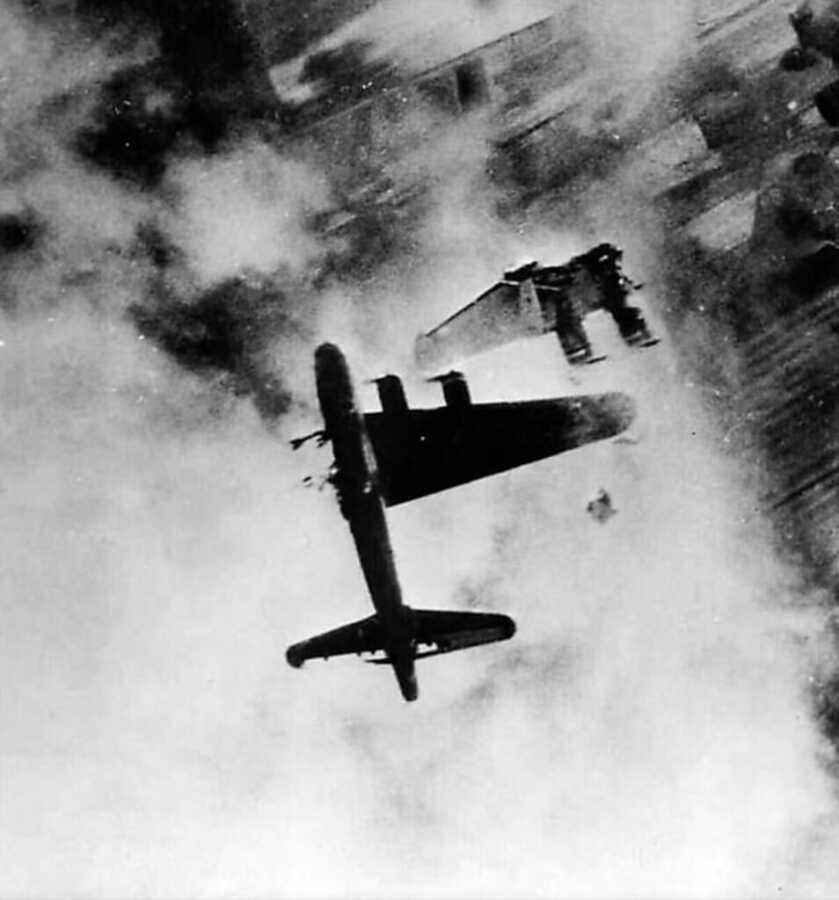
52,173 Americans died in aerial combat in WW2. Many fighter pilots like my friend’s high school classmate perished alone in the rarefied upper atmosphere. Others died as part of a crew with their friends by their sides to the last. The vast majority perished in anonymity, their sacrifice memorialized by nothing more than a heartfelt letter to loved ones from heartbroken friends or overwrought commanders. However, 1LT Knarr and SSG Reichley had their final moments immortalized. Even some eight decades later, those haunting images move me to my core.

I’m Going to sleep tonight knowing that we can still breed men like this man !!!!!!!!!! Grumpy
