Category: Cops
Categories
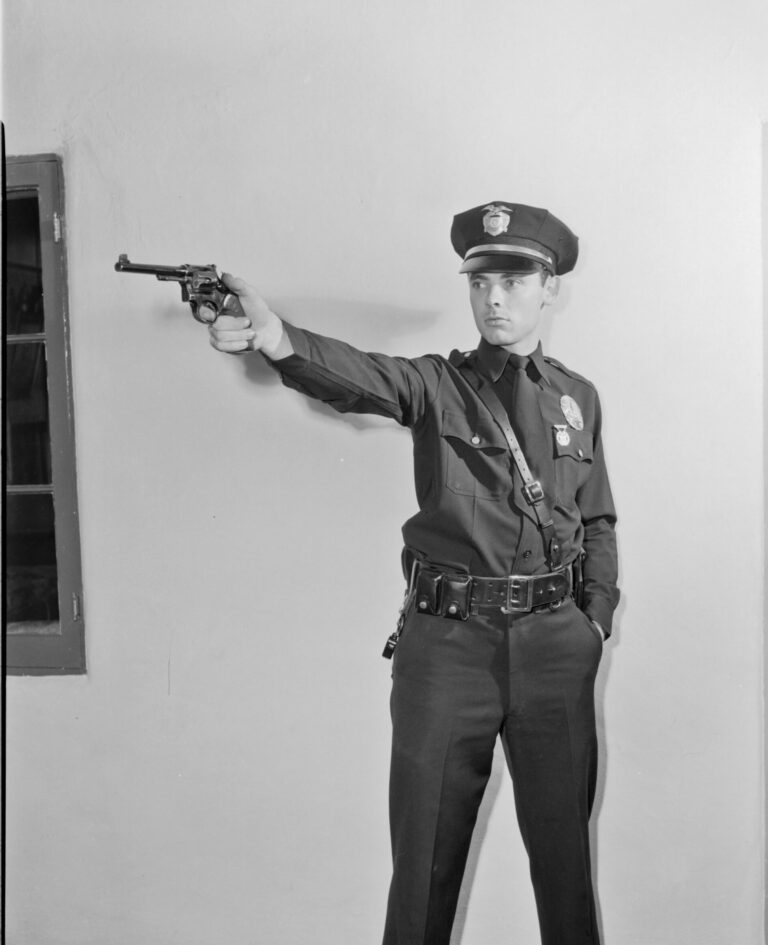
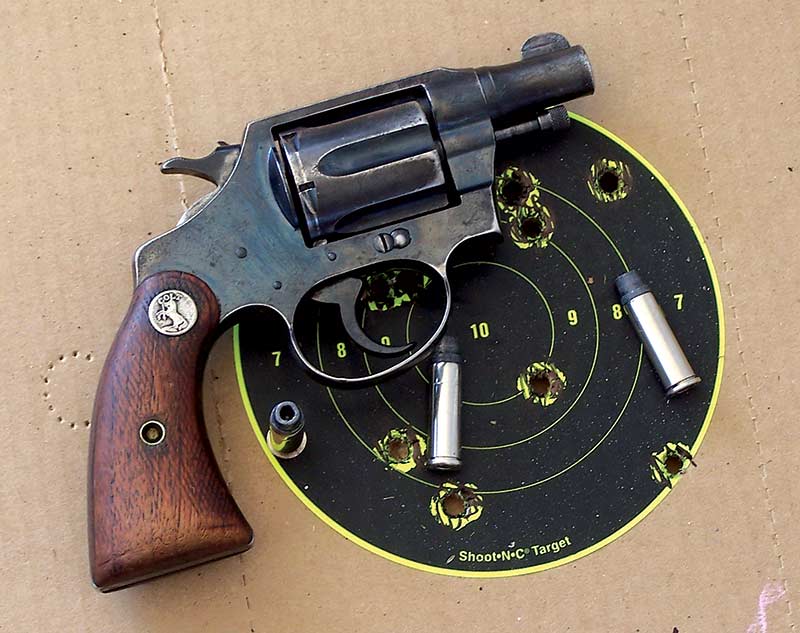
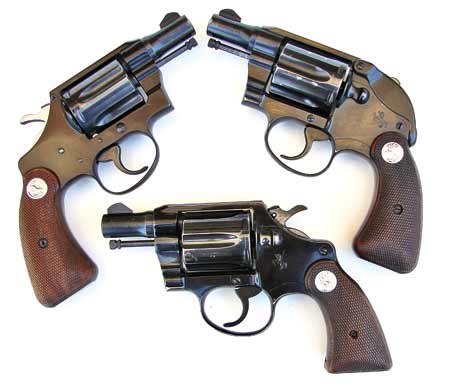
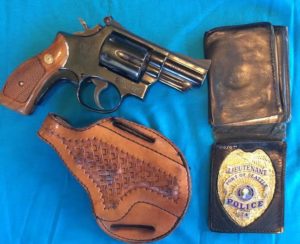
Old School Cop Guns

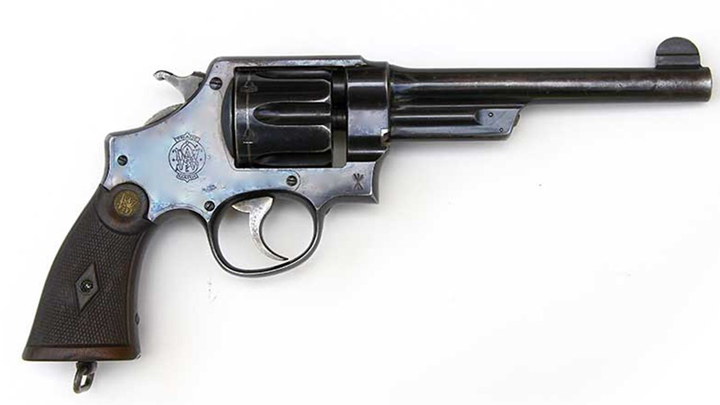

by Lee Williams
The United States Virgin Islands are beautiful, peaceful and serene as long as visitors don’t stray too far from the well-patrolled tourist areas. For Virgin Islands residents, as well as any visitors who may wander out of the safe zones, the USVI can be a death sentence.
The USVI has one of the highest crime rates in the world, per capita more than New York or even Washington D.C.
All major crime in the U.S. Territory is run by the “Commission,” hardcore but well-organized gangsters who are headquartered on St. Croix, the largest of the three islands.
The Commission is responsible for operating a massive international drug trade, which are delivered from across the Caribbean. It’s not unusual to hear planes landing at night without lights.
Virgin Islands criminals are smart, sophisticated and well-armed with handguns, shotguns and machineguns. For the most part, they only prey on other criminals, but this can change in an instant.
The Virgin Islands Police Department offers little resistance to the armed gangs who actually run the territory. The VIPD is severely undermanned, underpaid and undertrained. The department is horribly led.
Many VIPD officers are corrupt. If they’re told to stay away from an area because a shipment is inbound, they do what they’re told, or they can disappear without a trace.
Gun control in the USVI is the worst in the country, and as a result only the bad guys have guns. Civilians have no legal way to protect themselves, their family or their home.
In December 2025, the U.S. Department of Justice filed a lawsuit against the VI Government, the VI Police Department and the Police Commissioner, alleging that they “have continued to obstruct and systematically deny law-abiding American citizens this fundamental right by systematically delaying the processing of applications and imposing unconstitutional conditions on the exercise of this constitutional right.”
“The conduct by the USVI, the VIPD, and Defendant Brooks has rendered the constitutional right to keep and bear arms a virtual nullity within the United States Virgin Islands territory,” the lawsuit states.
While this may appear to be a good step forward, many VI residents see little likelihood that the lawsuit will be quick, and even less likelihood that it will force any significant change.
A unique idea
Kosei Ohno owns the Crown Bay Marina, which is located on St. Thomas. The marina has 100 slips, including many that can take mega-yachts of 200-feet or greater, and it’s only five minutes from the airport.

Ohno, who also spends time in Washington State, recently filed suit against the Virgin Islands Police Commissioner and the VI government after they denied his attempt to renew his firearm licenses, which he had for several years.
Legally owning firearms in the USVI is incredibly invasive and expensive. Gun owners must pay a tax of $150 per firearm every three years. If you legally own 10 guns, you’re going to pay $1,500 every three years. You must also allow a VI Police Officer access to your safe, and they photograph the contents. Getting the actual license can take 18 months or even longer.
“The officer comes into your home without a warrant, demands to see your safe, demands you open the safe and then takes pictures,” Ohno told me this week. “Some people have guns, jewelry and gold bars as well as cash, and you wonder how it gets stolen. The whole process creates a vulnerability and a list of people, many of whom have lost guns through burglaries and theft.”
Ohno soon learned he was not alone.
“I found out through a source of mine at the VIPD that they made it their new mission to deny everyone’s permits,” he said.
So far, Ohno said, he has spent more than $70,000 to get his permits back, so he decided to act. He created the Virgin Islands Safe Gun Owners, a private group of more than 250 residents who all believed it was time to get organized. Their mission is to “restore and promote Second Amendment Rights in the Territory while promoting safe gun ownership.”
“There was considerable abuse happening,” Ohno said. “Our members include many retired officer, feds, military and business owners. It’s a pretty diverse and expansive group. We were able to give the feds evidence, which allowed them to get involved in the Second Amendment litigation against the police department. I learned it’s not just me whose rights were violated.”
The group introduced legislation that they say will modernize firearms ownership throughout the territory.
Ohno said his lawsuit, which he filed in federal not territorial court, has “expansive potential.” But getting arrested for a firearm that’s not registered, he said, would be disastrous.
“According to Virgin Islands law, if you’re caught with an unregistered firearm, the mandatory sentence is 10 to life,” he said.
Ohno has just launched a GoFundMe page and is considering other legal options.
Said Ohno: “Bravery is contagious. Fear is just as contagious, but transition is always risky.”
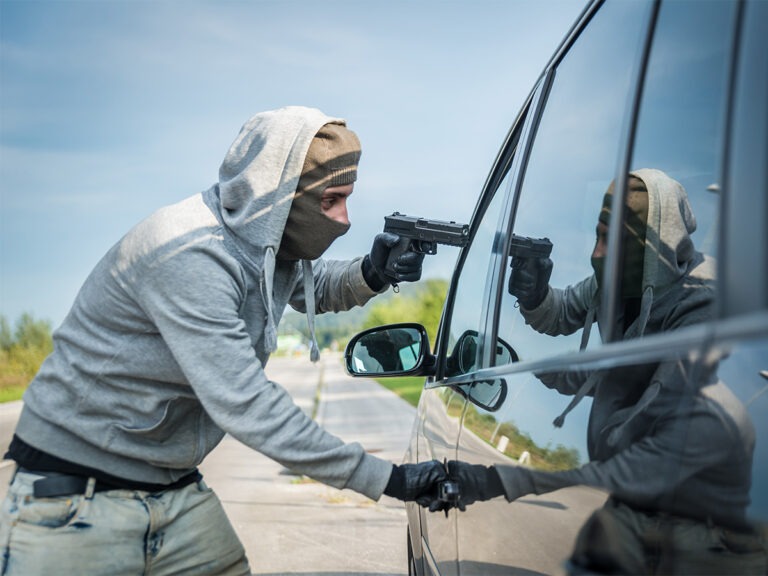
There are things that criminals know that you don’t, but here are some lessons that will help really keep you safe.
I recently attended the Crime and Criminals seminar presented by John Hearne of Two Pillars Training, an annual update he delivers through Citizen Safety Academy. It reinforced something most armed citizens intuitively sense but rarely see laid out this clearly: Much of what we believe about crime in America is either incomplete, misleading or simply wrong.
Hearne holds a master’s degree in criminal justice with a concentration in research methods, a public safety career stretching back to 1986 across fire, police, EMS and more than a decade as a federal law enforcement officer. He’s a published author and rangemaster instructor since 2001. What followed over two hours was one of the most grounded and practically valuable presentations I’ve sat through in years of firearms training.
His seminar isn’t about tactics or gear. It focuses on something more foundational: the reality of crime, how criminals think and how ordinary people become victims. For anyone serious about personal defense, this is where the conversation should start.
The First Hard Truth: The Data Isn’t What You Think
Most people assume FBI crime statistics offer a reliable picture of reality. Hearne makes a compelling case they do not. The FBI’s Uniform Crime Reports rely on “crimes known to police,” which excludes everything unreported—and according to Bureau of Justice Statistics survey data, less than half of violent crime is ever reported to law enforcement.
In 2023, the FBI published data suggesting violent crime dropped roughly 2 percent in 2022. Revised 2024 figures quietly revealed an actual net increase of about 41/2 percent, a swing of more than 6 points that never got a press release, discovered only when a criminologist noticed something odd while downloading fresh data. Cities like Washington, D.C., have been caught classifying gunshot-wound transports as routine EMS calls, effectively erasing violent crimes from the record.
By comparing FBI data to CDC homicide records, Hearne showed the FBI misses roughly 17 percent of homicides. If the agency is missing 1 in 6 murders, he asked, what percentage of rapes and aggravated assaults are going uncounted? His rule of thumb: Take the FBI’s violent crime numbers and multiply by 5. You’ll still probably come up short.
The Criminal Justice System Is Not Your Safety Net
Only about 3 percent of all violent victimizations and property crimes ever result in a prison sentence. Clearance rates hover around 15 to 20 percent for property crime and roughly 40 percent for violent crime, and clearance doesn’t mean conviction. Many cases end in diversion, plea agreements or minimal consequences.
Hearne illustrated the dysfunction with the case of Eliza Fletcher, a Memphis pre-K teacher murdered in 2022 by a man who had served 20 of 24 years for a prior kidnapping and robbery, received a new conviction for indecent exposure inside prison just one month before release, and then kidnapped and raped another woman almost immediately after getting out, but the sexual assault kit from that crime sat untested on a shelf. The system had multiple opportunities to intervene and did nothing with any of them.
He also pushed back on the narrative that American prisons are full of nonviolent drug offenders. In state prisons, only 16 percent of inmates are serving drug-related sentences, and fewer than 1 percent are there for low-level charges with no history of violence.
More than half the non-federal prison population is locked up for violent crimes. Hearne’s conclusion is blunt. If you want to meaningfully reduce the prison population, you are, by the numbers, talking about the possibility of releasing people convicted of murder, rape and kidnapping.
Criminals Choose You Faster Than You Think
Hearne referenced a landmark 1981 study in which convicted criminals were shown videos of pedestrians and asked to rate their ease of victimization. The inmates showed striking consensus, and they weren’t evaluating victims by size, dress or apparent wealth.
They were reading gait, stride length, weight shift and arm swing. These indicators signaled vulnerability more reliably than anything else. Subsequent research using point-light kinematics confirmed it. People form accurate assessments of vulnerability from movement alone in under 2 seconds.
What criminals are asking is simple: Can this person fight back? Are they paying attention? Is the reward worth the risk? Most are rational actors running a rapid cost-benefit calculation, and their default when uncertain is to move on to an easier target. Hearne called inducing that hesitation a “restraining judgment.” As he put it, quoting Clint Smith, “If you look like food, you will be eaten.”
It’s Not the Odds—It’s the Stakes
The statistical likelihood of violent crime in any given year may feel low, but over a lifetime that risk compounds, and when violent crime materializes, the consequences are often permanent. A better framework balances likelihood against consequence. Property crime is common and highly deterrable. Most residential burglaries are opportunistic, local and conducted during daylight by offenders seeking the easiest target. Simple measures like reinforced entry points, visible deterrents and limiting outward signs of valuable property shift the calculation in your favor.
Violent crime is less frequent but categorically different in consequence. As Hearne put it, borrowing from his late colleague William Aprill, “Your understanding and consent are not required for someone to take your life, kill your loved ones and destroy all that you hold dear.” That is not fear-mongering. That is the correct framing for how seriously to take preparation.
Where Firearms Actually Fit
Hearne was careful not to deliver a “go buy a gun” pitch. His framework builds in layers: general de-selection through awareness and not projecting vulnerability; specific de-selection through verbal skills when someone is running the pre-attack interview on you; and forced de-selection when the first two have failed.
The numbers on armed resistance are worth knowing. Complying completely in an armed robbery still leaves a 25 percent chance of injury, and the robbery succeeds 90 percent of the time. Resistance with a firearm drops injury odds to 17 percent and rarely allows the crime to complete. Resistance before injury drops that to around 6 percent. For rape specifically, armed resistance is the most effective deterrent to completion and does not increase physical harm to the victim. Research also shows defensive gun uses frequently occur without a shot fired. The presence of a firearm alone can stop a crime in progress.
A gun is not the first solution. It is the last. But as Hearne noted, “Most of the time, you don’t need a parachute, but when you do, nothing else will substitute.”
The Bottom Line
Personal safety begins long before any confrontation. Crime is underreported. Risk is local and situational. Criminals make fast, rational decisions, and the system most people trust to protect them is working at a fraction of the capacity they imagine.
For the armed citizen, this knowledge is not academic. It is the foundation on which every other preparation rests. The objective is not simply to be armed. It is to be prepared, aware and genuinely difficult to victimize.
Hearne offers this seminar annually through Citizen Safety Academy, and additional training through Two Pillars Training. If you get the opportunity, take it. It is not the most fun class. It is the necessary one.

Categories
“Requiem for an Unsung Hero”
*Last week I was talking to my old friend Andy Stanford on the phone. For those of you new to the shooting game, Andy was a pioneering instructor in the 1990s and 2000s. He focused a lot of his classes on handgun skills and operating in a low light environment.
Back in the days before the internet was popular, Andy was well known in the field because he wrote books about subjects that most of us were trying to master. I still have the original first edition copies of Andy’s books from the now-defunct Paladin Press.
Andy’s most notable book was Fight at Night, the first book ever written about low light operations. His book Surgical Speed Shooting was also quite innovative for the time. 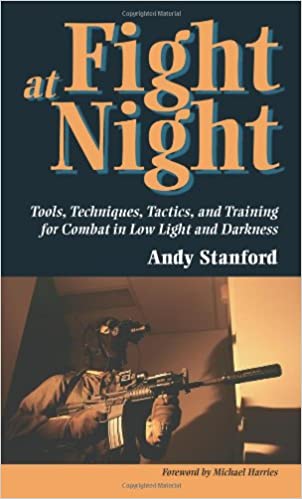
In our conversation, I mentioned that I was planning on attending an upcoming private training class taught by Larry Mudgett. Larry spent 35 years with LAPD, During his tenure there, he radically improved the police department’s (and the SWAT Team’s) firearms training.
He, somewhat like Andy, did the majority of his fine work in the days before YouTube, Instagram, and Facebook. That means most Gun Culture 2.0 folks have no idea those guys even exist.
I’ve always found Andy to be both superbly intelligent and intellectually curious. He’s a bit of a contradiction in the knuckle-dragging world of atavistic firearms instructors. If you don’t know anything about him, I think this short article Andy Stanford: Former shooting instructor hits the high notes in the Ridgecrest, California Daily Independent characterizes a lot of his personality.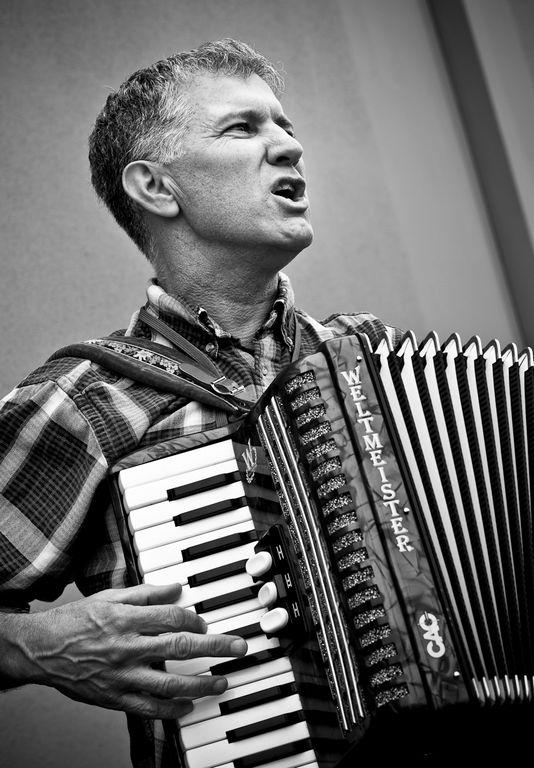
In our phone conversation, Andy told me about one of his friends whose accomplishments at Bakersfield, California PD rivaled those of Mr. Mudgett. In fact, Andy’s friend was once Larry Mudgett’s instructor. Unfortunately, this man, Mike Waidelich, passed away a few years ago.
I did some research on him and found that he and I would probably have gotten along quite well. He was a student and friend of Jeff Cooper, serving as Range Master at Gunsite Academy.
In one of Cooper’s monthly Commentaries from 1995, he mentioned Mike in the following entry.
“Family member and Orange range master Mike Waidelich has now become a firm advocate of the Glock pistol. This has puzzled me because I consider that trigger action is the most significant single element in the precision efficiency of any firearm, and the trigger on the Glock is customarily so bad as to be practically unworkable.
But Mike does not agree. He explained to me that pistol engagements within the law enforcement establishment customarily occur at such short range that precise bullet placement is not important. He maintains that he can teach anybody to center a human adversary with the Glock trigger at any reasonable range – say 10 meters or less.
The other points that recommend the Glock to the police establishment are low cost and readily available modular parts. The Glock people will furnish you with spare parts immediately, where most other manufacturers hem and haw. These points are important. They are not enough to turn me into a Glockenspieler; but then, I am not a police range master.”
An appreciation for Glocks in the Gunsite world back in 1995 was considered heresy. I decided I liked Mike’s style. I liked it even more when I read his letter to the editor published by The Bakersfield Californian titled Don’t leave home without one back in 2012.
“In response to the May 2 letter “Consequences of NRA’s assault on gun laws”: I was a police officer for 30 years. I was assaulted several times during that time and had contact with many assault victims. All manner of weapons, knives, clubs, guns, and a bunch of other things were used.
I have been retired for about 14 years now and I still never leave the house without a gun. When you can assure me that I will never be attacked by anyone, armed or otherwise, I’ll leave my gun at home. Until then, you should hope that I, or someone like me, is around if you are ever the victim of an assault.
I hate violence. I hate it so much that I am willing to kill if necessary, to keep anyone from using it against me.”
Mike Waidelich
I fear that history may forget the genre-changing accomplishments that men like Andy Stanford and Mike Waidelich contributed. Andy wrote an obituary of sorts documenting Mike’s achievements. I am publishing it below with Andy’s permission to keep Mike’s ideas alive for eternity.
I think if modern day officers shot the same 10-round course Mike developed twice a month, our police hit rates would change in a dramatically favorable manner. We’ve known how to solve the problem of cops who can’t shoot for almost 50 years now. The problem is that most modern police firearms instructors don’t take enough interest in their craft to study the methods used by past innovators.
I hope Andy’s article provides you all with a little perspective and historical context that you might not have otherwise been exposed to. Enjoy. Thanks to Andy for allowing me to reprint his work.
-Greg
R.I.P. Mike Waidelich
Requiem for an Unsung Hero
Lyle Wyatt just called me with “bad tidings”: Mike Waidelich died today. I first met Mike in 1977 through the South West Pistol League, where he had won the B-class Championship the year before.
The last time I saw him was probably in the early 1990’s at the Soldier of Fortune 3-gun Match, where Waidelich was a longtime staff member. He had Hollywood good looks, and Lyle confirms my impression that Mike was a genuinely nice guy.
R.I.P. Mike Waidelich
Requiem for an Unsung Hero
Lyle Wyatt just called me with “bad tidings”: Mike Waidelich died today. I first met Mike in 1977 through the South West Pistol League, where he had won the B-class Championship the year before. The last time I saw him was probably in the early 1990’s at the Soldier of Fortune 3-gun Match, where Waidelich was a longtime staff member. He had Hollywood good looks, and Lyle confirms my impression that Mike was a genuinely nice guy.
Mike was born in 1942, and served in the U.S. Army Special Forces (he fought in the Dominican Republic in ’65, if I recall correctly). One of the first Gunsite instructors, Mike taught during the API 250 class attended by LAPD SWAT icons Larry Mudgett and John Helms. But his biggest claim to fame was the too-little-known story of his success as the Bakersfield P.D. Rangemaster. By some miracle, I spoke with him several times in the last month or so, and got the details.
Mike joined the BPD in 1967 when it was an agency of 50-ish sworn personnel (now several hundred). At that time patrol cops carried .38 revolvers in clamshell holsters. A year or so later they had eight on-duty shootings with zero police bullets hitting the suspects. The Chief asked Mike if he could solve this problem. Mike said “yes” but only if he could do it his way. A couple of hours explaining the particulars of “his way” and the job was his, 12 years total.
Pretty quickly the switch was made to 9mm Smith and Wesson Model 59 autopistols, and later, in the 1980s, to the 1911A1 Colt 45’s that Mike initially recommended (in Milt Sparks leather no less). Then, approximately ten years after that, the department switched again, to Glocks, first in .40 S&W, now 9mm. But the hardware is not generally the most important factor in a gunfight. It’s usually “the nut behind the bolt,” and that is where Mike made his bones.
In-service transition training was five days long. So was academy firearms training for recruits. Paul Trent, Mike’s friend and protege, relates: “When I went to the Gunsite 250 course in 1980, I got an Expert ticket. I realized Mike had taught my 1976 academy class virtually the same material, plus some additional tactics.” Trent attended the BPD academy a year before Waidelich actually met Jeff Cooper, and prevailed in an on-duty gunfight his first day on the job.
The standard BPD course of fire (with Mike’s rationale) was as follows, all from the holster:
2 rounds in 1.5 seconds at 10 feet (“No one should be closer than that.”)
2 rounds in 2.0 seconds at 20 feet (“The length of a car.”)
2 reload 2 in 6.0 seconds (8.0 for revolvers) at 30 feet (“From the curb to the front door.”)
2 rounds in 3.5 seconds at 60 feet (“From the opposite curb to the front door.”)
The course was shot twice over each month (later, less frequently).
Mike told me the 10-point scoring zone on the silhouette target was, as best he could recall, a 7-inch circle, with the next zone (9 points) measuring 9×13 inches. A hit anywhere else on the silhouette scored 6 points. Departmental competitions were held as additional motivation for skills development. As for the rest of the system, I’ll let his words speak for themselves (from an 11 March 2021 email):
“I forgot to mention the somewhat unique method for scoring the basic drills. The time was flexible in that there were penalties for overtime. The penalties were 1 point per quarter second over the time allowed for the string. So, if you fired 2 in 1.5 seconds at 10 feet, you got zero penalties. At 1.6 seconds you lost 1 point. At 1.8 you lost 2 points, etc. I had shooters all over the place. One sergeant never made the time but never missed the 10 ring and his times were not long enough to disqualify him.
Others always made the time, but were all over the target. It was quite interesting to get them to balance the speed and accuracy appropriate for their abilities and I think it gave them a proper mind set for actual combat.
Of course shot timers didn’t come along until 1982 so initially the timing was done to tenths of a second with a stop watch. The course was administered with 6 shooters on the line and the RM would walk down the line and each shooter would shoot individually.
A run through all 4 stages for 6 shooters took less than 10 minutes so the first half hour of a 2-hour training session was basic drills, followed by additional drills covering and teaching specific skills and techniques.
Initially the standard was 80 out of 100 on either string out of 2 tries. If a shooter failed to shoot an 80 in his first 2 attempts he was sent to a side range to dry practice and then given a 3rd attempt. Those who failed 3 times were required to come back, but only once on department time.
If they failed again they were required to come back on their own time. If they couldn’t qualify during the course of the training period — monthly at first but it got longer as the department grew, finally to quarterly — they were assigned to the range for remedial training. Should they require remedial training in any two consecutive training cycles, their fitness for duty would be reevaluated.
In short, they could get fired, and nobody hit the street who wasn’t currently qualified. The training had teeth.”
How good were BPD officers? 85% hits when the national average was 15%. (Lyle says this number would be higher but for one outlier shooting in which an officer missed with his entire first magazine.) Anyone who has studied the matter knows how significant this is. Most cops can’t shoot well, and the few who can are usually self-motivated enthusiasts. Not one officer was killed in a gunfight when Mike was BPD rangemaster. A few anecdotes flesh out the tale:
The new regional FBI agents based in Bakersfield usually shot the BPD department qual for familiarization. Mike’s course of fire quickly humbled the mostly cocky G-men. (The Bureau actually used some of Mike’s written documentation as source material for their own efforts.)
When training in the L.A. area, Waidelich and other Bakerfield P.D. officers frequently heard comments like, “Oh. You’re from BAKERSFIELD. Our bank robbers go there to get killed.” Clearly the department had a widespread and well-earned reputation as real deal gunfighters.
Once, a visiting firearms instructor expressed skepticism when Mike described the BPD standards:
“You mean to tell me EVERY officer in your department passes this course?”
“Everyone from the Chief on down.”
“I’ll believe it when I see it!”
Mike got on the radio. “Dispatch, please send two officers to the range.” Shortly, two random BPD cops arrived, and both shot better than 90% scores, cold. “I can call two more but the results will be the same.”
In 2016 — long after Waidelich retired — Kern County law enforcement killed more people in the line of duty than any other county in the country, many much more populous. (Bakersfield is in west Kern County.) I believe this statistic is the result of three factors:
1) a relatively conservative political district where cops don’t automatically get fired for using their weapons,
2) a target rich environment full of gang bangers and oilfield roughnecks, and
3) the lasting influence of Mike Waidelich’s cutting-edge training.
That’s my story and I’m stickin’ to it.

Jack “Legs” Diamond was an old-school thug.
He came from the factory broken. Photo: Public Domain
Just what is “stopping power” anyway? One dude strolled nonchalantly into the ER when I was on duty, having taken a 9mm ball round to the pelvis. He was only minimally inconvenienced. Another guy sped away from a drug deal gone bad with the unlicensed pharmacist throwing 9mm rounds his way with vigorous dispatch.
Then he got home and noticed blood. A 115-grain FMJ round had punched through the trunk, back seat and then front seat before embedding in his back fat. This gentleman legitimately did not know he was shot. And then there was the sweet little old lady who caught a .25 ACP round to the neck during a robbery and will spend the rest of her days in a motorized wheelchair. How well bullets perform in the real world is bizarrely unpredictable. And then there was this guy.

The 1921 Colt Thompson got all the press. However, then,
as now, it was the humble handgun that spilled the most blood.
Origin Story
Nobody is really sure what Jack “Legs” Diamond’s real name was. He went by John Thomas Diamond, as well as John Nolan, John Moran and Gentleman Jack. He was born in the summer of 1897 to Sara and John Moran. It was obvious from the outset this little kid just wasn’t right.
Part of that was likely his sordid environment. Jack’s mom, Sara, was frail by nature and died of an illness when Jack was 16. Jack joined a Manhattan criminal gang called the Hudson Dusters soon thereafter. He was first arrested for burglary a year after his mom’s death.
Diamond enlisted in the Army intending to fight in Europe during World War I but lost his enthusiasm in short order. He deserted, was caught and served several years in Leavenworth.
Prison is grad school for criminals. When Diamond was finally released, he was free to pursue his true calling. In 1921, he entered the employ of a professional criminal named Arnold Rothstein. Diamond’s job description included bodyguard and general thuggery.
Jack Diamond’s nickname “Legs” spawned from one of two possible sources. He was purported to be a fairly competent dancer. He also established a well-earned reputation for being able to expeditiously get out of trouble. Somewhere along the way, his associates began calling him “Legs,” and the moniker stuck.
Being a mob enforcer doesn’t have the greatest retirement plan. Additionally, Jack Diamond was a hyperactive lad and a serial womanizer. Despite being married, he carried on a protracted illicit relationship with a prominent New York showgirl named Marion “Kiki” Roberts.
These suboptimal personal habits and the curiously violent nature of his profession synergistically combined to keep Jack Diamond’s physicians gainfully employed. By 1931, Diamond was known as the “Clay Pigeon of the Underworld.”
Normal people don’t have a nemesis. Jack Diamond, however, was not a normal person. His criminal counterpart was the infamous mobster Dutch Schultz. When describing Diamond, Schultz once remarked to his merry mob of misfits, “Ain’t there nobody that can shoot this guy so he don’t bounce back?”

Gangsters used a variety of handguns during the liquor wars of the 1920s. From left to right, we have the Colt Model 1903 .38 revolver, the .45 ACP Colt M1911 pistol, the 9mm P08 Parabellum
and the .32 ACP Colt Model 1903.
A Curiously Hazardous Profession
Prohibition ran from 1920 until 1933. The stock market crash that accompanied the Great Depression kicked off in 1929. The toxic combination of these two events meant there was a great deal of money to be made for those willing to ignore the law.
Diamond saw this as an opportunity and traveled to Europe in search of alcohol and drugs. He returned with barrels of liquor that he had dumped into New York Harbor. Partially filled, these barrels floated low in the water. By studying the tides, Diamond could predict where they might make landfall. He paid local children a nickel apiece to retrieve these containers.
Diamond was the partial owner of the Hotsy Totsy Club on Broadway. With a name like Hotsy Totsy Club, they weren’t hosting Sunday School brunches or teaching underprivileged blind kids to read.
Diamond used his club as a home base for all manner of illicit activities. In July of 1929, Diamond and an associate named Charles Entratta broke up a fight in the club by shooting three of the participants.
Two of the inebriated thugs, Simon Walker and William Cassidy, died as a result. William’s brother, Peter, was badly wounded. In response, the three men’s criminal associates kidnapped the Hotsy Totsy’s bartender, three members of the waitstaff and the cute hatcheck girl. One of the five was later found murdered in neighboring New Jersey. The other four were never heard from again.
There followed arrests for kidnapping, assault and sundry other crimes. Diamond attempted to flee to Europe but was unwelcome in the UK, Belgium and France. Eventually, German police deported him back to Philadelphia.


The first time Jack Diamond was shot, it was with a 12-bore shotgun. This vintage Remington Model 11 is typical of the genre.
A Notoriously Hard Man to Kill
Jack Diamond was the target of at least five assassination attempts. The first occurred in 1924 while he was attempting to hijack a truck full of liquor belonging to a rival criminal gang. Diamond caught a charge of 12-gauge shot to the face and head but recovered.
Three years later, Diamond was pulling bodyguard duty for a proper villain named Jacob “Little Augie” Orgen. While the two men were walking in Manhattan’s Lower East Side, they were confronted by a trio of assailants.
These three shooters opened fire at close range, killing Orgen outright and hitting Diamond twice in the chest. Both rounds passed beneath the gangster’s heart, and he recovered after a protracted hospital stay. Though he undoubtedly knew the men who shot him and killed his boss, Diamond refused to reveal their identities to police. Jack Diamond was a lot of things, but he wasn’t a snitch.
In October of 1930, Diamond was a guest at the Hotel Monticello on Manhattan’s West Side. Three assassins forced their way into his room and shot him five times. The shooters then fled. Diamond, for his part, stopped long enough to drink two shots of whiskey before staggering into the hallway in his pajamas where he collapsed. After two and a half months in the hospital, Legs Diamond was released to sow yet more chaos.
In 1930, Diamond and a pair of thugs kidnapped and beat a truck driver named Grover Parks, who was carrying a load of hard cider for a rival gang. Even if the victim is a thug himself, it was still against the law to beat people within an inch of their lives. In April of 1931, Diamond was arrested for Parks’ assault. Two days after his arrest, Diamond was released on a $25,000 bond.
Five days after that, Diamond was a guest at the Aratoga Inn, a roadhouse near Cairo, NY. After taking a meal with three associates in the roadhouse restaurant, Diamond stepped outside to get some air. Gunmen masquerading as duck hunters opened fire from a parked car and shot him three times at close range. Bystanders drove the bleeding Diamond to the hospital, where he recovered yet again after a protracted stay. By now, he was likely growing weary of hospital food.


Jack Diamond’s weapon of choice was a 4″ P08 Parabellum pistol equipped with the 32-round snail-drum magazine from an Artillery Luger.
Nobody is Immortal
If you’re counting, by then, Legs Diamond had been shot with 10 handgun rounds and an unknown number of shotgun pellets. The rock-hard mobster seemed unkillable. However, on December 18, 1931, Jack Diamond’s luck ran out.
By now, Diamond was staying at a rooming house in Albany, NY. He took dinner out with friends at a local restaurant before partying the night away with his mistress, Kiki Roberts. Come the dawn, Diamond staggered back to his boarding house and passed out on his bed.
Two attackers entered his room soon thereafter with a key. One man held him in place while the other pumped three rounds into the back of his head. The two gunmen fled, but one had second thoughts, ran back to the room and shot him several more times.
Mrs. Laura Woods, Diamond’s landlady, later testified that she heard one of the shooters say, “Oh, hell, that’s enough. Come on.” His killers were never caught.
There was ample conjecture. Some suspected local mafia hit men. Others postulated that the shooters had been crooked members of the Albany police force. Regardless, Legs Diamond was finally well and truly dead.
Legs Diamond was buried at Mount Olivet Cemetery in Maspeth, Queens, NY. Though there was no formal service, there were around 200 people who attended just to gawk.
Two years later, the body of Legs Diamond’s widow, Alice Kenny Diamond, was discovered shot to death in her apartment. Mob watchers suspected she was murdered to keep her from telling what she knew about her husband’s nefarious dealings.

This is the SS Belgenland. In 1930, Jack Diamond took this ship to Europe in search of illicit booze and drugs during Prohibition. Photo: Public Domain

The 9mm P08 Parabellum and the Colt M1911 .45 were both powerful and concealable gangster weapons used during the Roaring ’20s.
Ruminations
Legs Diamond was a killer. His weapon of choice was a German P-08 Parabellum pistol with a 4″ barrel and a 32-round snail-drum magazine. In the years following the First World War, such martial firearms would have been relatively commonplace, having been brought back from Doughboys serving overseas.
The 9mm round was appealing then for the same reasons it is appealing now. A drum-equipped Luger pistol was sort of concealable and offered unparalleled firepower.
So, what are the tactical lessons to be learned from the sordid life and gory death of Jack Diamond? For starters, handguns can be pretty substandard manstoppers, particularly firing ball ammo.
They will certainly do the job, but shot placement and ammunition selection are critical. In a social exchange of gunfire, most any rifle is more effective than most any pistol. At appropriate ranges, most any shotgun is more effective than most any rifle. It finally took 16 pistol rounds and Lord only knows how many shotgun pellets to put Jack Diamond down.
Jack Diamond shuffled off this mortal coil in 1931 at age 34. By the time he finally expired in a pool of his own blood, Legs had seen and done an awful lot of bad things. However, even nearly a century later, he can still teach us a great deal about the art of armed combat.