
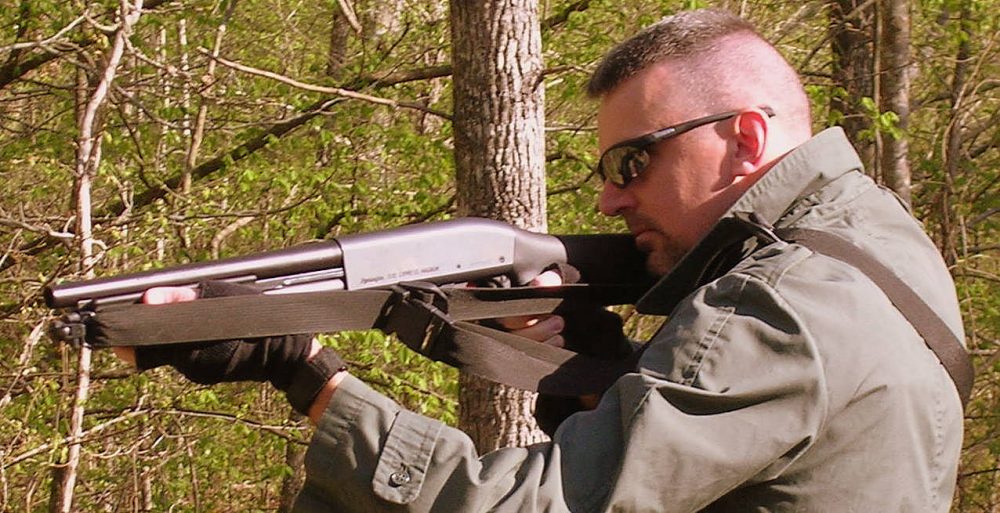
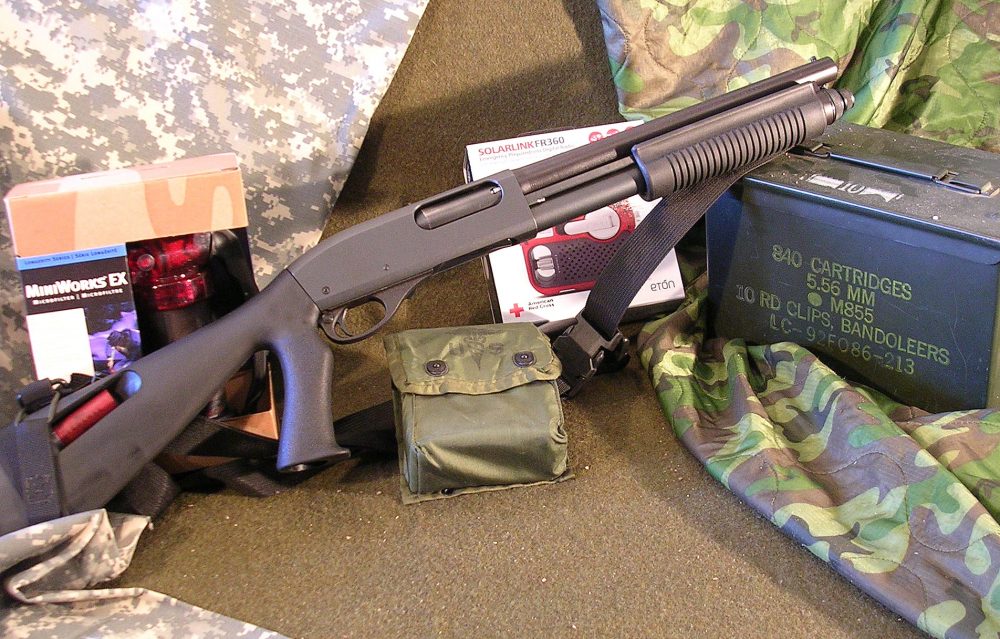
Decent sling system is critical component of practical defense weapon. While this one is homebuilt, there are dozens of top-quality commercial options from which to choose.
Instantly you shout the alarm and your family leaps into action. Your son grabs a case of MREs and heads for the minivan. Your daughter scoops up as much bottled water as she can carry and rushes to meet him.
Your wife bravely holds the horde at bay with the garden hose to buy you precious time to get inside. You throw open the door to the gun safe and scan its contents. You have very little time. You can only grab one gun and a sack full of ammo. What’s it going to be? There’s a lot riding on your decision—those guys outside want to eat your brain…
So what will it be? The argument of what gun to have if you could only have one sparks lively discourse any place two or more gun guys are gathered.
As my long-suffering bride can attest, we gun guys have a bit of a problem with the concept of how much is really enough. Even zealots with hundreds of guns of all flavors are still out there hunting that last elusive barrel length or nitnoid widget without which their collection remains woefully incomplete. The discussion of what comes closest to filling the niche for a single all-purpose survival firearm can indeed be spicy.
Some say a single survival gun should be an AR-15 for its light weight, wealth of accessories and fast handling. Others stand by the venerable Kalashnikov for its legendary reliability. Still others swear that as long as you have a tuned 1911 in your belt, you could want for nothing else.I disagree with all those folks. I say the ultimate zombie survival gun is some variation on your granddad’s pump 12 gauge.
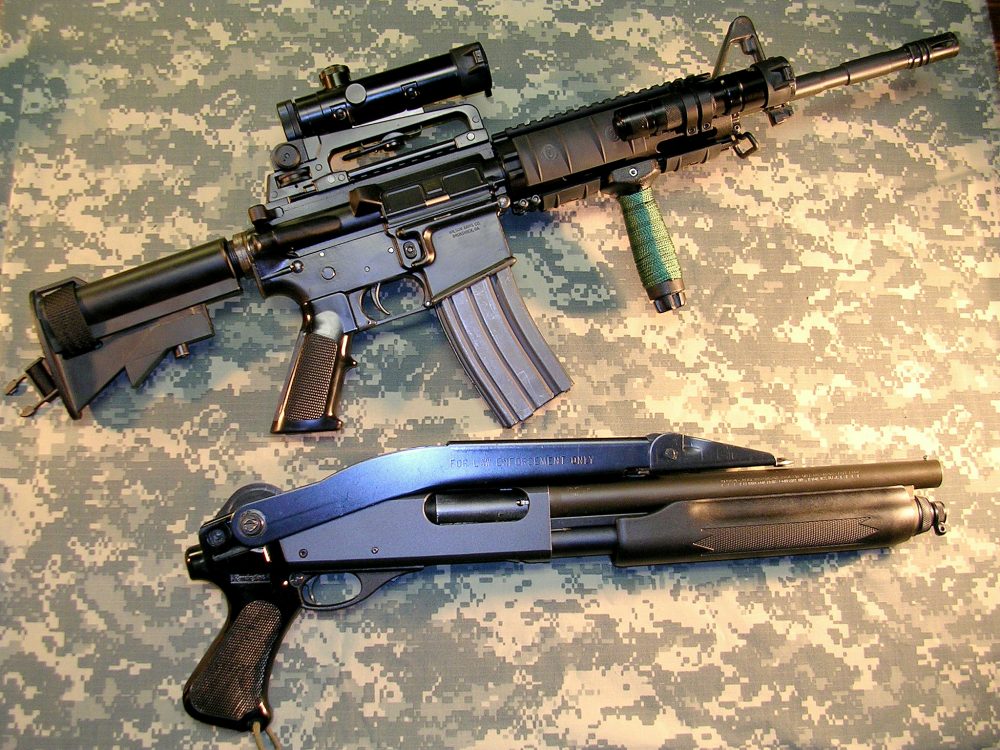
Table of Contents
MAXIMUM VERSATILITY
It’s hard to beat a 12 bore for flexibility and versatility. Stuff it with slugs and you’re good on zombie-sized targets out to 100 meters. Feed it buckshot and you’ve got more up-close stopping power than anything that doesn’t sport a tripod or an impact fuse. Switch to light birdshot and you can even feed the family during your trek to areas not contaminated with the undead.
I’ve owned scads of shotguns but always seem to come back to my trusty Remington 870 slide-action when the new wears off of whatever whiz-bang scattergun has caught my eye. Around my hacienda, the 870 stands out among all the other weapons in the collection, and my family refers to it as the Zombie Gun.
The 870 has been around since 1950 and thus sports an array of aftermarket accessories that can induce overload in even the most ardent gun nut. The action is notoriously reliable and smooth and, even bought new, this workhorse doesn’t make the dent in your wallet that most contemporary black guns do.
EXERCISING YOUR STOCK OPTIONS
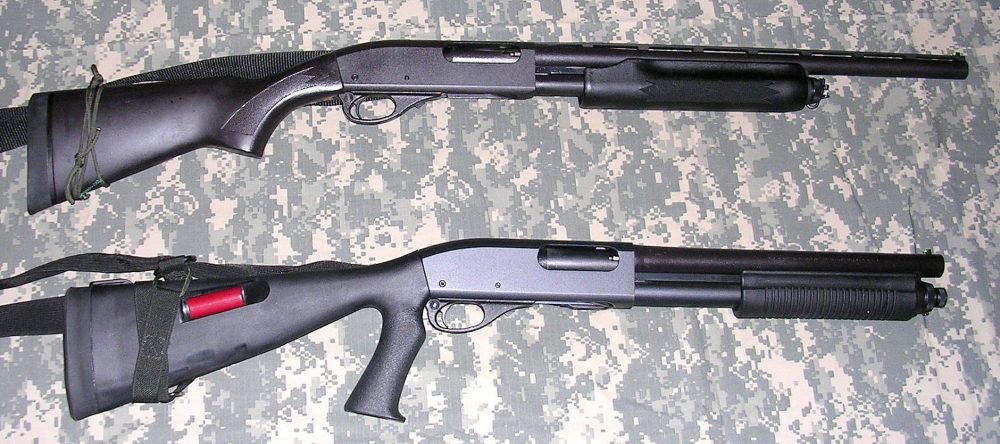
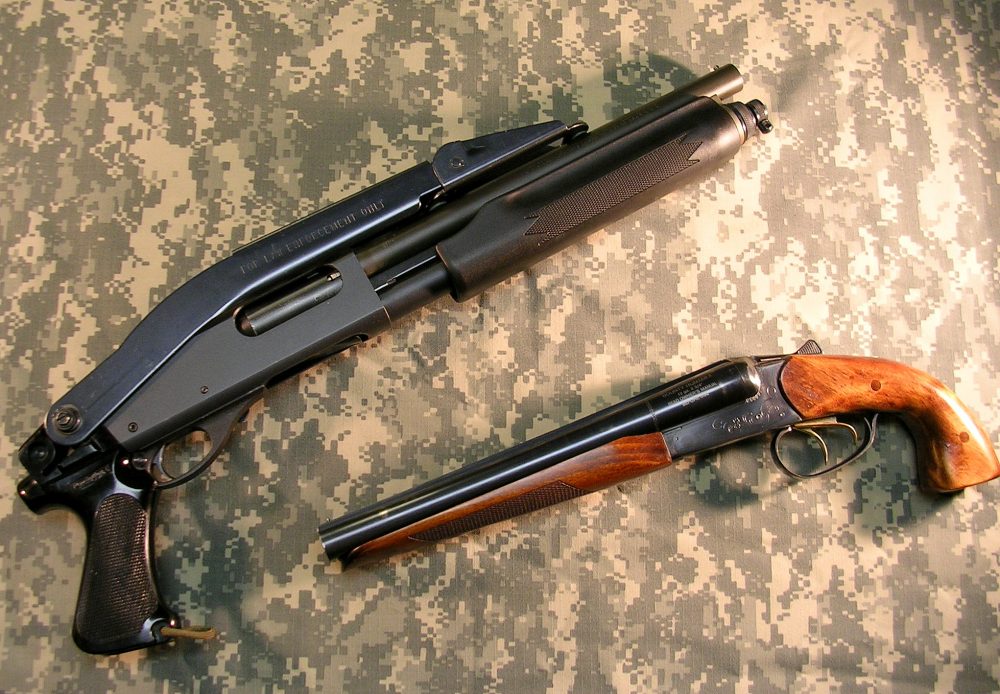
A bare pistol grip configures the weapon such that it can actually be concealed under a jacket—a handy feature when traversing areas not completely overrun with zombies—but the recoil and accuracy in this configuration with even light birdshot is punishing.
The standard stock that comes with the gun is appropriately scaled for most American shooters and, if so configured, does not raise eyebrows when carried in public or hung in the back of a pickup truck—at least not down here in the Deep South where I live.
Folding stocks come in a wide variety of offerings but are, in my experience, universally uncomfortable. I have found the Speedfeed® pistol-grip stock to be the most comfortable and handy stock option of the lot. What sets the Speedfeed stock apart from its competitors is the clever inclusion of a pair of spare ammo magazines in the sides of the stock. Each tubular magazine is spring-loaded and holds two spare rounds. Accessing these reloads is simple and intuitive and allows four rounds of backup ammo to be stored onboard the weapon itself without adversely affecting the weapon’s ergonomics or adding some protruding ditzel that could get hung up on clothing, equipment, or brush.
The pistol-grip geometry of the Speedfeed stock fits me nicely and helps ameliorate the recoil of high brass slugs and buckshot that might otherwise punish my shoulder unduly. This stock comes complete from the factory with a generous rubber recoil pad.
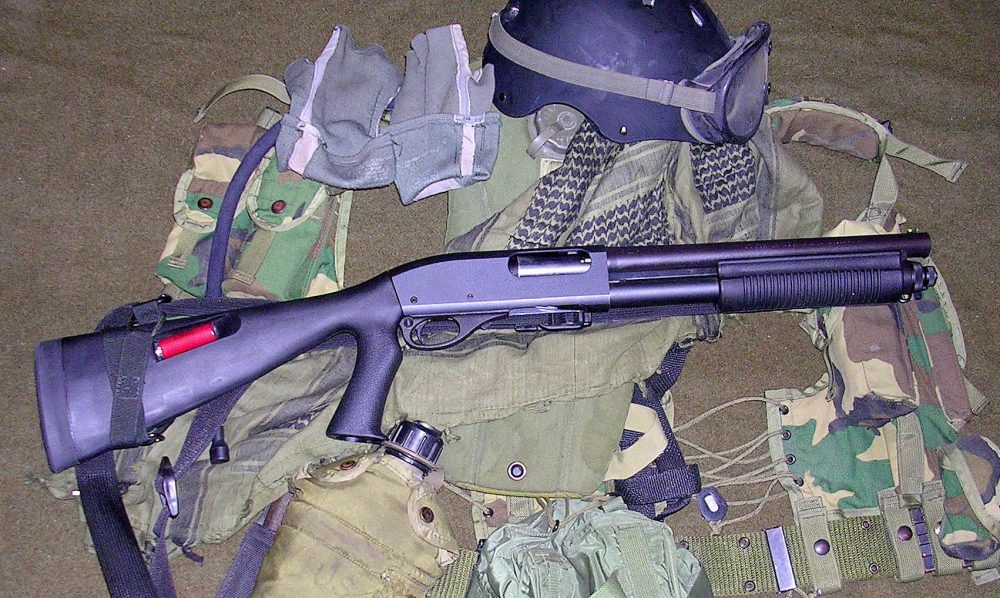 Remington 870 slide-action shotgun is zombie-ready with shortened barrel and Speedfeed pistol-grip stock. Thus configured, it carries nine rounds on board the weapon.
While this process may seem somewhat daunting, there really isn’t much to it. The form is available online and must be submitted in duplicate along with a recent photograph, a set of standard FBI fingerprint cards, a check for $200, and the signature of your local chief law enforcement official. The turnaround time can be fairly quick, but they say patience is a virtue. This particular set of paperwork took about three months door to door.
Once the paperwork returns approved from BATF, taking the barrel down is a fairly painless task. I cut the barrel to length with a cutoff wheel on a table saw and dressed the muzzle with a Dremel tool. My drill press and an appropriate tap mounted one of those nifty neon-green aftermarket front sights at the appropriate position.
The purist could have the muzzle bored for replaceable choke tubes. However, against snakes, varmints and the like, the 12-inch barrel as cut and squared has yielded yeoman’s service for the 14 years I have been using it.
After degreasing the chopped barrel with paint thinner, I sprayed it with ceramic engine block paint and baked it according to the manufacturer’s instructions. The resulting finish has been impervious to every solvent I’ve exposed it to, as well as mightily ding and scuff-resistant.
A homebuilt sling system optimized for my physique completes the ensemble and makes toting the piece on long forays comfortable and manageable.
In my experience, it’s worth it to invest a little time, effort and money into a quality suspension system for any weapon that will be keeping you company on long walks or cross-country movement. Even small, compact firearms become an uncomfortable nuisance after a couple of miles without a decent sling or holster.
PUTTING THE ZOMBIE GUN THROUGH ITS PACES
In the years I have been using my Zombie Gun, I have run just about every conceivable round through it. Buckshot and slugs are still a handful, but the Speedfeed stock makes the recoil tolerable. Through the 12-inch barrel, patterns with buckshot are still tight enough to scrape a zombie at any reasonable engagement range. As previously mentioned, rifled slugs will stay on a zombie-sized target out to about 100 meters.
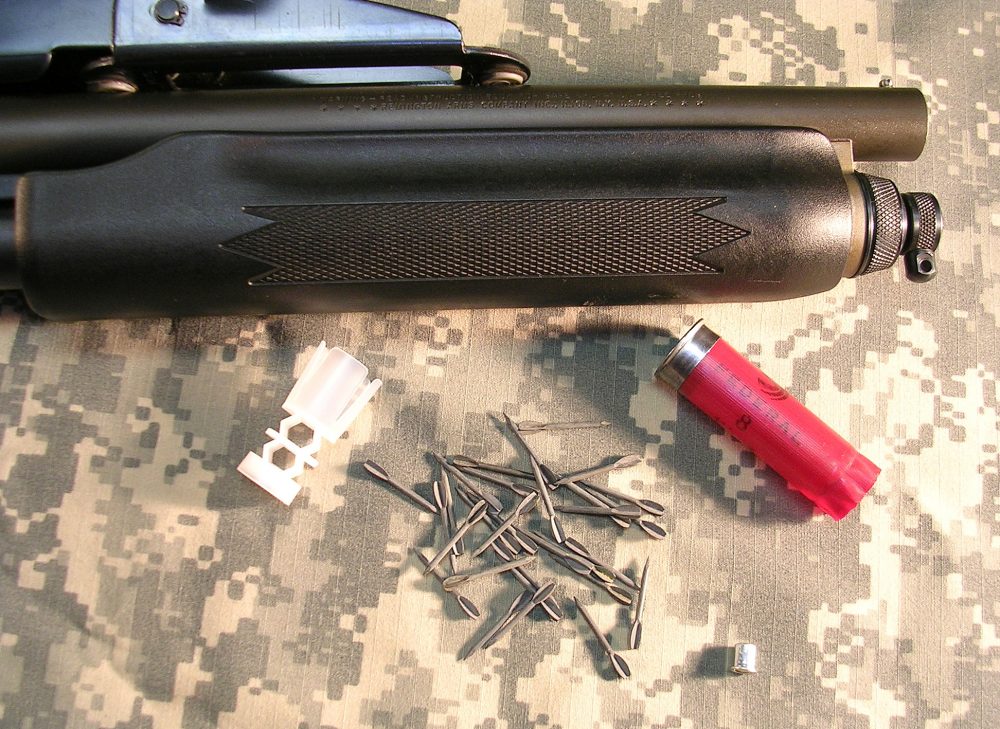
Flechette rounds, less-than-lethal beanbag rounds, and magnesium-spewing dragon’s breath rounds have all performed as advertised through this system as well. With the long 28-inch tube and a full choke, the Zombie Gun does a fine job against turkey. With the right stock, ammunition and barrel selection, this piece is good on rabbits, squirrels, deer, and birds when the zombie threat is minimal. In my experience, there is very little that can be legally hunted in North America that cannot be reliably addressed with my Zombie Gun in the appropriate configuration.
COST TO BE ADEQUATELY PREPARED FOR A ZOMBIE ATTACK
Unlike ammo for machine guns or even semi-auto black rifles, a couple boxes of ammo for the 870 will actually carry you through an afternoon at the range without breaking the budget. If carefully selected, $20 to $30 will purchase enough ammo in the appropriate configurations to set aside for any realistic eventuality, as well as a few unrealistic ones. I can seriously say that I get more real-world use out of my utility zombie shotgun than any other weapon I own.
I suggest you not tell just anybody about your plans to acquire a Zombie Gun. Most gun nuts will think it a respectable undertaking and volunteer volumes of free advice as to technical specifications and capabilities. However, some will try to have you put away or, at the very least, relocate to a neighborhood far from yours.
But in the right company, the question of what is the perfect Zombie Gun can be relied upon to spark a spirited discussion.
Whether your day job involves keeping the peace or just being a responsible citizen, the legal exercise of our Second Amendment rights represents the best safeguard we have for the remainder of the Bill of Rights.
It has been said that luck favors the prepared and, who knows, if you are the only adequately armed guy on your block, perhaps the zombie horde will move on to the house of that neighbor with the deep-seated aversion to firearms and the Handgun Control Inc. bumper sticker on his car.